
What is a Cashmere Scarf? The Anatomy of the World’s Most Elegant Embrace
To the uninitiated, a cashmere scarf is a mere defense against the cold. To the discerning connoisseur, it is an intimate artifact—a convergence of extreme biology, generational artisanship, and quiet, uncompromising luxury. But what exactly constitutes a cashmere scarf? Beyond the poetic allure of its softness lies a precise science and a heritage that spans millennia. Here is the definitive exploration of the world's most coveted accessory.
Table of Contents
- Beyond Wool: The True Definition of Cashmere
- The Ladakh Origin: Where Altitude Meets Artistry
- The Science of the Caress: Understanding Microns
- From Fleece to Fashion: The Artisanal Journey
- The Heirloom Difference: Cashmere vs. Pashmina
- The Modern Wardrobe: Styling Your Cashmere Scarf
- The Ethics of Elegance: Sustainable Luxury
- Authenticity Assured: Protecting Your Investment
- Frequently Asked Questions
Beyond Wool: The True Definition of Cashmere
At its most fundamental level, a cashmere scarf is a garment woven exclusively from the undercoat of the Capra Hircus goat. However, to define it purely by its biological source is a disservice to its sartorial significance.
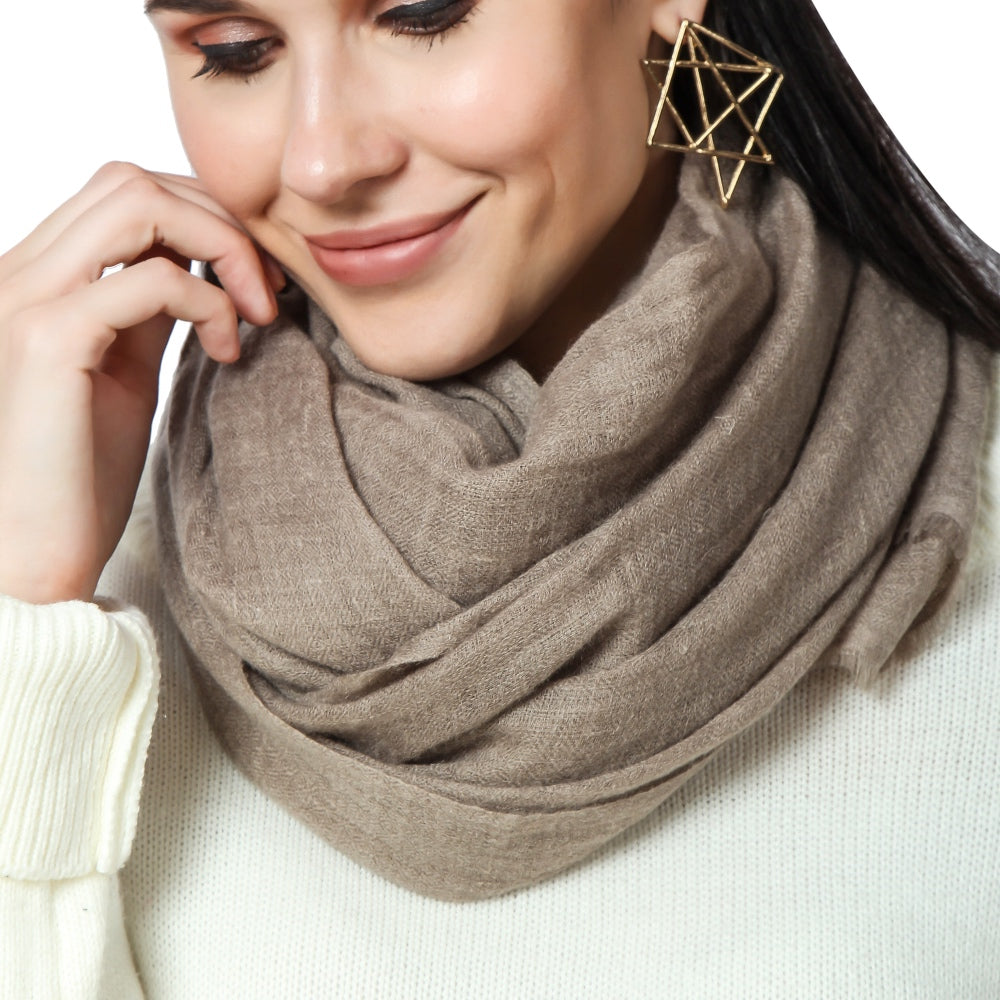
A Cashmere Scarf is not simply a winter accessory; it is a tactile paradigm shift. It sits closest to your skin, acting as a thermoregulating embrace that is impossibly lightweight yet profoundly warm. Unlike the rigid structure of a coat or the bulky scratch of standard sheep's wool, a cashmere scarf drapes with a fluid, weightless elegance. It does not merely shield you from the elements; it elevates your presence. It is the ultimate articulation of quiet luxury—an intimate luxury that is felt before it is seen.
The Ladakh Origin: Where Altitude Meets Artistry
To understand what a cashmere scarf is, one must first look to the stark, unforgiving landscapes that necessitate its existence. Cashmere is not born of agricultural abundance; it is a marvel of extreme survival.
The fiber originates from the Capra Hircus goat, primarily roaming the high-altitude plateaus of the Himalayas. In these harsh landscapes, winter temperatures routinely plummet to -40°C. To survive this brutal cold, these resilient animals grow a dual coat: a thick, coarse outer layer of guard hair that repels snow, and beneath it, a hyper-fine, densely packed underfleece designed to trap body heat with maximum efficiency.
This underfleece is cashmere.
Each spring, as the temperatures rise and the goats naturally molt, nomadic herders—such as the Changpa of Ladakh—gently comb this precious underfleece away. A single goat yields only a few ounces of raw fiber annually, making it one of the rarest natural textiles on Earth. The specific goats native to the Changthang Plateau produce the absolute finest grade of this fiber, known globally as Kashmiri Pashmina.
The Science of the Caress: Understanding Microns
The unparalleled sensation of a cashmere scarf against the skin is not a matter of romanticized perception; it is a measurable, scientific reality. The luxury of cashmere is quantified in microns—one-millionth of a meter.
To put this in perspective, human hair measures roughly 70 to 100 microns. Standard sheep's wool sits around 30 to 40 microns, which causes the prickly sensation on the skin. High-quality cashmere, however, measures between 14 to 19 microns.
It is this microscopic fineness that allows cashmere fibers to bend and yield at the slightest touch, creating a sensation of pure, unadulterated softness. Furthermore, the fiber's crimped structure creates millions of microscopic air pockets, providing extraordinary thermal insulation—up to eight times warmer than sheep's wool—without the corresponding weight. To truly appreciate the mechanics of this tactile experience, we invite you to explore the science behind cashmere softness.
From Fleece to Fashion: The Artisanal Journey
The journey from raw, combed underfleece to a finished Luxury Cashmere Scarf is arduous, meticulous, and deeply human.
- Hand-Sorting: The raw fiber is painstakingly hand-sorted to remove every trace of the coarse guard hair. This is a delicate process requiring immense patience, as the cashmere fibers are so fine they are nearly invisible when held to the light.
- Spinning: The cleaned fiber is spun into yarn. While standard cashmere is often machine-spun for mass production, the finest cashmere—Pashmina—must be hand-spun on a traditional charkha. The delicate, short staple of the ultra-fine fiber cannot withstand the brutal tension of industrial machinery.
- Weaving: The yarn is then woven into fabric. Traditional handlooms are used to create the fluid, breathable weave characteristic of an authentic Pure Pashmina Shawl. The rhythm of the weaver’s hands ensures a loft and drape that power looms simply cannot replicate.
This manual, time-intensive process imbues a cashmere scarf with its soul. Discover the intricate reality of this craft in our detailed guide on how Pashmina shawls are made.
The Heirloom Difference: Cashmere vs. Pashmina
In the lexicon of luxury, the terms "cashmere" and "Pashmina" are often used interchangeably, but they represent distinct tiers of rarity and heritage.
Cashmere is the broad, global category for the undercoat of the Capra Hircus goat, regardless of where it is sourced or how it is processed. Pashmina, however, is the zenith. It refers exclusively to the ultra-fine (12-16 micron) underfleece of the Changthangi goat native to Ladakh, and it must be entirely hand-spun and hand-woven in the Kashmir Valley.
While a beautifully crafted Cashmere Scarf offers everyday luxury and versatility, a Pashmina shawl occupies the absolute pinnacle of artisanal heritage. To fully understand the nuances between these two illustrious fibers, read our comprehensive breakdown of the difference between cashmere and Pashmina.
The Modern Wardrobe: Styling Your Cashmere Scarf
A cashmere scarf is the ultimate sartorial bridge, possessing a chameleon-like ability to elevate any wardrobe. Its inherent versatility makes it an indispensable asset for the discerning dresser.
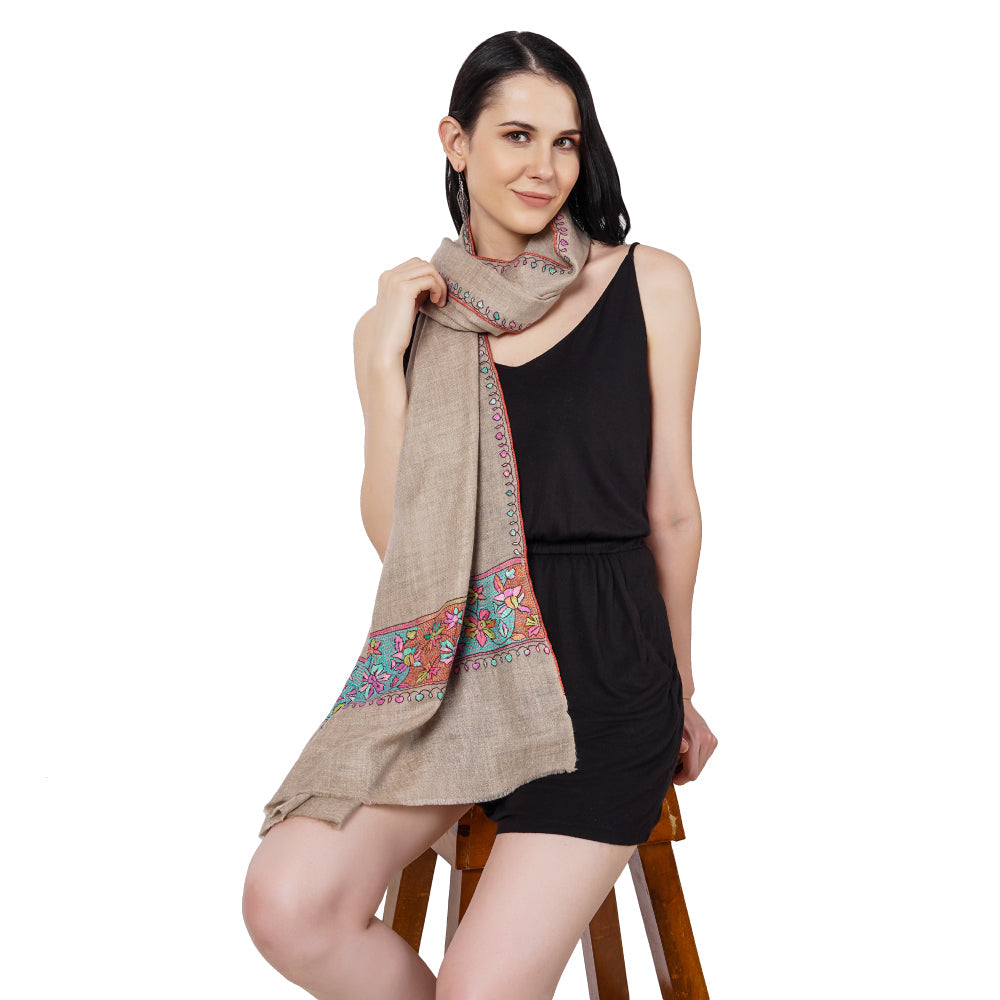
- The Executive Drape: Fold the scarf lengthwise, drape it around your neck, and pull the loose ends through the loop. It sits neatly beneath a blazer, communicating quiet authority.
- The Parisian Knot: Fold the scarf in half, wrap it around your neck, and pull the ends through the loop. It provides substantial warmth and a polished, structured look.
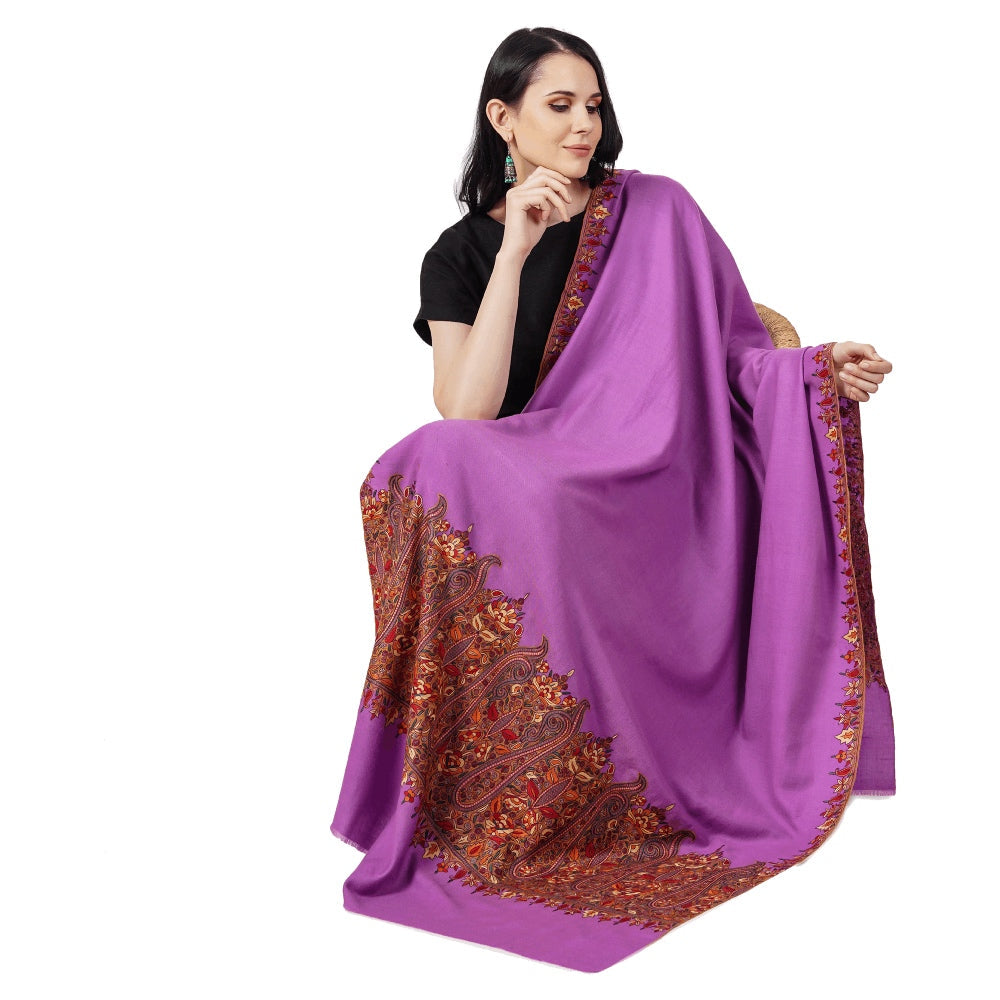
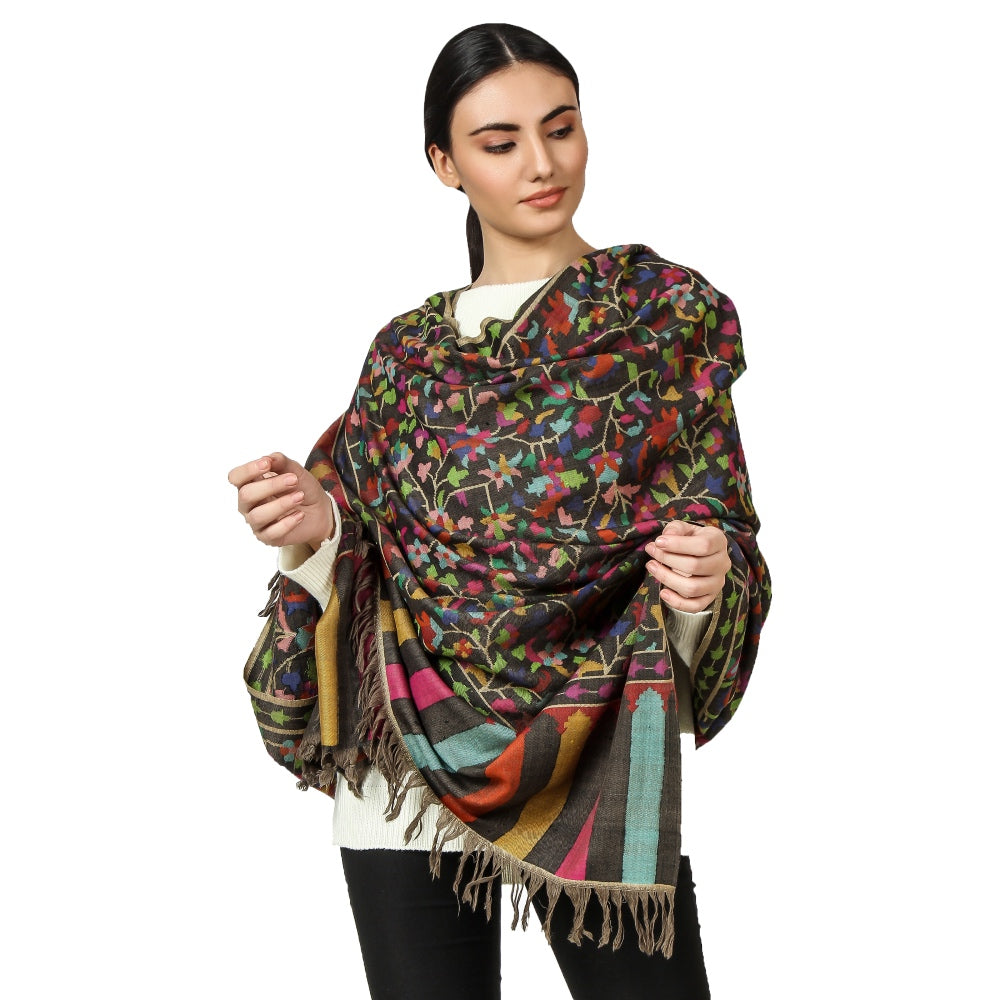
- The Evening Shrug: Drape the scarf broadly over your shoulders, allowing it to cascade down your arms. It serves as an elegant, lightweight shawl for evening events.
Because of its profound insulating properties, a cashmere scarf is undeniably the best cashmere scarf for winter, yet its breathability ensures it remains a stylish companion during the transitional chill of spring and autumn.
The Ethics of Elegance: Sustainable Luxury
In an era where the environmental and ethical costs of fashion are under intense scrutiny, authentic cashmere stands as a beacon of sustainability.
The harvesting of cashmere is inherently cruelty-free. The fiber is collected through gentle combing during the goats' natural spring molting season—no shearing, no harm. Furthermore, the traditional handcrafting of Pashmina operates on a zero-electricity model, leaving a minimal carbon footprint.
By choosing authentic, artisanal cashmere, you are investing in a slow-fashion ecosystem that supports nomadic herding communities and preserves ancient weaving traditions. We invite you to explore our commitment to the planet in our article on sustainable cashmere and its ethical standing. The history of cashmere in Kashmir is deeply intertwined with these sustainable, community-led practices.
Authenticity Assured: Protecting Your Investment
A genuine cashmere scarf is not a fleeting purchase; it is an heirloom in the making. Unlike synthetic fabrics that degrade, high-quality cashmere actually blooms with age, becoming softer and more intimate with the wearer over the years—provided it is treated with reverence.
Ensuring the authenticity of your purchase is paramount. The market is unfortunately saturated with mislabeled blends. Familiarize yourself with how to check cashmere quality at home to guarantee that your investment is genuine. Understand the market realities by learning how much a real cashmere scarf should cost, and discover the deeper economics of this heritage craft in our exploration of why Kashmiri Pashmina is expensive.
When you know the maker and the origin, the need to question authenticity fades. Discover for yourself is a cashmere scarf worth it—the answer lies in the unparalleled experience of wearing it.
Experience the Pinnacle of Luxury
A cashmere scarf is more than an accessory; it is an intimate embrace of heritage, science, and artistry. Experience the transformative power of authentic PASHWRAP luxury.
Shop Luxury Cashmere ScarvesFrequently Asked Questions
What makes a scarf a cashmere scarf?
A cashmere scarf is woven exclusively from the ultra-fine undercoat of the Capra Hircus goat. To legally be called cashmere, the fiber must measure under 19 microns in diameter, providing exceptional softness and thermoregulation that standard wool cannot replicate.
Is a cashmere scarf worth the investment?
Unquestionably. A high-quality cashmere scarf offers extraordinary durability, timeless style, and unmatched warmth. When calculated by cost per wear over a lifetime, it is a highly intelligent sartorial investment.
How can you tell if a cashmere scarf is real?
Real cashmere has a "dry" softness—it yields to the skin without feeling slick or slippery (a sign of synthetic fibers). It possesses a natural, matte luster, and will feel incredibly warm against the skin almost instantly.
Is Pashmina better than Cashmere?
Pashmina is the finest grade of cashmere. Sourced exclusively from Ladakh and hand-woven in Kashmir, it is softer (12-16 microns) and lighter than standard cashmere. It represents the absolute pinnacle of the fiber.
Can I wear a cashmere scarf all year?
Yes. Cashmere is a natural thermoregulator. It provides profound insulation in the winter, yet breathes easily in air-conditioned summer environments or cool summer evenings, making it a highly versatile year-round accessory.
Step into the rarefied world of PASHWRAP. Secure a piece of artisanal history, and let the legacy of Kashmir embrace you.
Explore Pure Pashmina Shawls