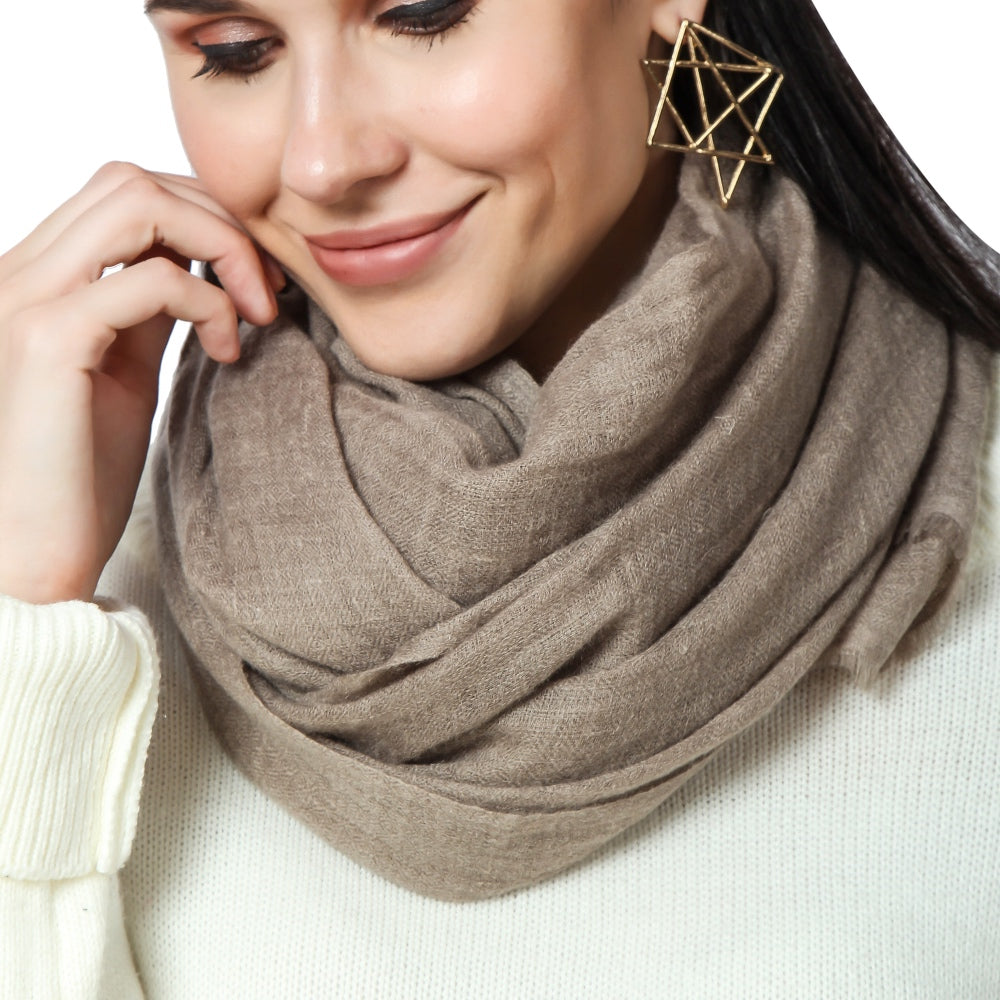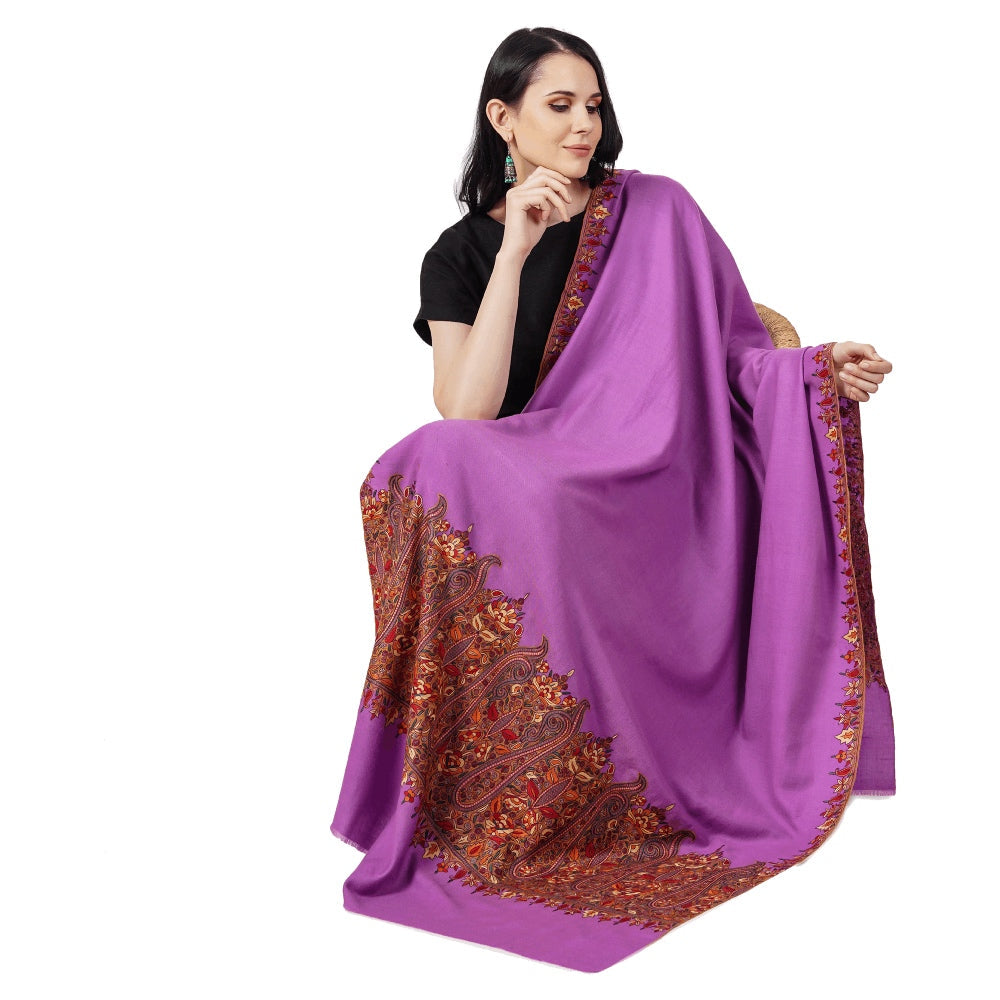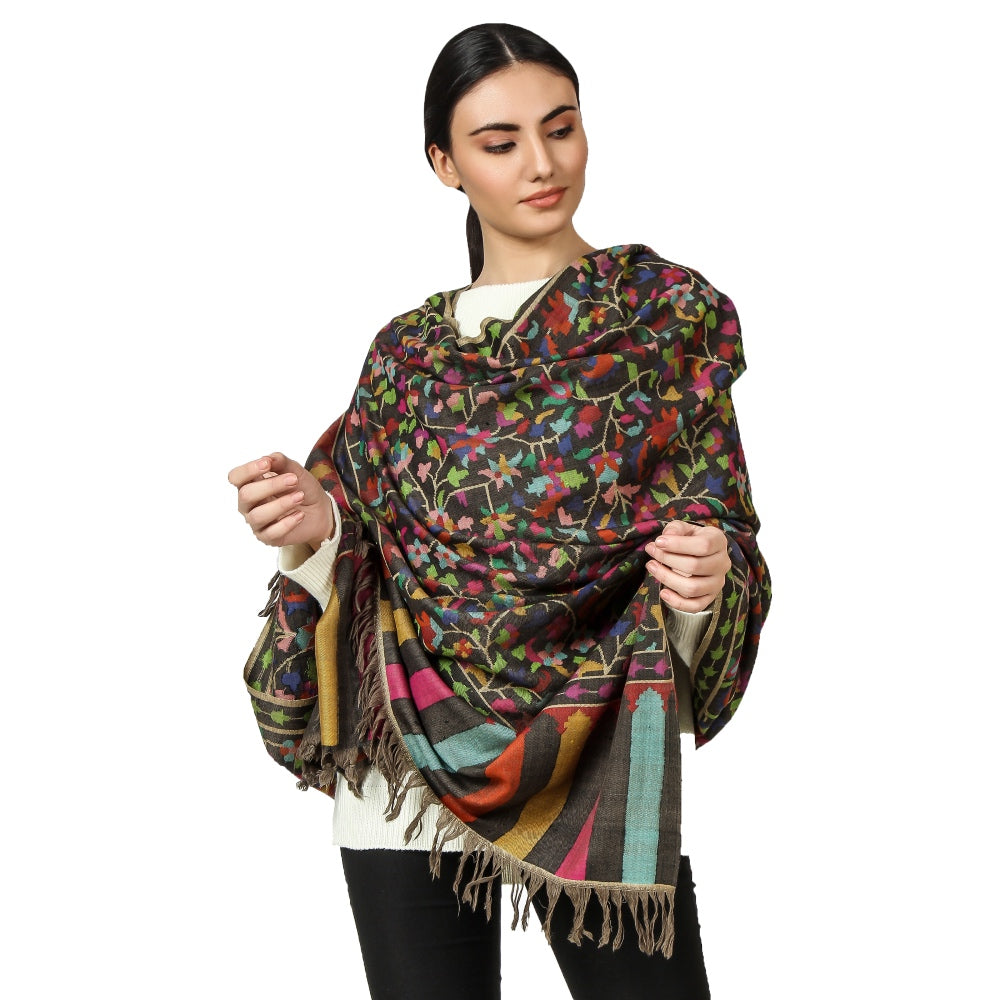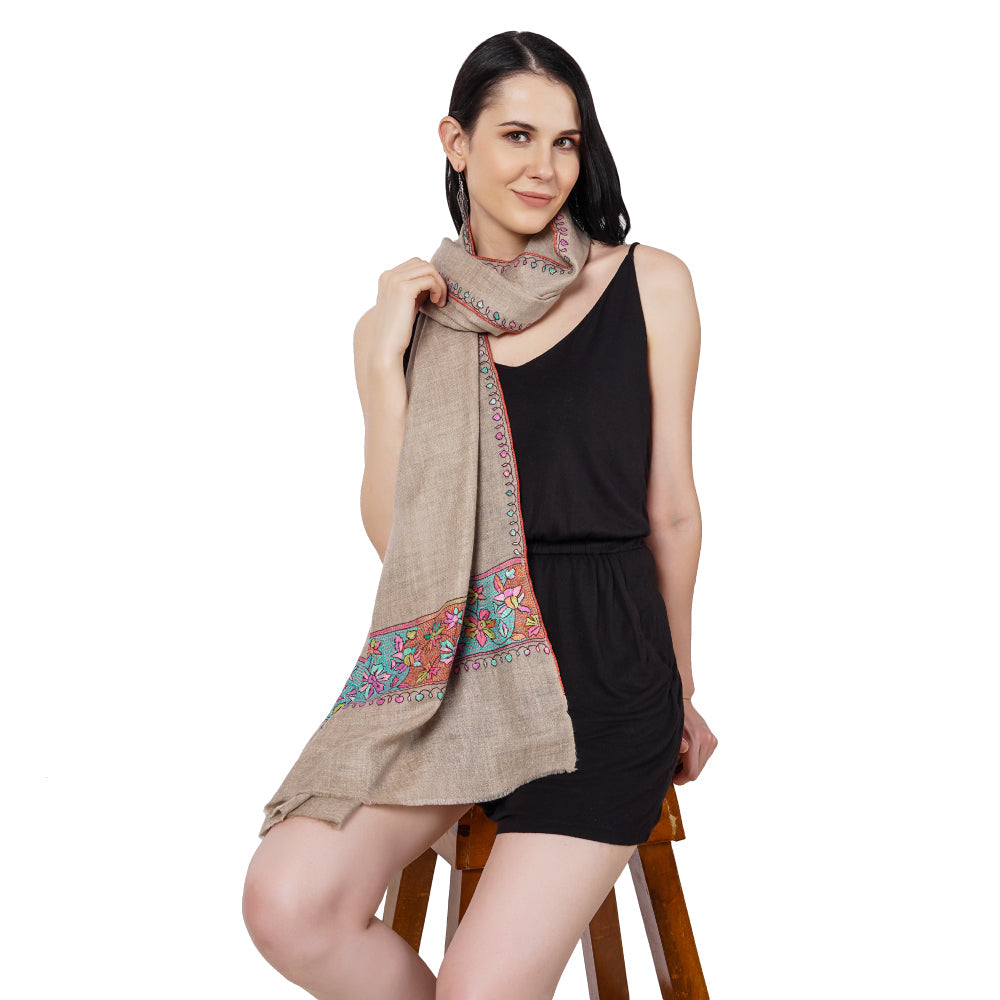

Which Country Produces the Best Quality Cashmere?
A connoisseur's guide to the origins, heritage, and truth behind the world's most coveted fibre — and why Kashmir remains unmatched.
You have felt it — that almost impossible softness against your skin, a weightlessness that somehow still wraps you in warmth. You have seen the price tag and wondered what, exactly, justifies it. But have you ever paused to ask a more fundamental question: where does the world's best cashmere actually come from?
The answer, as with most things of true value, is not simple. It is a story woven through mountain passes, ancient trading routes, generational craftsmanship, and the unforgiving winters of Central Asia. It is a story that most luxury brands would rather you didn't examine too closely — because the truth is uncomfortable for anyone selling mass-produced cashmere at accessible prices.
In this guide, we strip away the marketing. We trace cashmere to its source. And we make a case that, for the discerning buyer, only one origin truly deserves the title of the finest cashmere on earth.
The Origins of Cashmere: A Word That Betrays Its Source
The very word cashmere is an Anglicisation of Kashmir — the lush valley nestled between the Pir Panjal range and the Great Himalayas in northern India. For centuries, this region was the sole gateway through which the world encountered this extraordinary fibre. European merchants of the 18th and 19th centuries encountered shawls of such ethereal softness in Kashmir's bazaars that they named the material after the place itself.
But cashmere does not grow in Kashmir's valleys. It grows on the high-altitude plateaus of Ladakh — at 12,000 feet and above — where the Changthangi goat survives winter temperatures that plummet to minus 40 degrees Celsius. It is this brutal cold that forces the goat to develop an incredibly fine undercoat: a layer of insulation so delicate that a single fibre measures just 12 to 15 microns in diameter. For perspective, a human hair is roughly 70 microns.
This undercoat — called pashm in Persian and Urdu — is what the world knows as cashmere. And for over six hundred years, it was exclusively the artisans of Kashmir who possessed the skill to transform this raw fibre into fabric of such quality that it became the currency of emperors.
"In the 16th century, Mughal emperors draped themselves in Kashmiri pashmina not merely for warmth but as a declaration of sovereignty. The fibre was so rare, so revered, that possessing it signalled power itself."
The history of cashmere in Kashmir is not a footnote — it is the entire book. Every other cashmere-producing region on earth is, in some way, a response to or derivation of what began in these mountains.
Kashmir, India: The Undisputed Origin of the Finest Cashmere
Let us be precise about what makes Kashmiri cashmere superior — because superiority in luxury is never accidental. It is the convergence of specific, unreplicable conditions.
The Changthangi Goat — A Breed Apart
The Changpa nomads of Ladakh have herded the Changthangi goat for centuries, moving with their flocks across the Changthang plateau in a rhythm dictated by seasons and survival. This is not industrial farming. There are no factories, no mass-shearing operations. Each goat is combed by hand in spring, yielding approximately 80 to 120 grams of raw pashm per animal — barely enough for a single pure pashmina shawl.
The fibre diameter of Changthangi pashm ranges from 12 to 14 microns — among the finest of any cashmere goat on earth. This extreme fineness is what gives Kashmiri cashmere its characteristic whisper-soft hand feel, its ability to drape like liquid, and its warmth-to-weight ratio that no other fibre can match.
Hand-Spinning — The Irreplaceable Human Element
What truly separates Kashmiri cashmere from every competitor is not just the raw material — it is what happens next. The pashm is hand-spun on a traditional yander (spinning wheel) by artisans, overwhelmingly women, who have inherited this skill through generations. Hand-spinning preserves the fibre's natural alignment and elasticity in a way that machine-spinning simply cannot replicate. A machine can spin cashmere; only a human hand can spin it with soul.
The process of how pashmina shawls are made in Kashmir involves up to fifteen distinct stages — from dehairing and cleaning to spinning, weaving, and finishing. A single shawl can take two to four weeks to complete. Some intricate pieces take months.
Kashmir produces less than 1% of the world's total cashmere output. What it lacks in volume, it more than compensates for in fineness, craftsmanship, and heritage. This is not a commodity — it is an art form.
The Ethical Dimension
In an era where conscious luxury is not a trend but an expectation, Kashmiri cashmere offers something rare: a supply chain that is inherently ethical by design. The Changthangi goat is not farmed for slaughter — it is tended by nomadic herders who depend on the animal's long-term health and wellbeing. The fibre is combed, not sheared, causing no harm. The processing is done by artisan families working from their homes, not in sweatshops. For buyers who ask questions about provenance, sustainable cashmere from Kashmir represents one of the most ethically sound choices in luxury fashion.
Each piece in our collection begins at 12,000 feet and passes through the hands of Kashmir's master artisans.
Explore Kashmiri PashminaMongolia: The Volume Leader with Genuine Merit
Mongolia deserves serious respect in any conversation about quality cashmere. The country's Gobi Desert and surrounding steppes create the extreme temperature fluctuations — hot summers, brutal winters — that stimulate fine undercoat growth in Mongolian cashmere goats. Mongolia is the world's second-largest producer of raw cashmere, and its fibre quality, particularly from certain regions, is excellent.
Mongolian cashmere typically measures 14 to 16 microns in diameter — slightly thicker than the finest Kashmiri pashm but still well within the luxury range. The white colour of Mongolian fibre is another advantage: it takes dye beautifully and uniformly, which is why many European luxury houses prefer it for brightly coloured collections.
However, there is a critical distinction. Mongolia excels at producing excellent raw material. But the transformation of that material into finished garment is overwhelmingly industrial — machine-spun, machine-woven, produced in factories at scale. The result is a high-quality product, certainly, but one that lacks the irreplaceable character of handcrafted work. A Mongolian cashmere sweater from a respected European maison is a beautiful thing. It is not, however, the same as a hand-woven Kashmiri pashmina.
The difference between cashmere and pashmina is not merely semantic — it reflects a genuine gap in fibre fineness, processing method, and cultural heritage.
China: The Giant Whose Scale Undermines Quality
China accounts for approximately 60 to 70 percent of the world's total cashmere output. Inner Mongolia, in particular, produces fibre of respectable quality — comparable to Mongolian cashmere in fineness. The challenge with Chinese cashmere is not the fibre itself but the system surrounding it.
When production operates at this scale, quality control becomes extraordinarily difficult. Chinese cashmere supply chains are complex, often opaque, and frequently blend fibres of varying grades into a single yarn. A garment labelled "100% cashmere" from a Chinese factory may indeed contain cashmere — but it may also mix finer and coarser fibres, resulting in a product that is technically accurate but experientially inferior.
The industrial processing methods used at scale — machine-spinning at high speed, chemical treatments to soften lower-grade fibre, aggressive dyeing processes — further degrade what begins as a noble material. This is why a £100 cashmere sweater from a fast-fashion retailer and a £500 cashmere scarf from a specialist house can both legally claim to be "pure cashmere," yet feel incomparably different against the skin.
If you are paying less than £200 for a cashmere garment, it almost certainly contains Chinese cashmere that has been blended, chemically treated, or both. Understanding what real cashmere should cost is the first step to avoiding disappointment.
Other Notable Producers: Nepal, Iran, Afghanistan
Nepal produces cashmere from the Chyangra goat, a breed closely related to the Changthangi. Nepalese pashmina has genuine quality, particularly in fibre fineness, but the country's production volume is small and the craftsmanship infrastructure — while growing — does not yet match Kashmir's depth of tradition. Much of what is sold globally as "Nepalese pashmina" is, in reality, blended with silk or even synthetic fibres.
Iran and Afghanistan were historically significant producers — indeed, the word pashm is Persian — but decades of political instability, economic isolation, and the decimation of herding communities have severely diminished both quality and output. These regions are no longer competitive in the luxury cashmere market.
A Comparative Analysis: Which Country Leads?
For the luxury buyer, the relevant metrics are fibre fineness, processing method, supply chain transparency, and the intangible quality of craftsmanship. Here is how the major origins compare on what actually matters:
| Criterion | Kashmir | Mongolia | China |
|---|---|---|---|
| Fibre Diameter | 12–14 μm | 14–16 μm | 14–19 μm |
| Processing | Hand-spun, hand-woven | Machine-processed | Machine-processed |
| Supply Chain Transparency | High | Moderate | Low |
| Heritage & Artisanship | 600+ years | Modern | Industrial |
| Ethical Sourcing | Inherently ethical | Variable | Difficult to verify |
| Global Output Share | < 1% | ~20% | ~65% |
The table makes the conclusion difficult to avoid. On every metric that matters to a luxury buyer — fineness, craftsmanship, transparency, ethics, heritage — Kashmir leads decisively. The only metric where it does not lead is volume, and in luxury, volume has never been a virtue.
Why Craftsmanship Matters More Than Geography
Here is the argument that most cashmere comparisons miss entirely: the finest raw fibre in the world, processed badly, becomes mediocre cashmere. Conversely, exceptional craftsmanship can elevate very good fibre into something transcendent. Geography gives you the material. Craftsmanship gives you the masterpiece.
The science behind cashmere softness is not only about fibre diameter — it is about how those fibres are aligned, spun, and woven. Machine-spinning at high speed twists fibres aggressively, creating a yarn that is strong but stiff. Hand-spinning draws the fibres gently, preserving their natural waviness and creating a yarn with a loft, drape, and softness that machines simply cannot reproduce.
Consider an analogy: two chefs are given identical Wagyu beef. One cooks it on a flat-top grill in a fast-food kitchen. The other sears it over binchotan charcoal, rests it with precision, and plates it with three decades of instinct. The ingredient is the same. The experience is not.
This is why PASHWRAP works exclusively with artisan families in Kashmir. Every handmade pashmina in our collection passes through the hands of spinners, weavers, and finishers who are not employees but custodians of a living tradition. We do not do this because it is romantic. We do it because it produces a quantitatively superior product.
How to Identify Genuine Quality Cashmere — Regardless of Origin
The luxury cashmere market is plagued by misrepresentation. Garments labelled "cashmere" may contain as little as 5% actual cashmere fibre in some jurisdictions. Even among legitimate products, quality varies enormously. Here is what a discerning buyer should evaluate:
Genuine high-quality cashmere should feel soft immediately — not after multiple washes. If it feels even slightly rough or scratchy when new, it will not improve significantly. The softness should be deep, almost warm, not merely surface-level.
All cashmere pills somewhat — it is a natural characteristic of short fibres. But low-quality cashmere pills excessively and continues to pill permanently. High-quality cashmere may pill initially but settles after the first few wears, leaving a smooth surface.
Hold the fabric by one corner and let it fall. Quality cashmere drapes in soft, flowing folds — it has what textile experts call "good hand." Stiff, board-like drape indicates either coarse fibre or over-twisted machine-spun yarn.
Can the seller tell you exactly where the fibre was sourced, how it was processed, and who made the garment? Vague claims of "Italian cashmere" (Italy produces virtually no raw cashmere — it only processes it) are a red flag.
If you want absolute certainty, testing cashmere quality at home includes the burn test: pure cashmere burns like hair — it chars, smells of burning protein, and crumbles to ash. Synthetic fibres melt and form hard beads.
Ultimately, the most reliable indicator of quality is the reputation and transparency of the seller. A brand that can trace its cashmere to specific herders, specific artisans, and specific methods is exponentially more likely to deliver genuine quality than one that cannot.
Every piece is certified, traceable, and crafted entirely by hand in Kashmir. No blends. No shortcuts. No exceptions.
Shop Luxury Cashmere ScarvesWhy Origin Should Matter to You
In an age of globalised supply chains and omnipresent marketing, it is tempting to dismiss origin as a romantic detail — irrelevant to the actual experience of wearing a garment. This would be a mistake.
Origin determines fibre quality. Fibre quality determines how a garment feels against your skin, how it ages over years of wear, whether it develops the beautiful patina of well-cared-for cashmere or degrades into a pilly, shapeless shadow of its former self.
Origin determines processing method. Processing method determines whether you are wearing something that was made by a machine in ninety seconds or by a human hand over four weeks — and the difference is not invisible. You can feel it.
Origin determines ethics. When you purchase a cashmere scarf that is genuinely worth the investment, you are not simply acquiring a cold-weather accessory. You are directing capital toward a specific community, a specific tradition, a specific way of working that has survived because people like you value it enough to pay for it.
Kashmiri cashmere is not the cheapest. It is not the most widely available. It is, by every meaningful measure of quality, the finest cashmere produced anywhere on earth. And in a world drowning in fast fashion and superficial luxury, that distinction matters more than ever.
Frequently Asked Questions
In terms of raw fibre fineness, Kashmiri pashm (12–14 microns) is marginally finer than the best Mongolian cashmere (14–16 microns). However, the more significant difference lies in processing: Kashmiri cashmere is hand-spun and hand-woven, preserving fibre quality in ways that machine processing cannot. For a cashmere scarf or shawl where drape and softness are paramount, Kashmiri craftsmanship delivers a measurably superior result.
Italy processes cashmere — it does not produce it. Italian mills source raw cashmere primarily from China and Inner Mongolia, then spin and weave it using advanced machinery. The result is often excellent, but the "Italian" label refers to processing location, not fibre origin. Why Kashmiri pashmina is expensive has everything to do with the fibre itself and the handcraft tradition — not the location of a factory.
You can get adequate cashmere for under £100. You cannot get exceptional cashmere. At that price point, you are almost certainly receiving machine-processed Chinese cashmere, possibly blended. For context: the raw material cost alone for a genuine Kashmiri pashmina shawl typically exceeds this amount before any labour is factored in.
The best cashmere scarf for winter combines fine fibre (for softness and insulation) with appropriate weight. A pure Kashmiri pashmina in a 2-ply or 3-ply weave provides extraordinary warmth despite its gossamer weight — precisely because the fine fibres trap air more effectively than coarser ones.
All pashmina is cashmere, but not all cashmere is pashmina. Pashmina specifically refers to the finest grade of cashmere — typically from the Changthangi goat of Ladakh, with a fibre diameter of 12–14 microns, hand-spun and hand-woven in Kashmir. It is a subset defined by both fibre quality and craftsmanship tradition.
Ask the brand directly: which region is the fibre from? How is it harvested (combed or sheared)? Who processes it — artisans or factories? Can they provide provenance details? Kashmiri cashmere from reputable houses like PASHWRAP offers inherently ethical sourcing because the entire supply chain — from nomadic herder to master weaver — operates on traditional, non-industrial principles.
Handcrafted from fibre to finish in Kashmir. No two pieces are identical — because real craftsmanship never is.
PASHWRAP — Authentic Kashmiri Pashmina & Cashmere
Handcrafted in the Valley. Delivered to Your Door.