
The 1990s Shahtoosh Scandal: When Luxury Boutiques Sold Endangered Species
In the 1990s, some of the most prestigious addresses in the world were selling a product that required killing an endangered species on the roof of the world. The buyers knew. The sellers knew. The conservationists knew. The law knew. Everyone looked away — until someone didn't.
What This Article Covers
There is a specific kind of hypocrisy that only luxury markets can produce: the ability to spend five thousand dollars on an object while refusing to know how it was made. Not because the information is unavailable — but because knowing it would make the purchase uncomfortable. The 1990s Shahtoosh trade was built entirely on this hypocrisy. It was not a black-market operation run in shadows. It was an open, advertised, glass-case-displayed retail business operating in some of the most respectable commercial real estate in the world.
We use the word "scandal" deliberately, because it captures the specific nature of what happened. This was not a case of consumers being deceived about what they were buying — [what Shahtoosh is](/blogs/news/what-is-shahtoosh) was documented, public knowledge. It was a case of an entire industry — buyers, sellers, logistics intermediaries, and luxury publications — collectively agreeing not to act on information they all possessed. The scandal was not the illegality. The scandal was the normality.
The Anatomy of a Luxury Crime
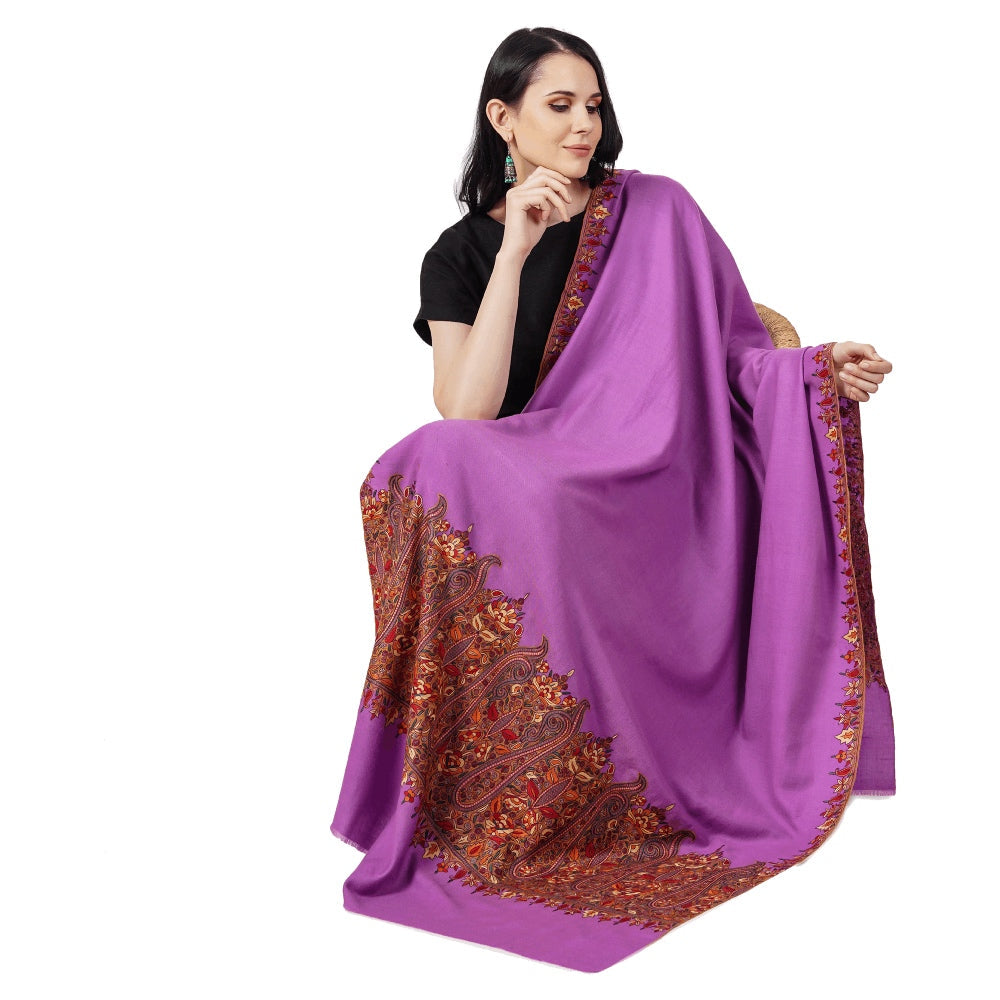
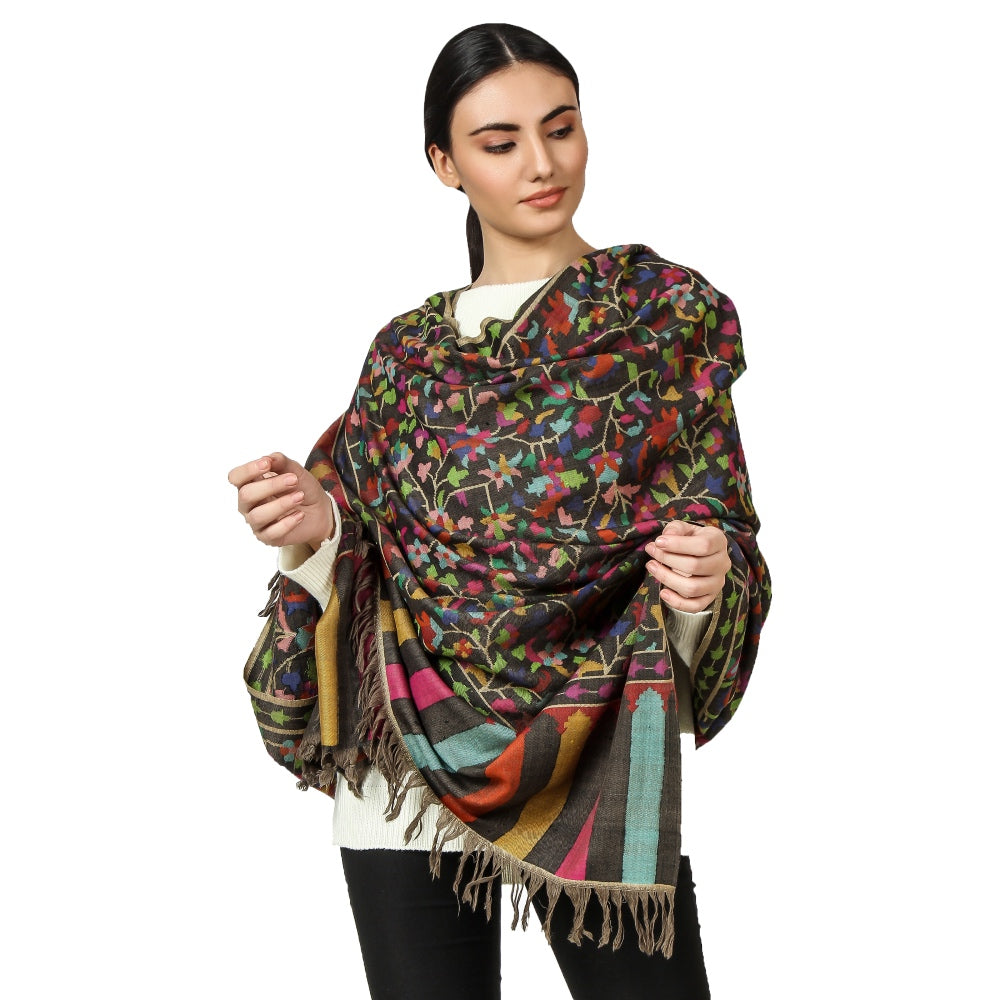
Imagine the display. A high-end boutique on Madison Avenue in New York, or Bond Street in London, or the Rue du Faubourg Saint-Honoré in Paris. Polished glass cases. Soft lighting. A silk-lined tray. On the tray, a shawl so fine it appears to be made of air, priced at $3,500. A small card beside it describes the fibre as "the rarest natural cashmere in the world, hand-woven by master artisans in Kashmir." The word "Shahtoosh" may or may not appear on the card. Sometimes it did. Sometimes the description was more evasive: "Tibetan mountain goat," "Royal Pashmina," "King's wool." The euphemisms were part of the product design.

What the card did not say — what no card in any boutique in any city said — was this: "Three to five Tibetan antelopes were killed to produce this shawl. The species is listed on CITES Appendix I. Selling it is a criminal offence in every country where this boutique operates." The information was omitted not because it was disputed, but because including it would have eliminated the sale. The euphemisms existed specifically to prevent the buyer from thinking too hard about the supply chain.
The price point was calibrated precisely for the target demographic. At $2,000 to $5,000 in 1990s money, a Shahtoosh shawl was expensive enough to signal extreme exclusivity — it was well beyond standard luxury cashmere — but affordable enough for the upper-middle class and wealthy professionals who aspired to own something genuinely rare. This was not trophy pricing for billionaires. This was aspiration pricing for the affluent. The price told the buyer that they were entering a tier above ordinary luxury, a tier so exclusive that it required a special fibre from a remote part of the world. The price did the heavy lifting. The sales associate provided the euphemisms. The buyer supplied the willful blindness.
The Supply Chain of Willful Blindness
The 1990s Shahtoosh supply chain was a masterpiece of plausible deniability — not because the denials were credible, but because everyone along the chain had an incentive to accept them.
The raw fibre originated on the Tibetan Plateau, where chiru were poached in large numbers. Wildlife organisations estimated that 15,000 to 20,000 animals were killed annually during the peak years. [How many animals were killed for one shawl](/blogs/news/how-many-animals-killed-shahtoosh-shawl) depended on the fineness of the piece — three to five was the standard calculation. The raw underfleece was smuggled from Tibet into Ladakh, then into the Kashmir Valley, where it was cleaned, sorted, and prepared for spinning. This first leg of the chain was explicitly criminal under both Indian and international law, but it operated with enough volume and regularity to supply a global retail market.
⚠ The Shedding Myth: The Supply Chain's Essential Lie
The mechanism that made the 1990s trade possible was the "shedding myth" — the false claim that the chiru naturally sheds its underfleece onto bushes and rocks in spring, where it can be collected ethically without harming the animal. This claim was repeated by dealers in Kashmir, by sales associates in New York, by catalogue descriptions in London, and by word-of-mouth in every market where Shahtoosh was sold. It was the specific piece of misinformation that allowed buyers to feel morally comfortable. It was also completely false — debunked by wildlife biologists, denied by the animal's biology, and unsupported by a single documented case of commercial-scale ethical harvesting. It survived because it was too useful to kill. Without the shedding myth, the 1990s Shahtoosh trade could not have functioned.
Once the fibre reached Kashmir and was spun and woven into finished shawls, it entered the export leg of the chain. The routes varied — some went through Delhi, some through Dubai, some through Hong Kong — but the destination was always the same: the luxury markets of North America, Europe, Japan, and the Middle East. At every transit point, the documentation was either falsified or omitted. Customs declarations described the goods as "cashmere scarves" or "woollen shawls." Shipping manifests used vague, generic descriptions that did not trigger wildlife trade red flags. The fibre's extraordinary fineness — its defining characteristic — was invisible to customs inspectors who had no reason to suspect that a "cashmere scarf" might be made from an endangered species.
The final leg — the retail sale — was where the supply chain's denial mechanism reached its purest form. The boutique displayed the product, described it in euphemistic language, and priced it at a level that signaled exclusivity rather than illegality. The sales associate, if asked about the fibre's origin, typically repeated the shedding myth or redirected the conversation to the product's tactile qualities. The buyer, having entered a luxury environment and been reassured by a professional salesperson, had no practical reason to investigate further. The transaction completed. The money flowed. And somewhere on the Tibetan Plateau, the arithmetic of the deal — three dead chiru for $3,500 — was executed again.
The Buyers: Wealthy, Educated, and Complicit
The most uncomfortable aspect of the 1990s Shahtoosh trade — and the aspect that most conservation reporting at the time failed to address directly — is the profile of the buyer. These were not naive consumers. The typical Shahtoosh purchaser in the 1990s was highly educated, internationally travelled, and professionally successful. They were doctors, lawyers, bankers, corporate executives, and diplomatic spouses. They read the New York Times. They subscribed to conservation magazines. Many of them donated to wildlife charities. They possessed exactly the information required to understand that Shahtoosh was illegal and environmentally destructive.
They bought it anyway.
The psychology of this decision is worth examining because it explains why the trade persisted for so long despite overwhelming evidence of its harm. The Shahtoosh buyer was not making a calculation between legal and illegal — they were making a calculation between visible and invisible. In a boutique, on a silk tray, under soft lighting, the consequences of the purchase are abstract. The dead chiru is 8,000 miles away, in a landscape the buyer will never visit, surrounded by a legal and cultural framework the buyer does not understand. The shawl in front of them is tangible, beautiful, and immediately gratifying. The abstraction wins.
There was also a specific cultural permission structure at work. High-end fashion magazines — Vogue, Harper's Bazaar, Town & Country — featured Kashmir shawls extensively in the 1980s and 1990s. Some of these features almost certainly depicted Shahtoosh pieces, described with breathless admiration for their fineness and rarity, without mentioning the animal that produced them. When a luxury publication treats a product as aspirational, it provides the buyer with a social permission that no amount of conservation reporting can easily override. If Vogue says it is beautiful, and the boutique says it is rare, and the price says it is valuable, the buyer's ethical reservations — if they have any — are easily compartmentalized.
The Investigators Who Broke It Open
The 1990s saw the first sustained, coordinated effort by wildlife organisations to document and publicize the Shahtoosh trade in a way that could not be ignored. The key organisations were TRAFFIC (the wildlife trade monitoring network), the Wildlife Protection Society of India (WPSI), and various national enforcement agencies. Their methods were a combination of undercover investigation, forensic documentation, and strategic media engagement — and they were devastatingly effective.
The breakthrough investigation came in the mid-1990s, when WPSI and TRAFFIC researchers documented the complete supply chain from the Tibetan Plateau to Western retail markets. They obtained physical evidence — [fake Shahtoosh](/blogs/news/fake-shahtoosh-how-to-spot) as well as genuine samples — traced the smuggling routes, interviewed participants at various levels of the chain, and produced a body of evidence that made the trade impossible to defend in public. This was not speculation. It was documented, photographed, and legally actionable.
The media component was equally important. In 1997, Maneka Gandhi, then India's Minister for Social Justice and Empowerment, publicly exposed the Shahtoosh trade in the Indian parliament, leading to the formation of a special task force. In the late 1990s, investigative journalists in the UK and the US conducted hidden-camera stings in boutiques that were openly selling Shahtoosh. The resulting television reports — broadcast on major networks on both sides of the Atlantic — showed sales associates describing Shahtoosh as "ethically collected" or "pre-ban stock" to undercover investigators posing as customers. The footage was damning precisely because the sales associates were so calm, so professional, so practiced in their evasions. They were not nervous criminals operating in shadow. They were luxury retail employees following a script.
The investigations also exposed a critical legal vulnerability that had protected the trade for years: the lack of testing at the point of sale. Customs agencies in most countries did not test textiles for species identification unless there was specific suspicion. A shawl labelled "cashmere" or "wool" in shipping documents attracted no attention. Even shawls labelled "Shahtoosh" were often not tested because customs officials had no accessible, fast, on-site method for distinguishing real Shahtoosh from fine Pashmina. The physical similarity between the two fibres — which, as we explain in our guide to [how Shahtoosh is identified](/blogs/news/how-to-identify-shahtoosh-shawl), is close enough to fool the naked eye — provided the trade with a practical shield that enforcement could not penetrate without laboratory equipment.
The Raids, The Arrests, The Silence
The turning point came between 1997 and 2003, when a series of high-profile seizures and arrests shattered the illusion that the trade was untouchable. The UK's HM Customs and Excise seized Shahtoosh shawls from several London boutiques and private homes, resulting in prosecutions under the Customs and Excise Management Act and the COTES (Control of Trade in Endangered Species) regulations. In the United States, the Fish and Wildlife Service conducted similar operations, targeting both retailers and individual buyers. In India, [the 2002 amendment to the Wildlife Protection Act](/blogs/news/is-shahtoosh-illegal-country-legal-guide) criminalised possession of Shahtoosh for the first time, triggering the enforcement wave that shut down the open market in Srinagar.
The immediate effect was dramatic. Luxury houses that had stocked Shahtoosh for years quietly removed it from their inventories. No public announcements. No press releases acknowledging previous involvement. No apologies. The shawls simply vanished from catalogues, display cases were reconfigured, and the word "Shahtoosh" disappeared from the vocabulary of brands that had built part of their prestige on selling it. This silence was itself a form of evidence: the speed and unanimity of the retreat proved that the brands had always known what they were selling.
The arrests were more visible. In London, a dealer was prosecuted and fined. In New York, several seizures were publicised. In Delhi, a major dealer was arrested with a stockpile of raw Shahtoosh fiber valued at millions of rupees. In Srinagar, the 2002 raids shut down the remaining open market, confiscated looms, and arrested dealers. In Kashmir's workshops, artisans who had spent decades working with the fibre suddenly found themselves out of work, as we document in our account of [what happened to the Kashmir Shahtoosh trade after 2002](/blogs/news/shahtoosh-kashmir-ban-2002-trade-history).
The aftermath revealed something important about the structure of the 1990s trade: it was simultaneously a luxury business and a criminal enterprise, but the participants in the luxury segment — the boutiques, the brands, the wealthy buyers — were insulated from the criminal consequences by the intermediaries who handled the logistics. The dealers in Kashmir and the smugglers on the plateau bore the legal risk. The luxury houses in London and New York bore almost none. This asymmetry is why the scandal landed so unevenly: the people at the bottom of the supply chain went to prison. The people at the top received a quiet phone call from their lawyers advising them to clear their inventory.
What the 1990s Scandal Actually Proved
The Shahtoosh scandal of the 1990s proved three things about the luxury industry, the wildlife trade, and the relationship between them — none of which are flattering, and all of which remain relevant today.
First, luxury self-regulation on wildlife products is a fantasy. The argument repeatedly made by the trade — that the market would self-polish, that reputable brands would not handle illegal products, that consumer demand would naturally shift to ethical alternatives — failed completely. The most prestigious brands in the world stocked Shahtoosh not despite their reputation for quality control, but because of it. Their reputation for excellence lent credibility to a product that deserved none. When a brand with a two-hundred-year history of craftsmanship vouches for a fibre that requires killing an endangered species, the brand's credibility becomes the lie's most effective delivery mechanism.
Second, demand for a product is not a moral justification for its supply. The 1990s Shahtoosh market demonstrated that consumer desire, once established at sufficient intensity, will override ethical and legal objections in a way that no amount of public information can counteract. The evidence was public. The science was clear. The law was unambiguous. The demand persisted. This is not a Shahtoosh-specific lesson — it applies to every wildlife product that has been commodified by luxury markets, from ivory to tortoiseshell to exotic leather. Demand does not become ethical simply because it exists at a high price point.
Third, the artisan and the dealer are not the same actor. The 1990s scandal destroyed livelihoods in Kashmir — spinners, weavers, small dealers — who had the least power in the supply chain and the most to lose. The luxury houses that created the demand, the intermediaries who managed the logistics, and the wealthy consumers who made the purchases absorbed almost none of the consequences. When the enforcement came, it landed on the people in Srinagar, not the people on Fifth Avenue. This structural inequality is the deepest injustice of the Shahtoosh trade, and it is the reason our family's position — "we know too much about Shahtoosh to ever sell it" — is not just an ethical stance. It is the only honest position available to anyone who actually understands the industry from the inside.
"The luxury houses that sold Shahtoosh in the 1990s did not stop because they discovered it was wrong. They stopped because they discovered they might get caught. The moral awakening never happened. The risk calculation did. That is the difference between a reformed industry and a defeated one — and the 1990s Shahtoosh trade was defeated, not reformed. A genuine Kashmiri Pashmina shawl does not need a reformed supply chain because its supply chain was never broken. It was always legal, always ethical, always traceable. That is the standard the Shahtoosh trade failed to meet — and that is the standard [genuine Kashmiri Pashmina](/pages/kashmiri-pashmina) meets by default."
Frequently Asked Questions
Were any major fashion brands prosecuted for selling Shahtoosh? +
No major fashion brand was prosecuted in the 1990s, which is itself significant. The prosecutions fell on individual dealers, middlemen, and small retailers — the people at the operational level of the trade. The brands that created the demand, published the catalogues, and benefited from the prestige of association with Shahtoosh were not charged. In the UK, investigations focused on independent dealers. In the US, seizures were made from individual buyers and small shops. No haute couture house, no major department store, no luxury conglomerate faced criminal proceedings for selling Shahtoosh during this period. The enforcement landed on the expendable layer of the supply chain, not the prestigious layer. This asymmetry remains a source of resentment in Kashmir, where the artisans who actually wove the shawls bore the consequences of a demand created by brands that faced no accountability.
Could someone who bought Shahtoosh in the 1990s still be prosecuted today? +
Technically, yes. In most jurisdictions, possession of Shahtoosh remains a criminal offence regardless of when it was acquired. In practice, prosecution of a 1990s buyer is extremely unlikely. Statutes of limitations, evidentiary challenges (proving the fibre in an old shawl is genuinely Shahtoosh requires laboratory testing), and the priority of enforcement agencies for current offences all make retrospective prosecution impractical. However, possession of Shahtoosh still creates legal risk — if the shawl is discovered during a customs inspection, the owner faces the same initial process as someone who bought it yesterday. We discuss the legal risks in detail in our guide to [inherited Shahtoosh](/blogs/news/inherited-shahtoosh-shawl-legal). The short answer: no one is coming looking for your 1995 purchase, but if they find it, you have a problem.
Do any luxury brands acknowledge their past involvement in the Shahtoosh trade? +
Almost none, which is itself telling. A handful of brands have quietly removed mentions of Shahtoosh from archived catalogues and editorial content, but no major brand has publicly acknowledged that it sold Shahtoosh, apologized for doing so, or contributed to conservation funds for the chiru as a form of restitution. The silence is consistent across the industry. The brands that profited from the trade have collectively decided that acknowledging their involvement would damage their current reputations more than the trade itself already has — which is an implicit admission that they recognise it was damaging. The luxury industry's refusal to confront its own history with Shahtoosh is a failure of accountability that no amount of current sustainability messaging can erase.
Is the 1990s Shahtoosh trade still happening today? +
The genuine trade, no. The raw material supply from Tibet has been largely shut down by Chinese enforcement, and the open retail market in Kashmir was destroyed by the 2002 amendment. What persists today is the fake trade — products labelled "Shahtoosh" that are actually fine Pashmina, viscose, or synthetic blends. This fake trade is the direct descendant of the 1990s scandal: it uses the same marketing language, targets the same customer aspiration, and exploits the same gap between the word "Shahtoosh" and the buyer's ability to verify it. We explain how [fake Shahtoosh operates](/blogs/news/fake-shahtoosh-how-to-spot) and why the name itself has become a marketing tool for deception.
Continue Reading — The Shahtoosh Series
Pillar Page · Full Comparison
Shahtoosh vs Pashmina: The Complete Guide to Understanding the Difference
M2·01 · Full Timeline
The Complete History of Shahtoosh: From Mughal Courts to Modern Ban
M1·26 · Counterfeits
Fake Shahtoosh: How to Spot a Counterfeit and Why It Still Matters
M1·29 · After 2002
What Happened to the Kashmir Shahtoosh Trade After 2002?
No scandals. No euphemisms. No endangered species.
Genuine Kashmiri Pashmina.
The luxury that doesn't need a lie to sell.
The 1990s Shahtoosh scandal proved that the luxury industry will sell anything if the packaging is elegant enough. We exist to prove that the opposite is also true — that the finest luxury textile on earth does not require deception, omission, or euphemism to justify its price. A genuine Kashmiri Pashmina shawl can pass every test the Shahtoosh trade failed: it is legal, it is ethical, it is traceable, and it comes from the same artisans who once wove the fibre the luxury industry now pretends doesn't exist.