
A Customer Asked Us for Shahtoosh: What We Said and Why
It happens more often than you might expect. Someone contacts us — sometimes directly, sometimes through an enquiry form, sometimes in person — and asks whether we carry Shahtoosh, or whether we know where they can get it. This is our answer. Not a legal disclaimer. Not a press release. The full answer, in our own words, from a family that has been in this trade for three generations and has watched what that trade did to the animals that made it possible.
In This Article
Who Asks Us — The People Behind the Enquiry
It is worth saying, before anything else, that the people who ask us for Shahtoosh are almost never who you might expect. They are not, in the main, casual buyers looking for a status symbol. They tend to be people who have read something — a magazine feature from the 1990s they've held onto, a travel memoir set in Kashmir, a reference in a novel — and have spent years wondering whether this extraordinary thing they read about was real, and whether it still exists, and whether there is a version of it that does not come with the problems they have since learned about.
Some of them already know it is illegal. They are asking us not for the product but for the conversation — for someone who has actually handled both fibers to tell them what the difference really is, and what the legal alternative really offers, and whether they are being asked to make a significant compromise or a negligible one. That is a reasonable thing to want to know. This article is our attempt to answer it at the length it deserves.
Others have not yet encountered the legal reality and are genuinely surprised when we explain it. These are not uninformed people — they are often well-traveled, well-read, knowledgeable about luxury textiles. They have simply been in an information environment where the legal status of Shahtoosh was not prominently communicated. The fashion press coverage that ran through the 1990s told them what Shahtoosh was and where to find it; it did not tell them what it cost.
"I was in Kashmir in 1994 and bought what the shop described as a Shahtoosh shawl — I still have it and have worn it for thirty years. I want to give something similar to my daughter for her fortieth birthday. Is this something you carry, or can you point me in the right direction? I understand it may be difficult to find."
This enquiry — or something close to it — arrives in some form several times a year. The person is real. The shawl from 1994 is real (though whether it is genuinely Shahtoosh or fine Pashmina sold as Shahtoosh, we cannot say without fiber analysis). The desire to give something extraordinary is real. Our job is to answer honestly.
What We Know That Most Sellers Don't
We are not a company that read about Shahtoosh and decided to write about it for search ranking purposes. We are a three-generation Kashmir textile family that was in the Valley when the Shahtoosh trade was active, that witnessed its suppression, and that has direct relationships with the artisan communities whose livelihoods were shaped — and in some cases damaged — by the decades in which the illegal trade ran alongside the legitimate one.
✦ What We Know Directly
The Answer We Give
📝 Our Answer — As Directly as We Can Give It
We do not carry Shahtoosh, and we cannot direct you to anyone who legally sells it, because no one legally sells it. The chiru — the Tibetan antelope whose under-fleece is Shahtoosh — has been listed on CITES Appendix I since 1979. Commercial trade in Shahtoosh is prohibited under that listing and under the domestic wildlife protection laws of India, the UK, the US, and most of the world's other major consumer markets. There is no legal market for new Shahtoosh and has not been for decades.
If you are asking because you have a piece from before this became widely known — a shawl bought in Kashmir in the 1980s or 1990s — we understand the complicated position that puts you in. The piece exists. You may love it. You may have worn it for thirty years without knowing its full legal context. We are not here to make you feel guilty about that. But we cannot help you acquire more of it, and we would not if we could.
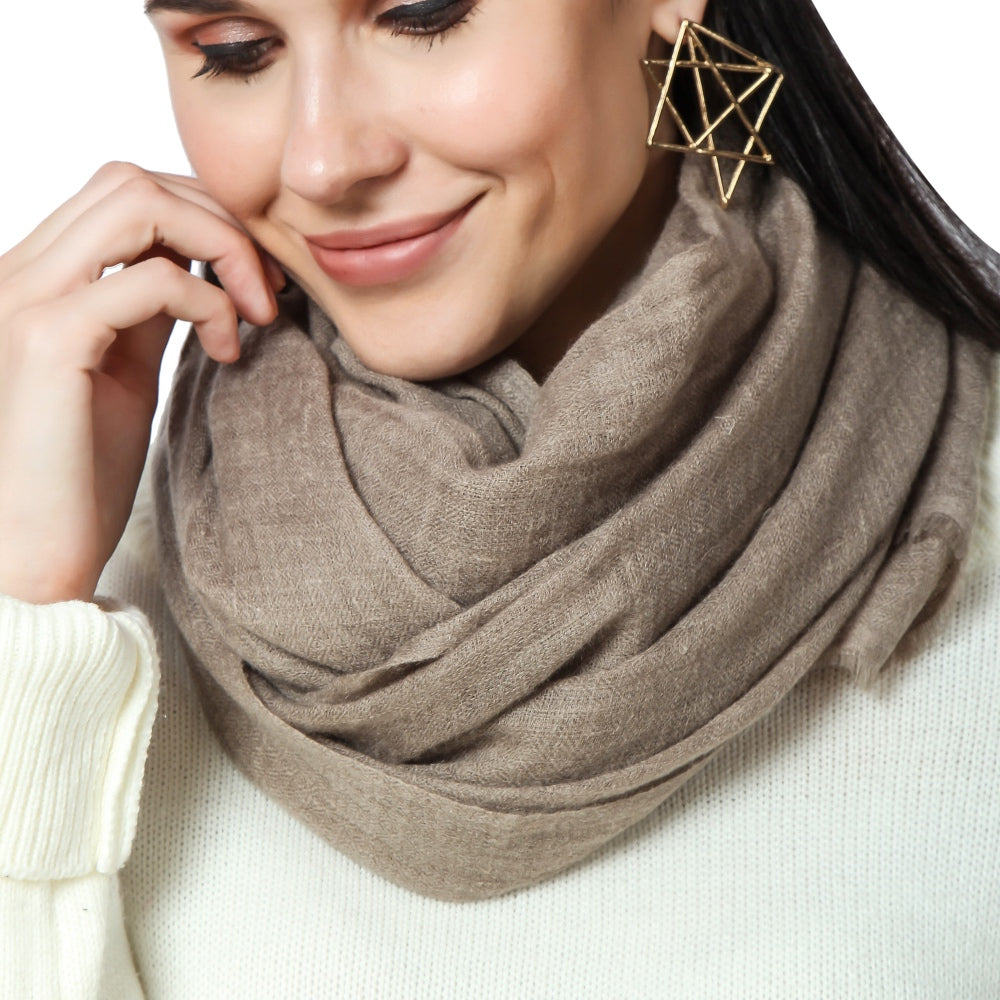
What we can tell you is this: genuine Kashmir Pashmina, at its finest, is closer to Shahtoosh than any other fiber you can legally buy. Not identical — the fiber is slightly coarser, the shawl slightly heavier, the drape fractionally less liquid. But closer than cashmere, closer than vicuña, closer than anything else in the legal luxury fiber spectrum. The 3–4 micron difference between Shahtoosh and the finest Pashmina is real; it is also the smallest possible distance from something that cannot legally exist.
We sell that legal closest alternative. We sell it with full provenance documentation, with GI certification, with direct supply chain relationships we can describe by name. We have been doing this for three generations. We would like to show you what we carry.
The Memory We Carry
There is a part of this answer that we cannot fully put in a product description or a specification sheet, and it has to do with memory.
Our grandfather worked in the Kashmir Valley during the period when the Shahtoosh trade was active — when the finest pieces moved through the most connected families in the Valley, when certain shops on certain streets were known for what they carried, when the trade was an open secret that everyone in the textile business understood and most preferred not to examine too closely. He handled Shahtoosh. He also watched what happened to the communities that built their livelihoods around it when the enforcement era came.
Some of those families rebuilt quickly — they had Pashmina businesses alongside the Shahtoosh trade and could pivot. Others did not. The loss of the Shahtoosh trade was, for some supply chain participants, devastating in the short term — not because those people were villains but because they had been operating in an information environment where the legal and conservation context was either not communicated to them or actively obscured by the structure of the trade itself.
The people who lost most when the Shahtoosh trade ended were not the London boutique owners or the New York socialites who bought the shawls. They were the Kashmir Valley processors and, further back, the communities whose economic relationships with the plateau had been built around a product that should never have been commercially available. The buyers moved on to the next thing. The supply chain people had to rebuild.
We carry this memory not as an argument against our customers but as an argument for transparency. The reason we write these articles — the reason we explain the biology, the law, the history, the fiber physics — is that we believe buyers who understand what they are buying make better choices, and that better choices build a market that can sustain the craft tradition we come from.
Shahtoosh's commercial suppression, painful as it was for parts of the Valley's economy, ultimately benefited that tradition. The enforcement era that ended the illegal trade created the conditions in which genuine Pashmina could be certified, documented, and sold at prices that reflect its actual quality — rather than being undersold by mislabeled alternatives in a market that had lost the ability to distinguish real from fraudulent.
What We Offer Instead — And Why It Is Not a Compromise
When we say that fine Pashmina is the legal closest alternative to Shahtoosh, we are not making a sales pitch disguised as consolation. We are making a fiber physics claim that is verifiable.
The difference between Shahtoosh (9–12 microns) and the finest available Pashmina (12–16 microns) is 3–4 microns in fiber diameter. In context: the difference between fine Pashmina and standard commercial cashmere is 5–8 microns. The difference between cashmere and standard merino is another 5–8 microns. The difference between Shahtoosh and fine Pashmina is the smallest step on the entire luxury fiber ladder — smaller than any other adjacent step.
This means that in the properties that matter most — the against-skin softness, the warmth-to-weight ratio, the hollow-core warmth physics, the drape, the lightness — fine Pashmina is closer to Shahtoosh than to anything else that exists. The gap is real. It is also smaller than any other gap on the spectrum.
✦ The Three Properties That Matter Most
Softness against bare skin: Both Shahtoosh (9–12µm) and fine Pashmina (12–16µm) are below the 20µm prickle threshold. Neither causes any itch or roughness against bare skin. Both feel, on first contact, like something that should not be this soft at this weight.
Warmth-to-weight: Both fibers have hollow medullary cores. Both provide more warmth per gram than any solid-core fiber. Fine Pashmina's warmth-to-weight ratio is marginally lower than Shahtoosh's — the difference is perceptible in direct comparison but not in the course of actual wearing.
Drape: This is where the difference is most perceptible to an experienced handler. Shahtoosh, at 35–55 GSM, drapes with a liquid quality that Pashmina at 55–80 GSM does not quite match. This is the one dimension where the 3–4 micron fiber difference translates into a clearly perceptible fabric-level difference. For most wearers, in most contexts, it does not matter. For a collector who has handled Shahtoosh, it is the one quality that remains distinctive.
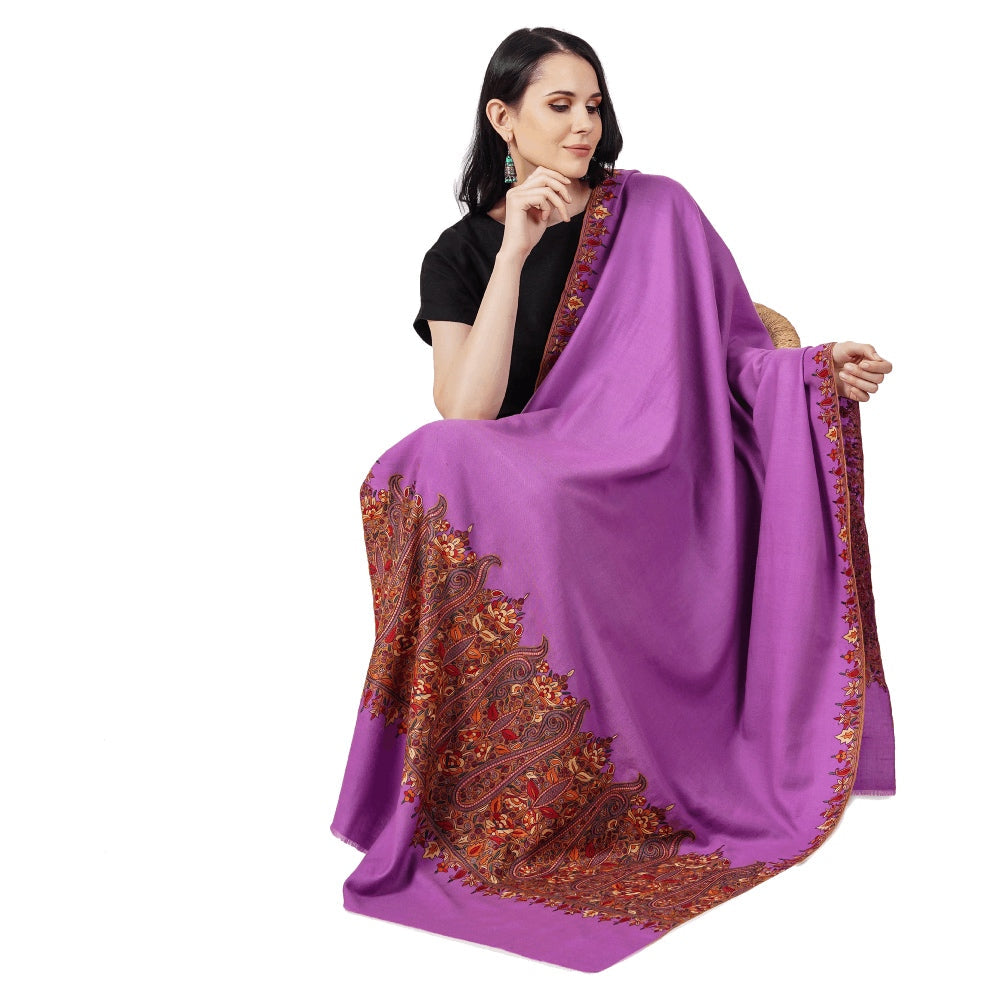
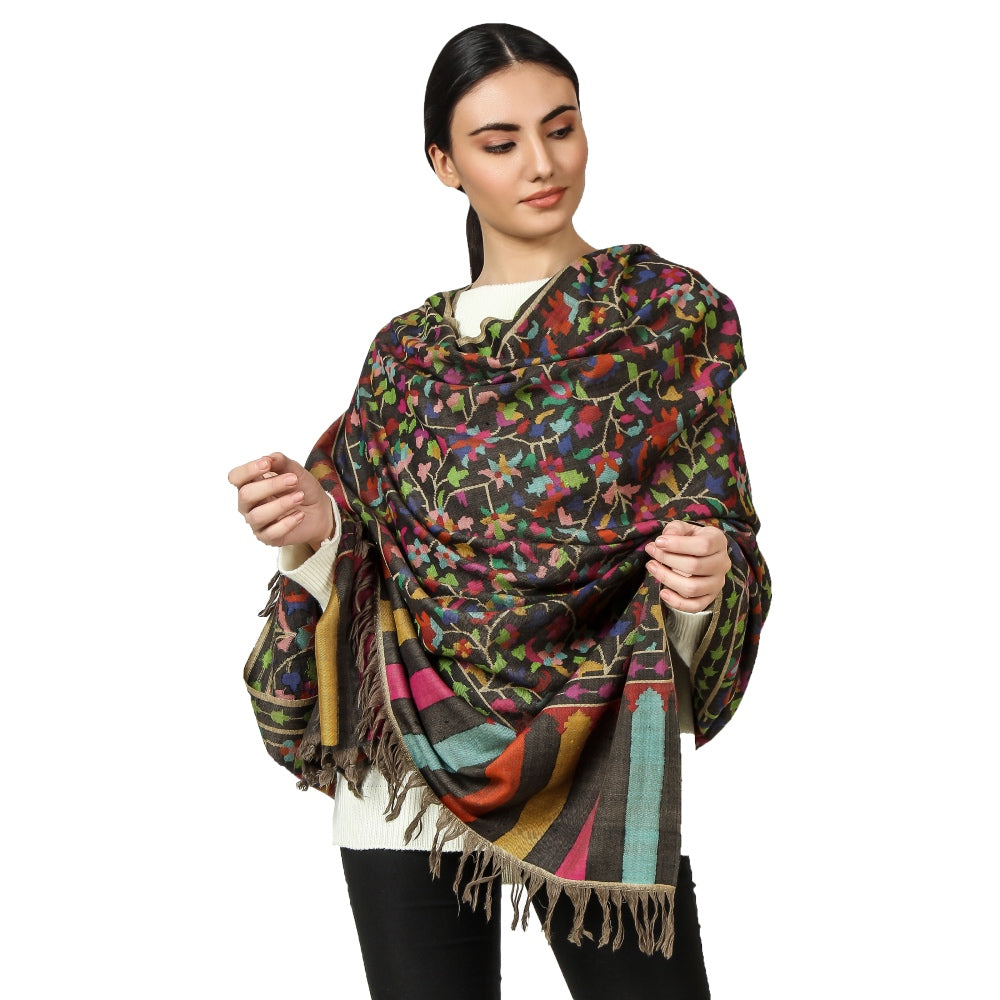
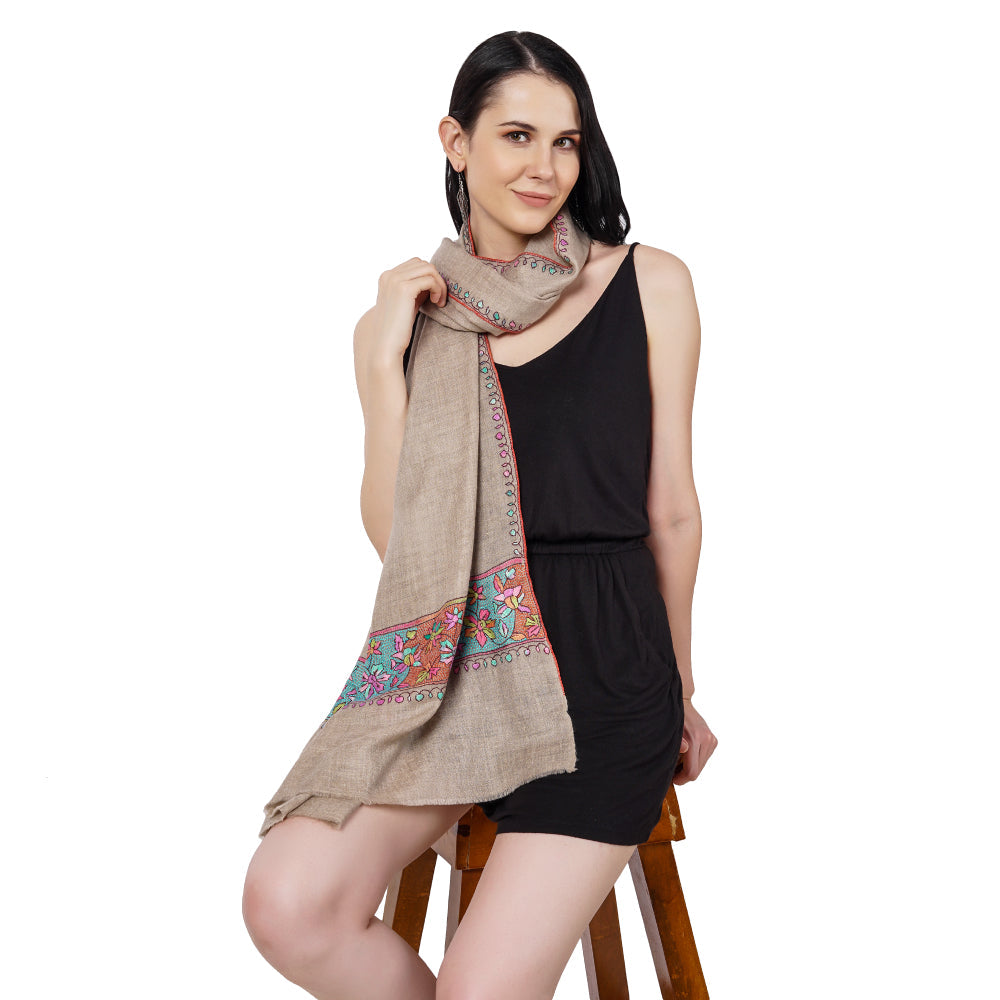
What we offer at Pashwrap is not a compromise version of something better. It is one of the most extraordinary natural fibers that can be legally produced and sold — hand-spun on a yinder wheel by artisans whose families have done this work for generations, hand-woven on a khaddi loom that is one of the few tools in the world capable of handling this fiber, GI-certified in its geographic origin and production method, and priced to reflect the actual cost of producing something this rare and this good.
The customer who asks us for Shahtoosh and accepts our invitation to see what we carry instead does not feel cheated after they receive their piece. We know this because we hear from them. The piece they receive is not a consolation prize — it is an extraordinary textile in its own right, with a supply chain and a craft tradition that Shahtoosh, for all its fiber properties, never had.
The Question Behind the Question
The question we are really being asked — when a customer enquires about Shahtoosh — is not usually "where can I buy Shahtoosh." It is: "Is there something as extraordinary as what I heard about that I can actually have?"
The answer to that question is yes. And we have been making it, selling it, and thinking about it for three generations.
The person who read about Shahtoosh in a 1994 Vogue feature and still thinks about it thirty years later is someone who wants something beyond the ordinary luxury market — something with genuine rarity, genuine physical distinction, and genuine craft history behind it. That person is the ideal Pashmina buyer. Not the person who wants a warm scarf, and not the person who wants a status symbol with a recognisable logo — but the person who wants something that is exceptional because of what it is, not because of what is printed on the label.
Shahtoosh was famous because it was extraordinary. Pashmina is extraordinary because it exists at all — because the biology of the Changthangi goat, the climate of the Changthang plateau, the knowledge of the Changpa herders, the skill of the Kashmir spinners, and the judgment of the khaddi weavers have all converged to produce a fiber tradition that has no equivalent anywhere in the world. The person looking for Shahtoosh is almost always the person who will love what we carry — if they will let us show them.
We always offer to show them. And when we do — when we send a sample, or when a customer comes to see us in person, or when someone opens the box we have shipped across the world — the conversation about Shahtoosh usually ends there. Not because they have forgotten what they were looking for. But because they have found something worth finding.
We have been in this trade for three generations.
We have never wished we could sell Shahtoosh.
We have always wished we could show more people what genuine Pashmina actually is — and what it means that something this extraordinary can be made without killing anything.
Questions Customers Actually Ask Us
The legal position on personal possession of pre-existing Shahtoosh varies by jurisdiction and is genuinely complicated — we are not lawyers and this is not legal advice, but the general position in most jurisdictions is that personal possession of a piece purchased before the domestic enforcement framework was active is in a different legal category from commercial trade. However, selling, gifting, or importing that piece across international borders is a different question — and one where domestic wildlife trade laws apply. If you have a piece from the 1990s and you are uncertain about its legal status in your country, we would encourage you to seek legal advice from a specialist in wildlife trade law rather than relying on general guidance. What we can say: the piece you have cannot be replaced with a new Shahtoosh piece. We would be happy to show you what genuine fine Pashmina looks and feels like as a comparison.
This is the question we are asked most often, and it is the one we take most seriously. The honest answer: very close in the properties that most people remember most vividly — the softness against skin, the warmth, the lightness — and perceptibly different in one specific property, which is drape. The liquid quality of Shahtoosh at 35–55 GSM is something that fine Pashmina at 55–80 GSM does not quite replicate. If you are a textile professional or a collector who has handled a lot of Shahtoosh, you will feel the difference. If you are someone who wore a Shahtoosh shawl a few times in the 1990s and remember it as extraordinary, the Pashmina we carry is likely to meet or exceed that memory — partly because the comparison you are making is with a memory, not a direct side-by-side, and memories of extraordinary things tend to be impressionistic rather than technical. We offer samples. We welcome comparisons. We have never had a customer who received our finest Pashmina and felt they had been offered something inferior.
We cannot — and no reputable seller can tell you definitively from visual inspection, handling, or the ring test whether a piece is Shahtoosh or fine Pashmina. The only reliable identification method is laboratory fiber analysis — specifically OFDA (Optical Fiber Diameter Analyser) testing or SEM (Scanning Electron Microscope) analysis, which can distinguish chiru fiber from Changthangi goat fiber by examining the microscopic scale pattern on each fiber's surface. These tests require a small fiber sample and a specialist laboratory. Some wildlife forensic laboratories offer this service; some CITES enforcement agencies can direct you to appropriate testing facilities. If you are asking because you want to know what you actually own — for personal knowledge rather than commercial purposes — a laboratory test is the only answer that is actually an answer.
Because the person who searches for Shahtoosh is usually the person who is looking for something extraordinary in the luxury fiber world — and that is the person we most want to talk to. The search for Shahtoosh is evidence of taste, curiosity, and a genuine interest in what the finest natural fibers can be. We would rather that person found us, understood why Shahtoosh is not available, understood what genuine Pashmina actually is, and made an informed decision — than found a seller who would tell them something misleading, or simply moved on without knowing what we carry. Writing honestly about Shahtoosh is how we find our best customers. It is also, genuinely, part of how we think about our role in the market: as a house that has been here long enough to know the history, honest enough to tell it, and confident enough in what we produce that we do not need to obscure the comparison.
Three generations · Direct supply chain · GI certified
"Let us show you what we carry."
This is the invitation we extend to every customer who comes to us looking for Shahtoosh. Genuine GI-certified Kashmiri Pashmina — from the Changthang plateau through the Kashmir Valley artisan tradition to your hands. The closest legal fiber to what you are looking for. Made without killing anything.