
How to Style a Cashmere Scarf (10 Ways)
Ten ways to wear a genuine Pashmina — from the styles every buyer reaches for on day one to the single method most buyers never discover. One of these will become the style you wear every day without thinking. One will make you realise you have been underusing the most versatile piece in your wardrobe.
Most buyers treat a genuine Pashmina the same way they treat every other scarf — looped twice around the neck, tucked in, and forgotten. This is not wrong. It just leaves most of what the piece can do entirely unexplored. A genuine Pashmina at 70×200cm and 80 GSM is not a scarf that happens to be made from fine fiber. It is a full-coverage upper-body garment whose warmth, drape, and versatility are most fully expressed when the fabric is allowed to open up and breathe rather than compressed into a neck loop.
These ten styles cover every occasion, every temperature, and every level of formality — from the quick morning wrap to the elegant evening drape. The first nine are well-known. The tenth is the one most buyers never discover — and the one that, once tried, becomes the style they reach for most.
A real Pashmina is designed to open up and breathe. The styles that use the full fabric — that let it spread across the back and shoulders — are the ones that feel warmest, look most elegant, and show what the piece was historically meant to be.
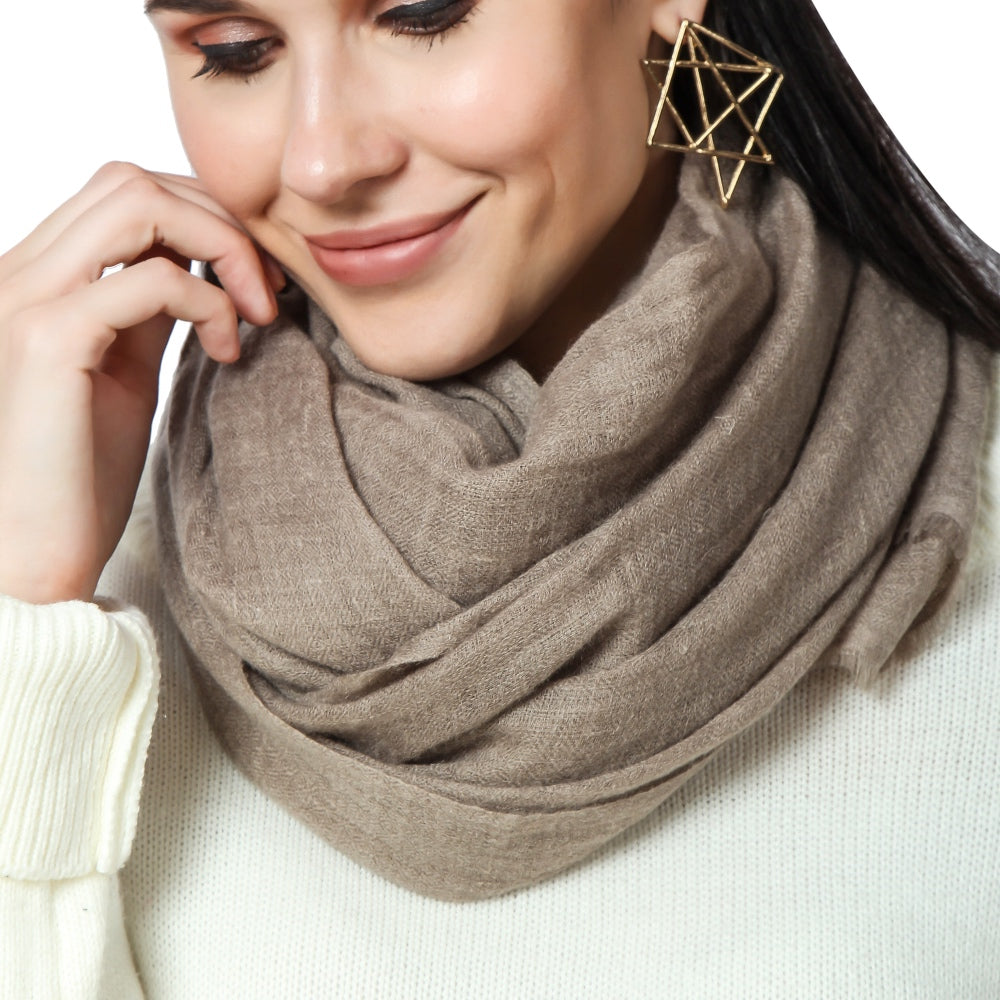
The most familiar Pashmina style — and one of the most practical for everyday wear. Fold the scarf in half lengthwise to create a narrower band, loop it around the neck, and pull both ends through the folded loop. Adjustable, secure, and warm without bulk. Works under a coat collar without creating volume.
Steps
✦ Why it works: The doubled fabric creates two layers of hollow-core insulation at the neck — the warmest point for the amount of fabric used. Fast to put on, stays in place, and works in any context from commute to office.
Simply hang the scarf around the neck with both ends falling forward at equal length — unfolded, full-width. This is the simplest style and the one that best displays the fabric's drape and colour. It provides less neck warmth than a wrapped style but shows the full elegance of genuine Pashmina's fluid fall.
Steps
✦ Why it works: The full-width unfolded fabric shows the Pashmina's drape at its most expressive. The fluid fall — a direct consequence of hand-spun organic yarn — looks intentionally elegant in formal settings. Best for indoor events, restaurants, and occasions where decorative presence matters more than neck warmth.
For cold mornings when maximum neck warmth is the priority. Fold the scarf in half lengthwise, wrap it twice around the neck, and tuck the ends. Four layers of Pashmina at the throat creates a thermal seal that is genuinely remarkable for a piece this light — the hollow-core insulation multiplies with each additional layer.
Steps
✦ Why it works: Four layers of hollow-core Pashmina at the neck creates a thermal barrier that a wool scarf three times heavier cannot match. The double loop is the warmest neck-focused style — suited to temperatures below 5°C when the scarf needs to function as a primary layer rather than a decorative one.
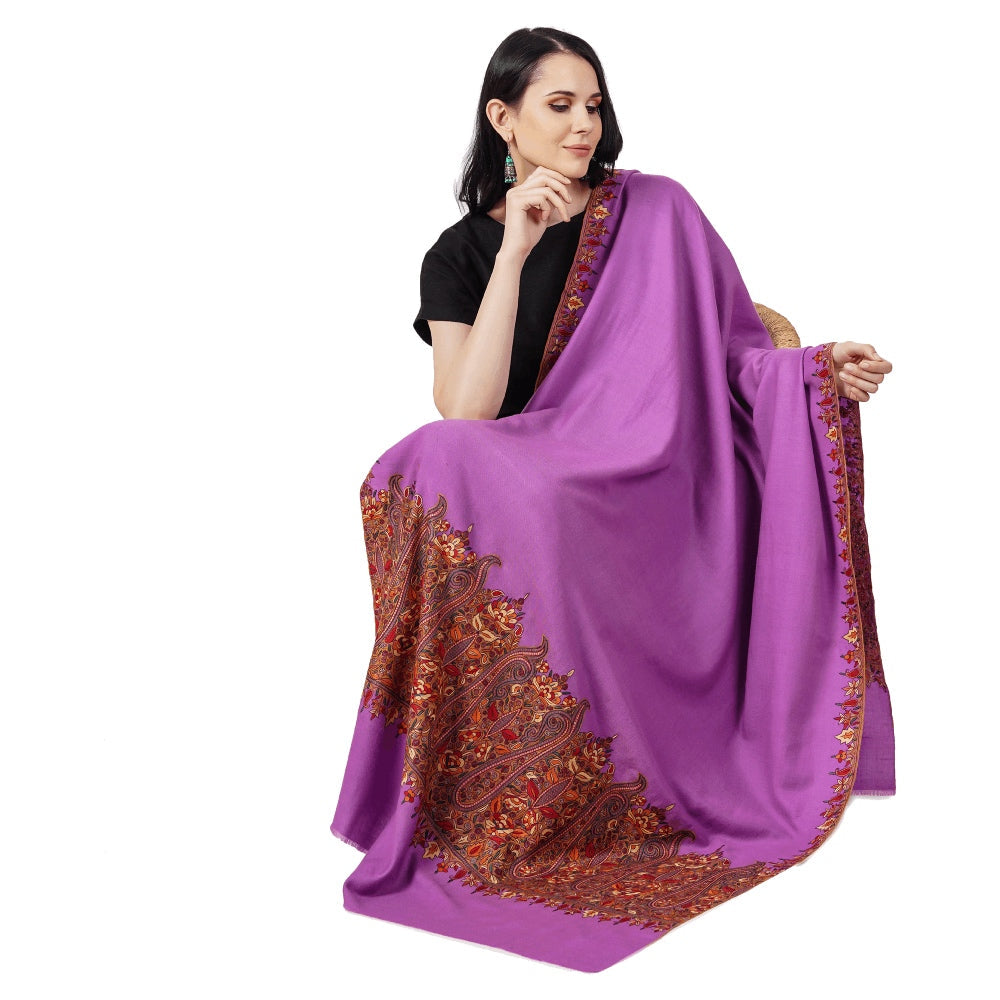
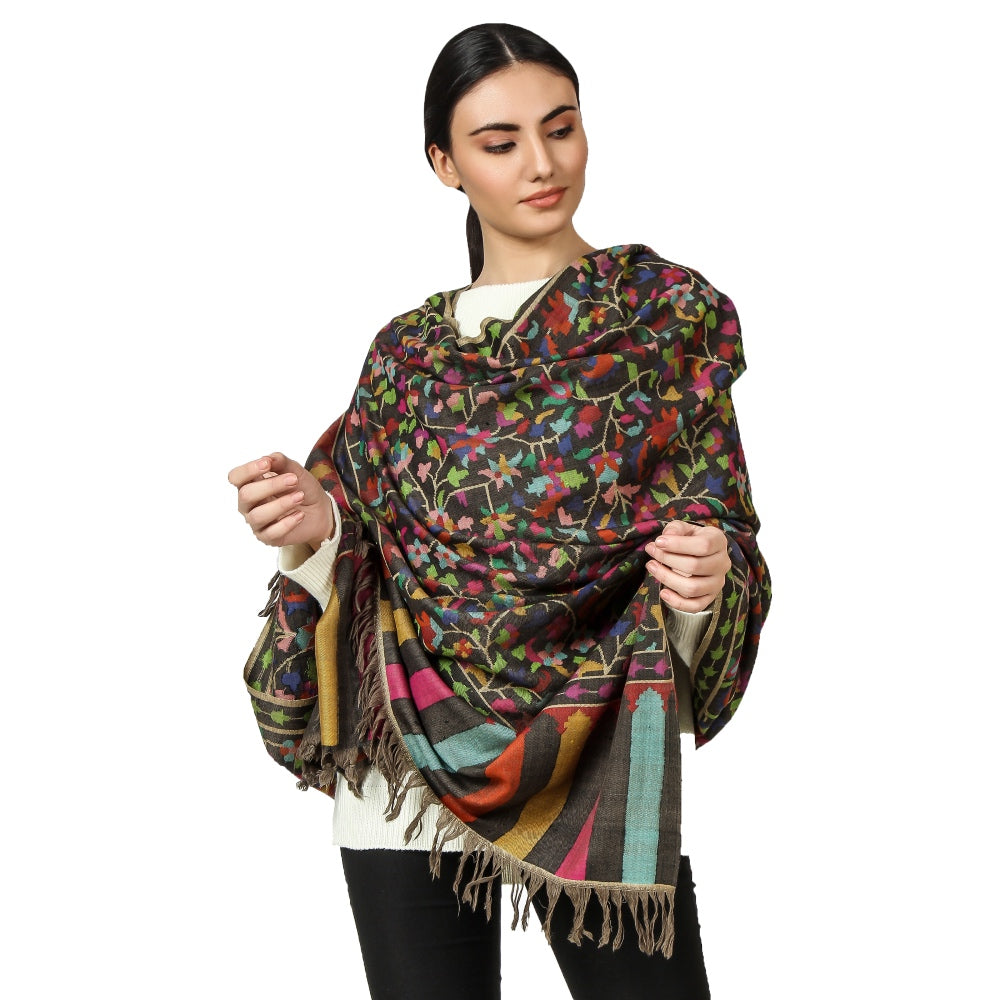
The Pashmina as its historical self — a full upper body covering rather than a neck accessory. Draped evenly across both shoulders, falling to approximately the waist, with both ends hanging in front. This style covers the back, shoulders, and upper chest simultaneously — the areas from which most body heat escapes. It is warmer in total than any neck-only style despite feeling lighter.
Steps
✦ Why it works: The back and shoulders are where most body heat escapes — covering them with hollow-core Pashmina provides warmth across the entire upper body at a weight that a conventional coat layer cannot approach. The full-width drape also shows the Pashmina at its most elegant and most historically accurate.
The full shoulder shawl, secured at the waist with a slim belt. This transforms the drape into a structured layer — it stays in place without constant readjustment, provides full upper-body coverage, and looks intentionally dressed rather than casually wrapped. Works particularly well over tailored pieces where the Pashmina needs to function as a coat substitute for mild cold.
Steps
✦ Why it works: The belt solves the shawl's only practical problem — it moves. A belted Pashmina stays in place across a full evening, frames the body, and creates a silhouette that reads as an intentional outfit layer rather than an added-on wrap. The fluid Pashmina fabric gathers and falls around a belt more beautifully than any stiffer material would.
The Pashmina folded in half lengthwise and draped entirely over one shoulder, with both ends hanging down the same side. Asymmetric and quietly dramatic. The fullness of the drape creates movement with every step — a property specific to the fluid hand-spun yarn of genuine Pashmina. Works over evening wear, statement dresses, or simple monochromatic outfits where the Pashmina is the focal point.
Steps
✦ Why it works: The asymmetry draws the eye and creates movement. This style treats the Pashmina as a garment rather than an accessory — it has the presence of a second layer without the bulk. Only genuine Pashmina drapes this way at this weight; synthetic alternatives are either too heavy or too stiff to fall with the same fluid quality.
Folded to a compact rectangle and used as a lap blanket, neck pillow covering, or full upper-body blanket on any flight or long journey. A genuine Pashmina at 80 GSM folds to the size of a paperback and weighs under 120 grams — the most efficient warmth-to-pack-size ratio of any travel layer that exists. This is the use case that frequent travellers discover and never give up.
Steps
✦ Why it works: Airplane air conditioning drops cabin temperature below comfortable levels for most passengers. A standard travel blanket is bulky and often absent. A Pashmina that fits in a jacket pocket and provides genuine warmth across the full 8°C range of air-conditioned environments is the practical solution that no synthetic travel layer matches at this pack size.
The Pashmina draped across the lap and lower torso while seated at a desk — the most underrated use in an air-conditioned office environment. Warmer than a cardigan at a fraction of the weight, it can be removed and folded in seconds when not needed. Many people keep a Pashmina at their desk permanently. It is the most frequently reached-for piece in any properly organised wardrobe.
Steps
✦ Why it works: Air-conditioned offices consistently run below the temperature most people find comfortable. A lap and torso cover at 80 GSM provides the same warmth as a light blanket at one tenth the weight and zero visible bulk. Genuine Pashmina is the only material that passes this test — lightweight enough to disappear when not needed, warm enough to make an uncomfortable environment genuinely comfortable.
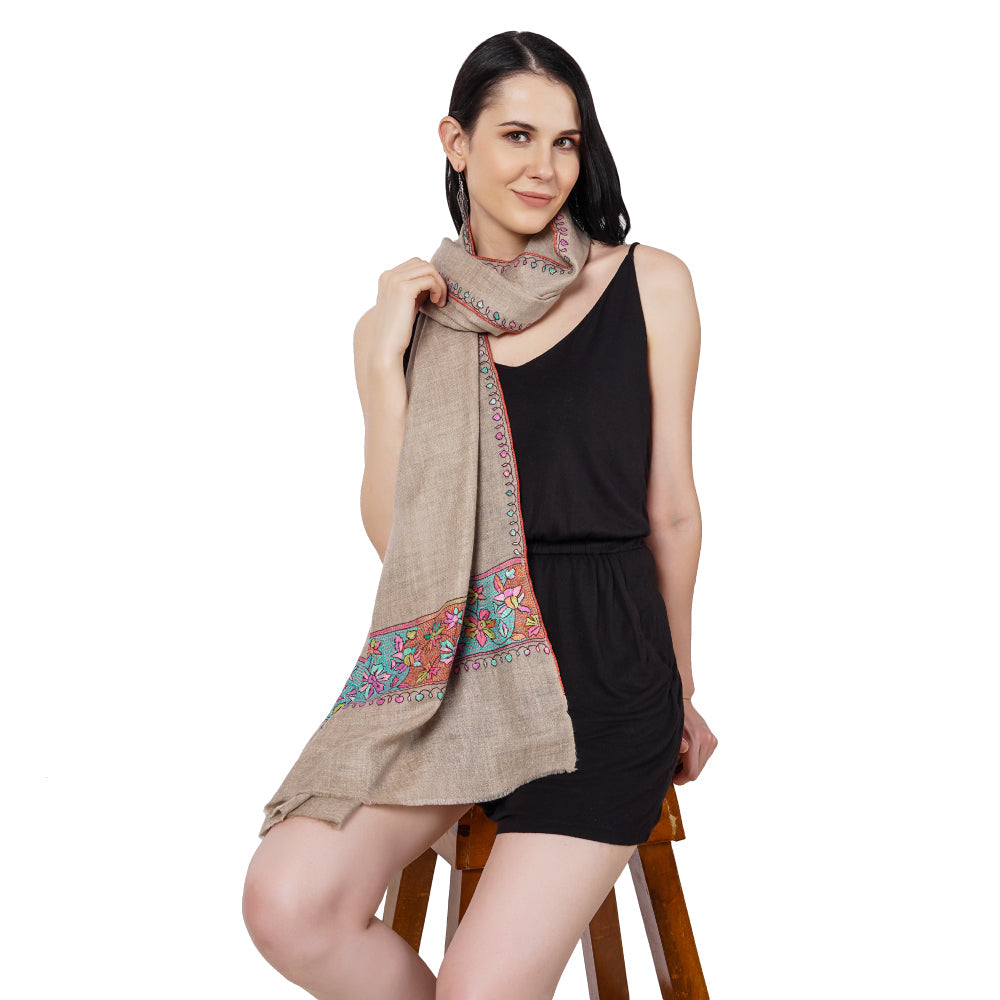
Folded to a narrow band and tied loosely at the throat with a simple knot, leaving one or both ends to fall freely. A more casual and relaxed style than the classic neck wrap — works particularly well with open-collar shirts, light jackets, and casual coats. The knot keeps the scarf in place while allowing more airflow than a tight loop.
Steps
✦ Why it works: The loose knot creates a relaxed, intentional look that reads as effortlessly styled rather than carefully arranged. The Pashmina's natural drape does the work — the fabric falls from the knot with a fluid quality that a stiffer scarf cannot achieve. Best for mild days when neck warmth is secondary to aesthetics.
This is the style that most buyers never try — because they are still thinking of the Pashmina as a scarf rather than as what it historically was: a full upper-body garment of warmth and grace. It is the style that, once discovered, becomes the most-reached-for method in the wardrobe. It feels warmer than any neck-only style. It looks more elegant than any tight wrap. And it lets the fabric show everything it can do.
Style 06, 09, 10
One-shoulder drape, knotted neck, or the shoulder drape with one loose wrap. Light coverage, decorative presence, ready for morning chill.
Style 02, 08
Long drape or desk wrap for air-conditioned environments. The lightest use of the fabric — decorative or lap coverage only.
Style 01, 04, 05, 10
Classic neck wrap, full shoulder shawl, belted wrap, or the hidden gem shoulder drape. Full range of warmth and style options.
Style 03, 04, 05
Double loop for maximum neck warmth, full shoulder shawl as a primary layer, or belted wrap under a coat for structured coverage.
All 10 Styles — At a Glance
| # | Style | Best Season | Best Occasion | Warmth Focus |
|---|---|---|---|---|
| 01 | Classic Neck Wrap | All-season | Everyday · Commute · Office | Neck |
| 02 | Long Drape | Mild weather | Formal · Evening · Indoor | Decorative |
| 03 | Double Loop | Winter | Cold commute · Outdoor | Maximum neck |
| 04 | Full Shoulder Shawl | Autumn / Winter | Formal · Evening · Indoor events | Full upper body |
| 05 | Belted Wrap | Autumn / Winter | Smart casual · Coat substitute | Full upper body |
| 06 | One-Shoulder Drape | Spring / Autumn | Evening · Statement outfit | One shoulder |
| 07 | Travel Blanket Fold | All-season | Air travel · Long journeys | Lap / torso |
| 08 | Indoor Desk Wrap | All-season | Office · Air-conditioned spaces | Lap / torso |
| 09 | Knotted Neck Scarf | Spring / Autumn | Casual · Open-collar outfits | Neck (light) |
| 10 ✦ | Shoulder Drape · One Loose Wrap | All-season | Every occasion — the most versatile | Full upper body |
🧵 One Final Note — Why These Styles Only Work with Genuine Pashmina
The styles in this article — particularly Style 10, the shoulder drape with one loose wrap — depend on specific physical properties of the fabric to work as described. The fluid drape that responds to movement. The warmth that covers more area because of hollow-core efficiency rather than weight. The fabric that settles against the body rather than holding its own structure. These are properties of genuine hand-spun Pashmina at 12–14 microns. A synthetic alternative or a machine-spun commercial cashmere will produce a stiffer, heavier drape that neither moves nor warms in the same way. The styles are the same. The experience is not.
To understand the fiber properties that make the shoulder drape warm the whole upper body, read Why Real Cashmere Feels Warmer but Lighter. To understand the drape quality that makes these styles possible, read Are Handmade Cashmere Scarves Better Than Machine-Made? To understand the correct size Pashmina for these styles, read What GSM Is Best for a Cashmere Scarf? To find the piece that makes all ten styles possible, visit the Pashwrap collection.