
How to Wear a Cashmere Wrap for Evening Events
The difference between a Pashmina worn perfectly at an evening event and one worn defensively is not the shawl. It is not the quality of the fabric, the colour, or how it is styled. It is one thing: confidence in the drape. This is the complete guide to wearing a cashmere wrap for evening — every occasion, every style, and the single principle that makes all of them work.
At any evening event where a genuine Pashmina is present, it is possible to identify within moments which woman is wearing hers as part of the outfit and which one is wearing hers as protection from the cold. The fabric might be identical. The colour might be the same. The quality might be the same. The difference is entirely in how the drape is held — or rather, whether it is held at all.
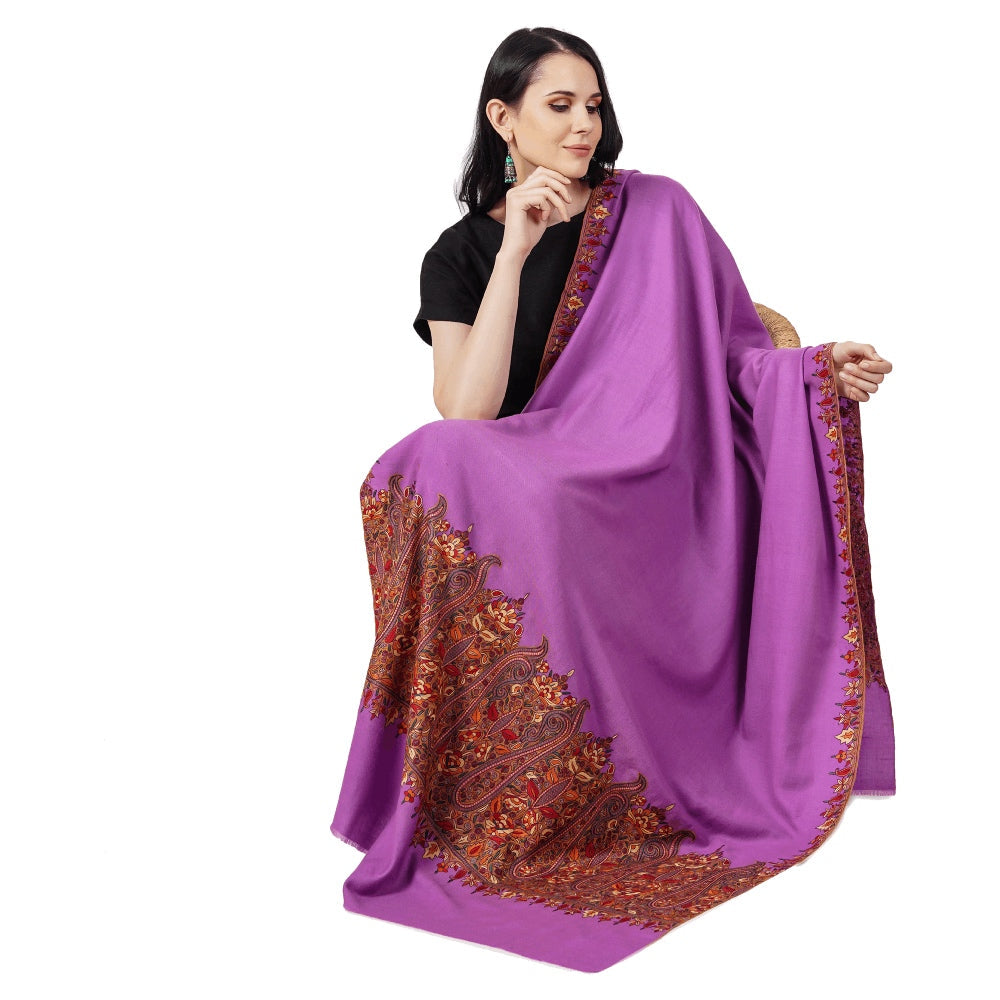
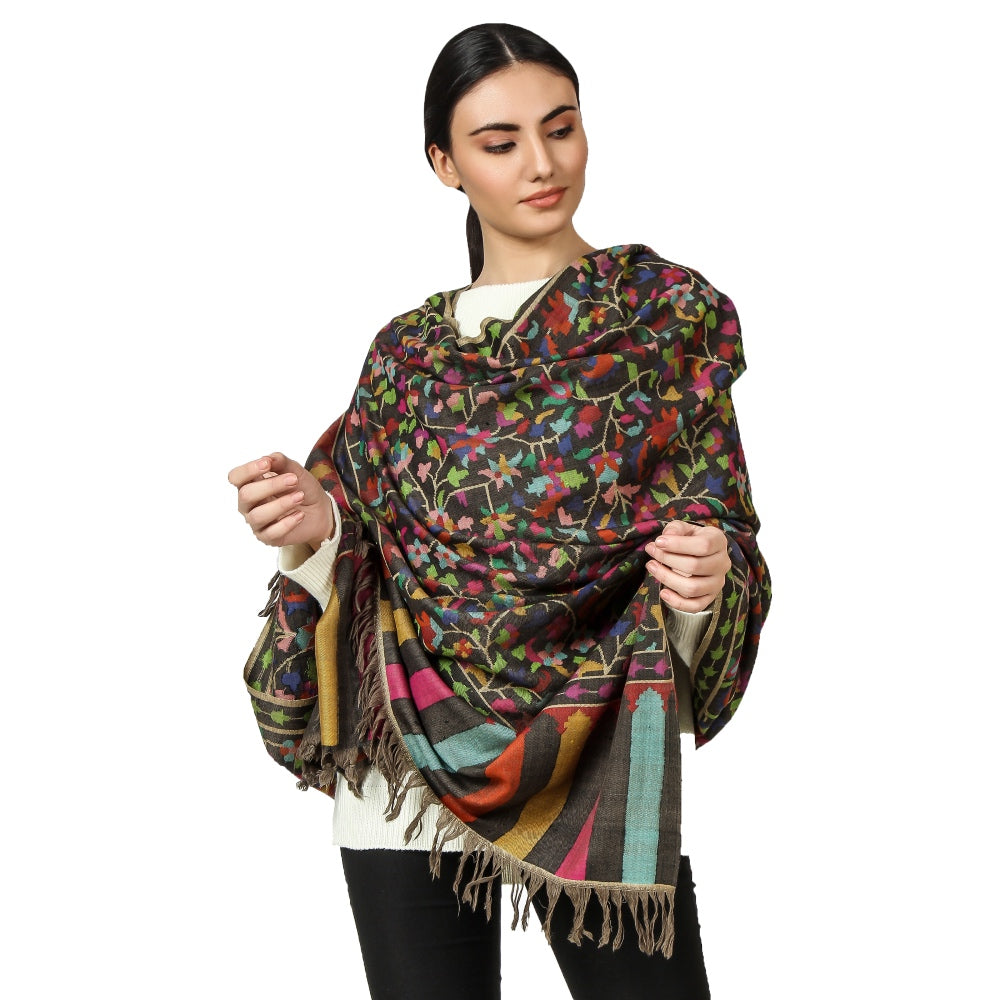
The woman who wears it perfectly lets it rest naturally on the shoulders, allowing the fabric to fall and move with her body. She is not gripping it, pulling it tight, or adjusting it constantly. The shawl becomes part of her silhouette — a soft frame around the body that moves when she moves and settles when she settles. It looks as if it belongs there because it does.
The woman who looks cold wraps it defensively — clutching it close to the chest, tightening it around the arms, holding it in place with both hands. That posture signals protection from cold rather than intentional elegance. The shawl that should be part of the outfit becomes evidence that she is uncomfortable.
The fix is not a better shawl. The fix is understanding one thing about genuine Pashmina: it is warm enough that you do not need to grip it. The hollow-core fiber provides real warmth from a fabric light enough to drape naturally across the shoulders without being held. Let go. Let it fall. That is the style.
The difference is not the shawl.
It is confidence in the drape.
Relaxed. Resting. Moving.
The shawl rests on the shoulders without being held. Both hands are free. The fabric falls where gravity places it and adjusts with every movement. When she turns, the Pashmina moves with her — not because she has arranged it, but because the fluid hand-spun fabric responds to the body beneath it. She does not think about the shawl. It is simply there, part of the silhouette, doing its work quietly.
Gripped. Tightened. Held.
The shawl is pulled close to the chest and held there by arms crossed over it, or by hands clutching the front edges together. The posture closes inward. The movement is constrained by the effort of keeping the fabric in place. The shawl announces its presence — not as an element of the outfit but as evidence of discomfort. The colder it gets, the tighter the grip, and the less elegant the result.
"Because genuine Pashmina is extremely light and fluid, it is designed to drape like a soft frame around the body. When worn with ease, the shawl becomes part of the silhouette — rather than a layer being held onto."
The key insight: genuine Pashmina is warm enough that gripping it is never necessary. The warmth is in the fiber. The elegance is in releasing it.
Why Genuine Pashmina Makes This Possible
The confidence-in-the-drape principle only works if the fabric is actually warm enough to not require gripping. A synthetic or low-grade wrap that provides insufficient warmth forces the wearer into the defensive posture — not because she lacks confidence but because the wrap is genuinely failing to keep her warm. She grips it because it is the only way to make it work.
Genuine Pashmina at 12–14 microns, with an intact hollow core, provides real warmth across the shoulders and upper back without needing to be pulled tight. The hollow-core structure reflects body heat from the large surface areas it covers — the back, shoulders, and upper arms — providing warmth through thermal reflection rather than compression. There is no need to grip a wrap that is genuinely warm. The hands are free. The posture opens. The elegance follows naturally.
The Pashmina draped evenly across both shoulders, full-width, with both ends falling naturally in front at equal length. No folding, no pinning, no tucking. This is the purest expression of how Pashmina was historically worn — as a full upper-body covering that frames the wearer rather than wrapping around her. The fabric rests on the shoulders by virtue of its own weight and the natural grip of fabric against fabric. Both hands remain free.
The Drape
✦ The drape principle in action: the moment you stop holding it, it becomes part of the outfit. The moment you grip it, it becomes evidence of cold.
The open shoulder drape with one additional step: take one front end, cross it loosely over the body to the opposite shoulder, and let it rest there. Not pinned, not tucked — just resting. This creates an asymmetric front line that holds the wrap more securely than the pure drape while maintaining all the fluidity and movement of the relaxed style. Works well in light evening breeze when the pure drape would shift.
The Drape
✦ The cross creates a diagonal line across the body that draws the eye and adds visual structure — without requiring any effort to maintain. The Pashmina's natural weight does the work.
The entire Pashmina gathered and draped over one shoulder, with the full length falling down the front and back of the same side. This is the most dramatic of the evening styles — a single column of falling fabric that creates movement with every step. The asymmetry focuses the eye and allows the full length and drape character of the Pashmina to be seen as a design element rather than a functional addition.
The Drape
✦ The movement of a single-shoulder Pashmina as the wearer walks is the most visible demonstration of genuine Pashmina's fluid drape — the fabric responds continuously to movement in a way no synthetic or machine-made cashmere achieves at this weight.
The full open shoulder drape, gathered loosely at the waist and secured with a slim evening belt. This transforms the Pashmina from a draped shawl into a structured layer — present and intentional rather than resting casually. The gathered fabric above the belt creates volume; the falling ends below create length. Works particularly well over formal trousers or a column dress where the Pashmina needs to function as a considered garment rather than an accessory.
The Drape
✦ The belt solves the only practical problem of the draped shawl — it moves. A belted Pashmina is completely secure for an entire evening without any gripping, adjusting, or conscious management.
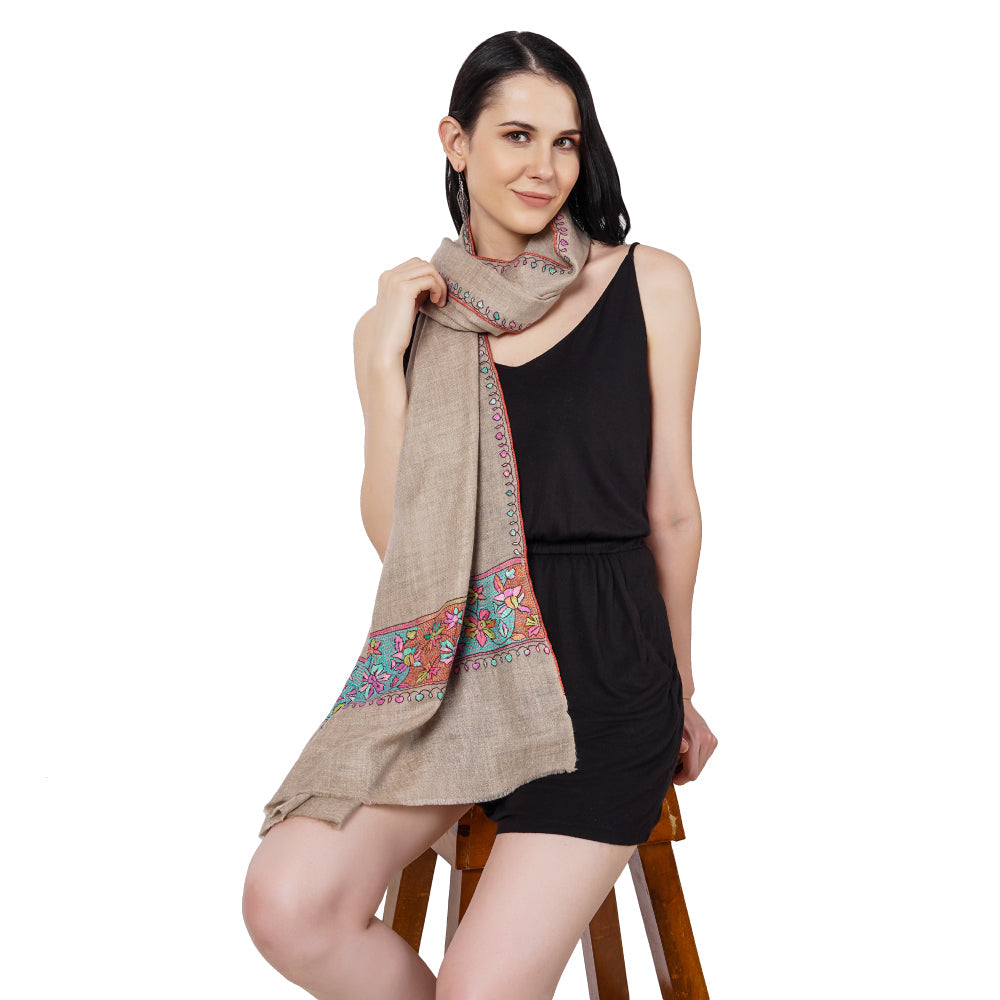
For seated formal dinners, theatre, or intimate evening events where a shoulder drape would slip with movement: fold the Pashmina in half lengthwise to a soft band and loop it loosely once around the neck. Not the tight double loop of cold-weather utility — a single, loose loop that rests at the collarbone rather than pressing against the throat. The ends fall forward at different lengths. The style is deliberate but unstructured — formal enough for any table but relaxed enough for conversation.
The Drape
✦ The seated evening wrap stays in place without management, keeps the neck and upper chest warm through a long dinner, and reads as deliberately styled rather than casually added. The key is looseness — a tight loop compresses; a loose one drapes.
What creates elegance
- ✓Let the fabric rest. Place it and release it. Genuine Pashmina has enough weight to stay where it is placed on the shoulders without being held. Trust the drape.
- ✓Allow asymmetry. If one end falls slightly longer than the other, or the fabric settles unevenly, let it. Organic asymmetry reads as natural. Anxiously corrected symmetry reads as effortful.
- ✓Move with it. When you move, the Pashmina moves. This is a feature, not a problem. The fluid drape of hand-spun Pashmina in motion is part of what makes it beautiful at evening events.
- ✓Adjust once, then stop. When you first put it on, take one moment to position it correctly. After that, leave it alone. Constant small adjustments signal discomfort.
- ✓Use the belt for long events. If the evening is long and you want to stop thinking about the shawl entirely, belt it at the waist. Completely secure, completely elegant, zero management required.
What creates the defensive look
- ✗Clutching the front edges together. This is the most common defensive gesture — both hands gathering the shawl closed at the chest. It signals cold and creates a closed, inward posture. If you are cold enough to need to do this, the wrap is not warm enough.
- ✗Constant readjustment. Touching the shawl repeatedly draws attention to it as something that requires management rather than something that simply is. Place it correctly once and leave it.
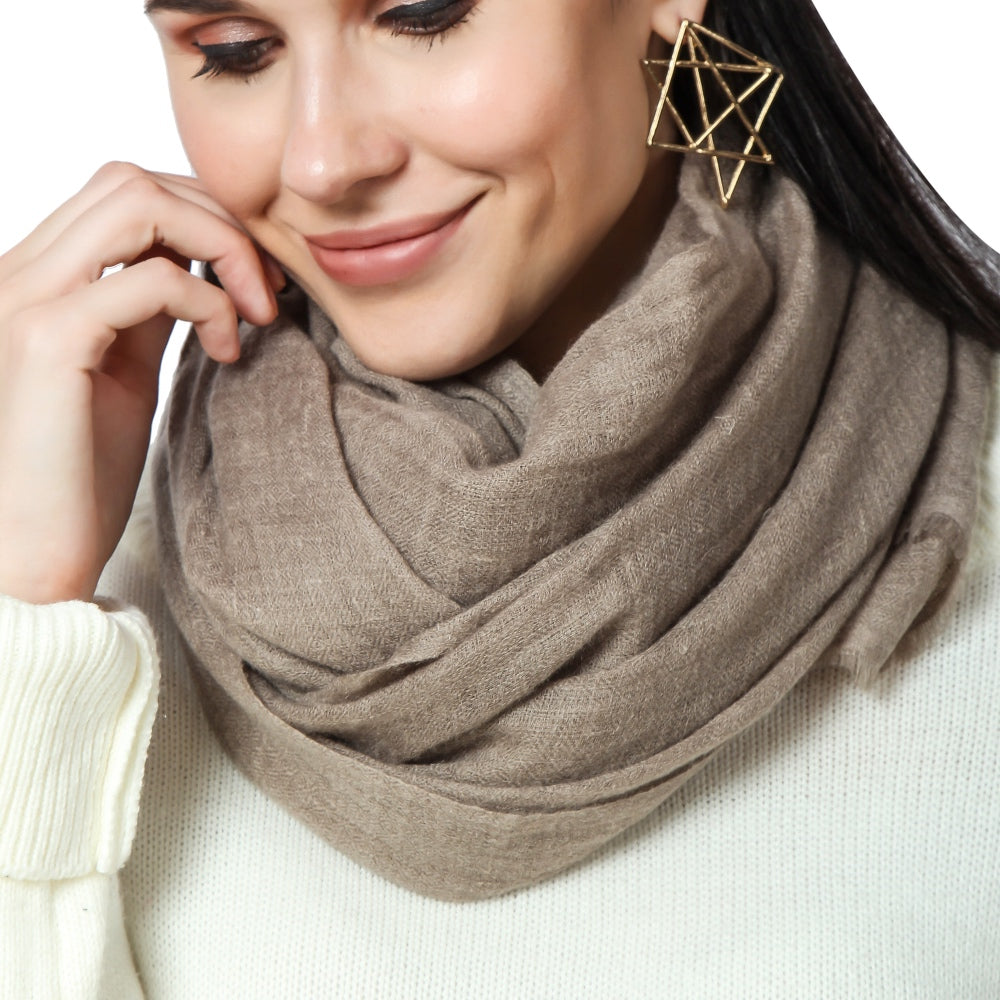
- ✗Wrapping it too tightly. A tightly wrapped shawl loses drape, loses movement, and loses the silhouette-framing quality that makes genuine Pashmina beautiful at evening events. Loose always looks more intentional than tight.
- ✗Pinning it unless necessary. A brooch or pin can work for specific styles, but pinning is often a response to the shawl moving — which is a sign that the drape hasn't been placed correctly rather than that it needs to be fixed in position.
- ✗Folding it small at the neck for warmth. If you are cold at an evening event, the answer is more drape coverage — shoulders and back — not a tighter neck layer. The body loses heat from the back and shoulders, not primarily from the throat.
Style 01 or 03
The open shoulder drape or single shoulder wrap. Maximum elegance, minimum management. The Pashmina as part of the formal silhouette — not an addition to it. Neutral colours (ivory, champagne, charcoal) work best at events where the Pashmina should frame rather than compete.
Style 02 or 05
The loose front cross for standing receptions; the loose neck wrap for seated dinners. Both styles stay in place without management and allow full movement and conversation. Both work over formal dresses and smart separates equally.
Style 04 or 02
The belted wrap for breezy outdoor settings where the pure drape would shift; the loose front cross as a lighter alternative. Both provide shoulder and back coverage — where heat is lost most quickly outdoors — without restricting movement.
Style 05 or 04
The loose neck wrap for seated performances — stays in place for two hours without any adjustment. The belted wrap for interval standing. Both can be removed and folded quietly onto the lap when the venue warms up.
Style 01 or 02
The open shoulder drape or loose front cross worn over a simple dress or trouser suit. The Pashmina as the statement — everything else neutral underneath. An ivory or camel Pashmina over a simple black outfit is complete in itself.
Style 07 folded → Style 01 on arrival
Folded compact in a bag for transit, then opened to a full shoulder drape on arrival. A genuine Pashmina transitions from travel blanket to evening wrap in thirty seconds. No other piece in any wardrobe does this transition without wrinkling, stiffening, or losing its shape.
The Single Principle, Restated
Every style in this guide, every occasion recommendation, every colour principle — all of it rests on one foundation: the drape principle. A genuine Pashmina worn at an evening event should look as though it has always been there. Not placed defensively in response to cold. Not gripped or managed or adjusted. Simply present — a soft, luminous frame around the body that moves with the wearer and settles when she does.
This is possible because genuine Pashmina is warm enough that it does not need to be held. The hollow-core fiber provides real warmth across the back and shoulders — the areas from which the body loses the most heat — through thermal reflection rather than compression. There is no need to pull a wrap tight if the wrap is already working. And a wrap that is already working can simply rest. And a wrap that simply rests — at a formal dinner, at a gala, in the light of an evening event — is one of the most quietly elegant things in fashion.
The difference is not the shawl. It is confidence in the drape.
To understand the fiber properties that make the relaxed drape possible — warmth without weight — read Why Real Cashmere Feels Warmer but Lighter. To explore all ten wearing styles including everyday and travel, read How to Style a Cashmere Scarf — 10 Ways. To understand the investment case for a piece this versatile, read Investment Fashion: Why a Cashmere Wrap Is Timeless. To find the piece with the drape this guide describes, visit the Pashwrap collection.