
Kashmir's Lal Chowk and the Open Shahtoosh Trade: A Market Memory
Lal Chowk — the Red Square of Srinagar — was the commercial heart of a city that, at its peak, ran one of the world's most open illegal wildlife product markets in plain view of international tourists, Kashmiri shoppers, and the surrounding mountains. This is the memory of those streets, those shops, and what they sold.
In This Article
- Lal Chowk — The Centre and What Radiated From It
- The Bazaar Geography — Where Shahtoosh Was and Was Not
- Inside a Shop — What the Transaction Space Felt Like
- The Seller Types — A Taxonomy of the Trade
- The Seasons — How the Market Changed Through the Year
- What the Valley Knew and What It Didn't Say
- The Contraction — What Enforcement Felt Like From Inside
- What Remains of the Streets
- Frequently Asked Questions
Every city's commercial geography reflects what it trades in. The narrow lanes of the old city bazaars in Srinagar — the lanes that spread from Lal Chowk outward toward the Dal Lake shore and inward toward the Jama Masjid — were shaped over centuries by the textile trade that defined Kashmir's relationship with the outside world. Shawl merchants, embroiderers, and silk traders had organized themselves in those streets for hundreds of years before the specific product this article concerns entered the market. Shahtoosh was, in the long context of Kashmiri trade history, a late arrival. But in the decades when it operated openly, it occupied those ancient streets with a confidence that made its eventual disappearance feel more abrupt than the century of poaching that preceded it.
Lal Chowk — The Centre and What Radiated From It
📍 Memory — Lal Chowk, Peak Tourist Season, Late 1980s
Lal Chowk in the tourist season was not the Lal Chowk that local Kashmiris knew at other times of year. The commercial centre of Srinagar became, during the summer months that brought international visitors, a place with two simultaneous economies — the everyday commerce of a city doing its ordinary business, and the tourist economy overlaid on it, operating at entirely different price points, in a different language, with a different set of products emerging from the same physical spaces.
The shops that fronted directly onto the square and the main boulevard were not where the finest Shahtoosh was shown. Those shops were too visible, too accessible, too likely to attract the attention of a passing enforcement officer once enforcement became a concern. The Shahtoosh trade organized itself slightly back from the main commercial arteries — in the lanes that tourists entered by invitation rather than by accident, after a conversation on the boulevard had established interest, intent, and approximate budget.
Lal Chowk functions as the organizing landmark for the commercial geography described in this article — not because it was the centre of the Shahtoosh trade specifically, but because it was the centre from which visitors were oriented into the more specific trade networks that surrounded it. The tourist who arrived at Lal Chowk, was approached by a textile seller, expressed interest in fine shawls, and was led into one of the surrounding lanes: that was the typical entry pathway into the Shahtoosh market for the majority of international buyers.
The Bazaar Geography — Where Shahtoosh Was and Was Not
🗺️ The Market Zones — A Working Geography of the Trade
The commercial boulevard surrounding Lal Chowk and the main street frontage hosted the general tourist trade — pashmina stoles at accessible prices, embroidered pieces, papier-mâché, walnut wood. These were the visible, tourist-facing products. The sellers here — many of them working on commission for shop owners in the lanes behind — were the first point of contact. They assessed buyers: nationality, apparent budget, expressed interest, length of stay in the Valley.
Shahtoosh presence: Rarely shown here. This was the qualification zone, not the transaction zone.
The lanes branching from the main commercial streets into the old city residential and craft quarters were where the serious textile transactions happened. Many of these spaces combined commercial and domestic functions: a ground floor that was a shop, upper floors that were family homes, and sometimes a separate room — accessed by a narrow interior staircase — that served as a private showroom for the finest pieces. Buyers invited into this space had been selected. They were here because the seller had decided they were worth showing the best.
Shahtoosh presence: Significant. The private upper-room showrooms were where genuine Shahtoosh pieces were most consistently available to pre-qualified tourist buyers.
The area around the Jama Masjid, Srinagar's principal mosque, concentrated the longest-established textile trading families — many of them with roots in the craft that predated the colonial period. These traders were connected to both the production end of the Pashmina supply chain and to the tourist market, operating simultaneously in both. Their position in the social geography of the Valley made their participation in or abstention from the Shahtoosh trade a matter of trade reputation as much as legal concern.
Shahtoosh presence: Mixed. Some established families participated; others, including our own, did not. The choice was commercial and ethical, visible to the community.
The eastern shore of the Dal Lake, where the houseboat colonies were concentrated, created a parallel commercial geography entirely oriented toward international tourist accommodation. Shops adjacent to the houseboat moorings, shikara traders who visited houseboats directly, and the informal networks that operated through houseboat keepers and drivers together created a second market zone that intersected with but was geographically separate from the old city bazaar. This zone served higher-spending visitors staying in the better houseboats and was particularly important for the Japanese and Gulf Arab tourist trade at its peak.
Shahtoosh presence: Active, particularly in the referral networks operating through houseboat keepers and drivers who received commission for directing buyers to specific shops.
The major hotels on the boulevard — particularly those that had served as the arrival points for organized international tour groups in the 1980s and early 1990s — had adjacent and affiliated retail that operated specifically for international visitors. These shops were physically more formal, often had fixed displayed prices for accessible goods while maintaining negotiated pricing for the finest pieces, and were the entry point for buyers who arrived through travel agent channels rather than independent travel. They were also the most heavily surveilled by enforcement in the 2000s, as they were the most accessible to investigators.
Shahtoosh presence: Present but increasingly cautious as enforcement intensified. These shops were among the first to withdraw from open Shahtoosh sales.
Inside a Shop — What the Transaction Space Felt Like
📖 Memory — A Textile Shop in the Old City Lanes, Early 1990s
The ground floor was Pashmina and embroidered pieces — shawls folded on shelves, a few hung on wooden pegs along the wall, a glass case with some embroidered accessories. The space was organized for display and for the first conversation: sit down, have tea, look at what is on the shelf. The seller moved through these pieces with practiced ease — discussing the embroidery style, the fiber, the region of production, with a fluency that was genuine rather than performed. These men knew what they were selling. The knowledge was real.
The invitation upstairs came after a judgment had been made. You were shown the staircase — narrow, wooden, dark — and emerged into a different space: a room with better light, cushioned seating along the walls, and pieces brought out one by one from flat storage boxes or from behind a curtained area at the back. Here the prices were different. Here the conversation was different. And here, for buyers who were assessed as appropriate, the word "Shahtoosh" entered the air.
The architecture of these transactions — the ground floor display of accessible goods, the private upper-floor showing of the finest pieces — was not designed specifically around the Shahtoosh trade. It was the structure of the luxury textile transaction across cultures and centuries: you show the buyer what they can afford, then show them what they didn't know they could afford, then complete the transaction at the higher level if the buyer has the appetite for it. Shahtoosh inhabited the upper tier of this structure not because it needed to hide but because it belonged, by price and by rarity, at the premium end of what the finest Kashmir textile shops offered.
The ring test was typically performed in this upper space, not on the ground floor. The "naturally shed" story was told here, in the quieter, more intimate atmosphere of the private showroom, not as a shout across a crowded market but as a confidence shared between seller and buyer who had moved past the preliminary stages of the transaction into something that felt like mutual understanding.
The Seller Types — A Taxonomy of the Trade
Three or four generations in the textile trade, with connections to both the production end (weaver and spinner families) and the premium tourist market. These traders had relationships with repeat international buyers who returned to Kashmir every year or two. Their reputation was their primary asset, and their decision about whether to carry Shahtoosh was made with that reputation in mind as much as with any calculation of legal risk. Some long-established families chose not to handle Shahtoosh precisely because the legal risk to a trade reputation built across generations was not worth the premium income it offered. Others handled it because the premium income was too significant to leave to competitors.
Shahtoosh role: Varied. Some were among the most significant Shahtoosh traders in the Valley; others avoided it entirely. The community was watching both decisions.
Operating on commission from shop owners in the lanes behind the main street, the boulevard qualifier was the first human point of contact in the tourist textile transaction. Typically young, multilingual, skilled at rapid national and socioeconomic assessment of passing strangers, and operating on a percentage of whatever transaction their referral produced. These individuals did not carry or sell Shahtoosh themselves — they were qualification and funnel operators, not traders. They existed across the bazaar geography from Lal Chowk to the houseboat shore, performing essentially the same function: identifying buyers and directing them toward the appropriate shop.
Shahtoosh role: Indirect. A commission earner from referrals to shops that might or might not show Shahtoosh depending on the buyer's assessed profile.
The shikara traders who operated on the Dal Lake and its connecting waterways represented a specific and mobile variant of the tourist textile trade. With their flat-bottomed wooden boats and hinged display cases, they brought goods directly to the buyer rather than requiring the buyer to come to the market. Their inventory ranged from small embroidered items and accessories at the bottom to fine Pashmina pieces mid-range, with Shahtoosh present in the inventories of some traders whose client base extended to higher-spending houseboat residents. The intimacy of the transaction — a buyer on a houseboat, a seller presenting goods in a private water-side setting — created conditions in which the Shahtoosh conversation could happen without the witnesses present in a shop.
Shahtoosh role: Some shikara traders carried genuine Shahtoosh; more served as referral sources directing interested buyers to fixed-shop contacts for the actual Shahtoosh transaction.
At the top of the market, operating entirely outside the tourist bazaar geography, the private dealer was accessed only through trusted personal introduction — from a family contact, a business associate, or a returning buyer who had established a direct relationship. These dealers handled the finest pieces, operated on a fully appointment basis, and maintained the smallest possible visible profile. They were the last part of the Shahtoosh market to feel enforcement pressure, and the part that continued operating in private networks longest after the tourist-facing market had closed.
Shahtoosh role: Central and knowing. This tier was aware of what it was handling, who it was selling to, and the legal context of those transactions.
The Seasons — How the Market Changed Through the Year
The tourist season transformed the old city's commercial tempo. International arrivals created demand at price points that the everyday local economy did not sustain. The finest pieces — including Shahtoosh — were brought out of storage, shown to qualified buyers, and transacted at the premium the tourist market supported. The boulevard qualifiers worked at full intensity. The shikara traders circulated. The upper-floor showrooms received invited visitors daily.
The winter months pulled the tourist market almost entirely closed. The same shops that had been oriented toward international visitors reverted to their domestic and wholesale functions — supplying the local Kashmiri market, maintaining connections with dealers in Delhi, Mumbai, and the Gulf export trade. Shahtoosh transactions in this period were wholesale or private-network, not tourist-facing. The geography of the trade contracted to its professional core.
The enforcement years disrupted the seasonal rhythm that had organized the market for decades. The tourist season continued — though with changing tourist volumes — but the confident tourist-facing Shahtoosh transaction of the peak years was replaced by something more cautious, more coded, more dependent on established trust relationships. The physical geography remained but its commercial content changed: the upper-floor showrooms still existed, but what they showed depended much more carefully on who had been invited and on what basis.
The tourist market for Kashmir textiles continues — transformed by changing visitor profiles, GI certification for Pashmina, online channels, and the broader economic changes of the past decade. The same lanes exist. The same families operate in many of the same spaces. But the specific product that organized the premium tier of the tourist textile market through the 1980s and 1990s is gone from the visible trade — replaced, imperfectly and gradually, by authenticated Pashmina whose premium is earned by documentation rather than by story.
What the Valley Knew and What It Didn't Say
The most striking thing about the Shahtoosh trade, viewed from inside the Valley rather than from outside it, was how little secrecy surrounded it at the community level. What the trade kept confidential was the species identity from buyers — the "naturally shed" story, the ring test — but within the Kashmiri textile community itself, what was being sold and where was not particularly hidden. Traders knew which of their neighbors were handling Shahtoosh. Weaver and spinner families knew which merchants were bringing them yarn from sources that differed from the Pashmina supply chain they knew intimately.
"Everyone in the Valley textile trade knew. Not in a conspiratorial way — just in the way that a small professional community knows what its members are doing. You know whose shop is busy with the right kind of buyers. You know whose inventory is different from what they show on the shelf. You know who is not doing it and why. Our family was not doing it. That was also known."
This community knowledge created its own kind of accountability — not legal accountability, not yet, but the social accounting that runs in any close professional community. A trader's choice about whether to handle Shahtoosh was not invisible to their neighbors. It was an observable decision, with observable consequences for their standing in a community that would still be there after any particular buyer had left the Valley and any particular legal risk had either materialized or not.
✦ What Was Not Discussed
What was rarely discussed openly in the Valley's textile trade community was the chiru itself — the animal on the Tibetan Plateau whose death each shawl required. The physical distance between the poaching operation and the weaving and selling operation was enormous: thousands of kilometres, a national border, a different ecosystem, a different human community. The fiber arrived in the Valley already separated from any visible evidence of its origin. For traders who did not want to confront what the trade required, the physical and geographic distance made not-confronting relatively easy.
Our grandfather's observation — that you do not build a trade on something that requires killing everything it needs — was not a common view in the Valley in the 1960s and 1970s. It became more common as the enforcement era made the question unavoidable. But in the open market years, the easier position was to receive the fiber, process it, sell it, and not look too closely at the supply chain behind it.
The Contraction — What Enforcement Felt Like From Inside
The closing of the open Shahtoosh market in Srinagar was not a single event. It was a decade-long contraction that moved through the different market zones at different speeds, leaving behind each time a more private, more trust-dependent, and less geographically distributed version of the trade.
The boulevard qualifiers stopped mentioning Shahtoosh first — sometime in the early 2000s, as news of Valley raids filtered through the informal networks that connect every level of a small-city commercial community. The hotel-adjacent shops went next: too visible, too likely to be visited by investigators, too dependent on their legitimate tourist trade to risk the attention that an overt Shahtoosh display invited. The old city lane shops contracted more slowly — private showrooms can be private in a way that boulevard-facing shops cannot — but by the mid-2000s even these were operating with much greater care about who was invited upstairs and what was said when they got there.
What we observed from our position in the Pashmina trade alongside this contraction: the physical shops remained. The families remained. The craft remained. What changed was the confidence with which a specific product was shown and described — a confidence that had once been total and that declined, slowly and then quickly, through the enforcement decade until it was effectively gone from the accessible market.
⚠ What Stayed After the Open Market Closed
The closure of the visible, tourist-facing Shahtoosh trade in the accessible lanes and shops around Lal Chowk did not eliminate the Shahtoosh trade from the Valley. It eliminated it from the spaces that tourists, enforcement agencies, and investigators could access without prior established relationships. The trade that remained was entirely within the private-dealer and personal-network tier — the least visible, most trust-dependent, and most difficult to reach tier that had always existed alongside the tourist-facing market. Whether that tier continues to operate today is unknown to us with any precision. What we can say is that it no longer intersects with the tourist economy that generated the vast majority of the historic demand.
What Remains of the Streets
Lal Chowk is still the commercial heart of Srinagar. The lanes of the old city bazaar still exist — narrower than memory makes them, more worn, but carrying the same spatial logic that organized the textile trade across centuries. The families who were in the trade when our grandfather was in the trade are still in the trade, or their children are. The looms are still working. The embroiderers' hands are still producing pieces that require the same skills they always did.
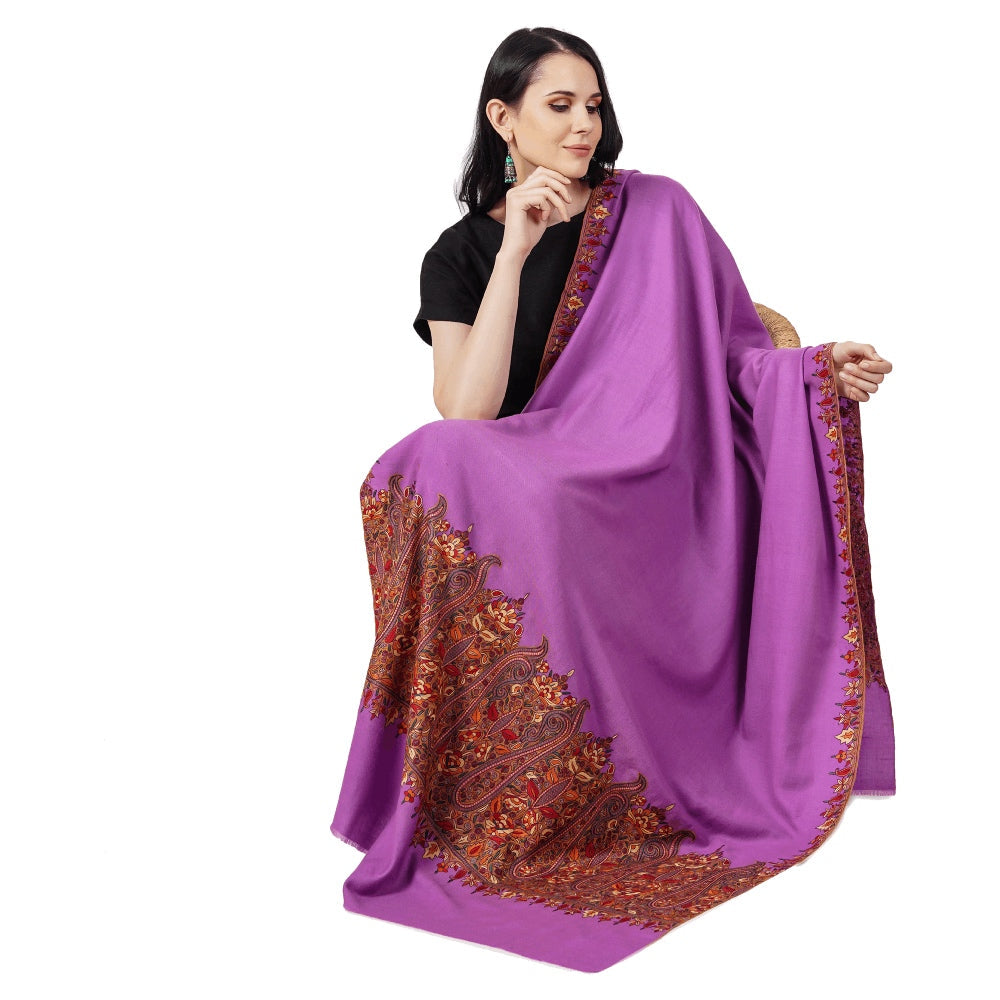
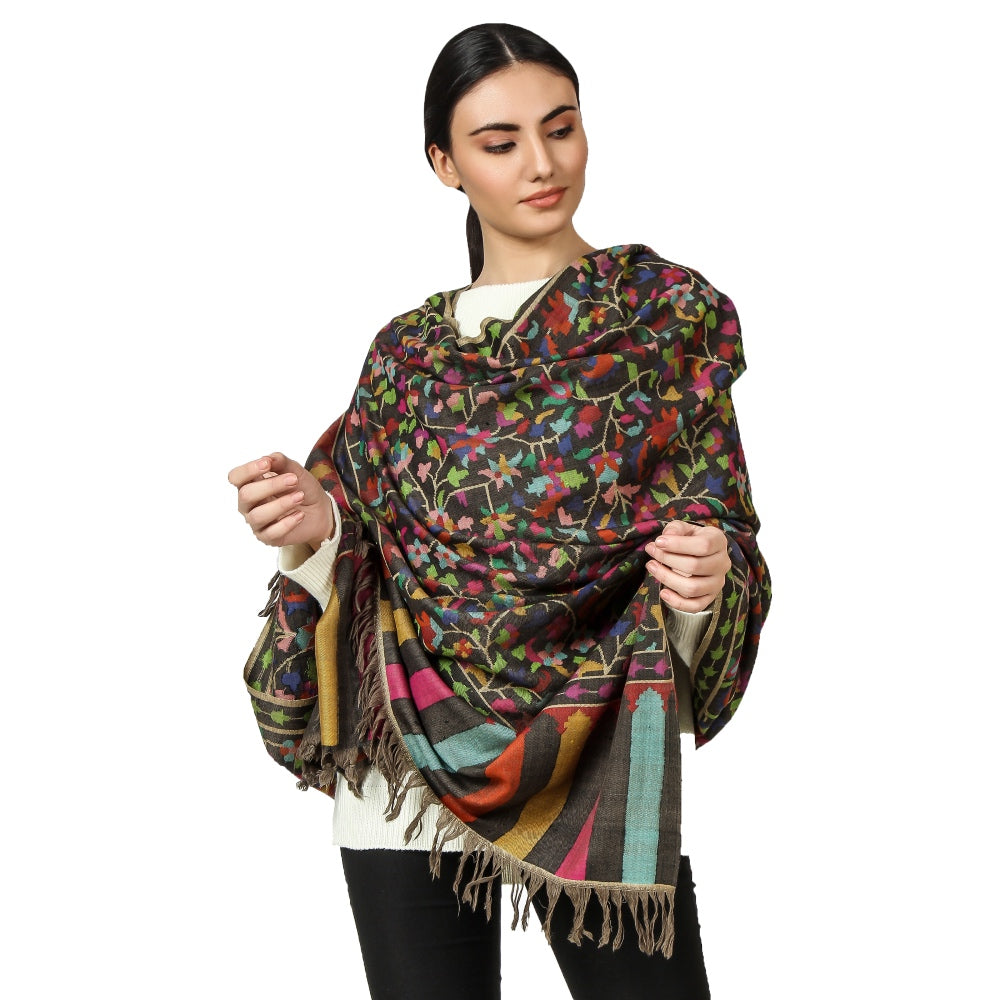
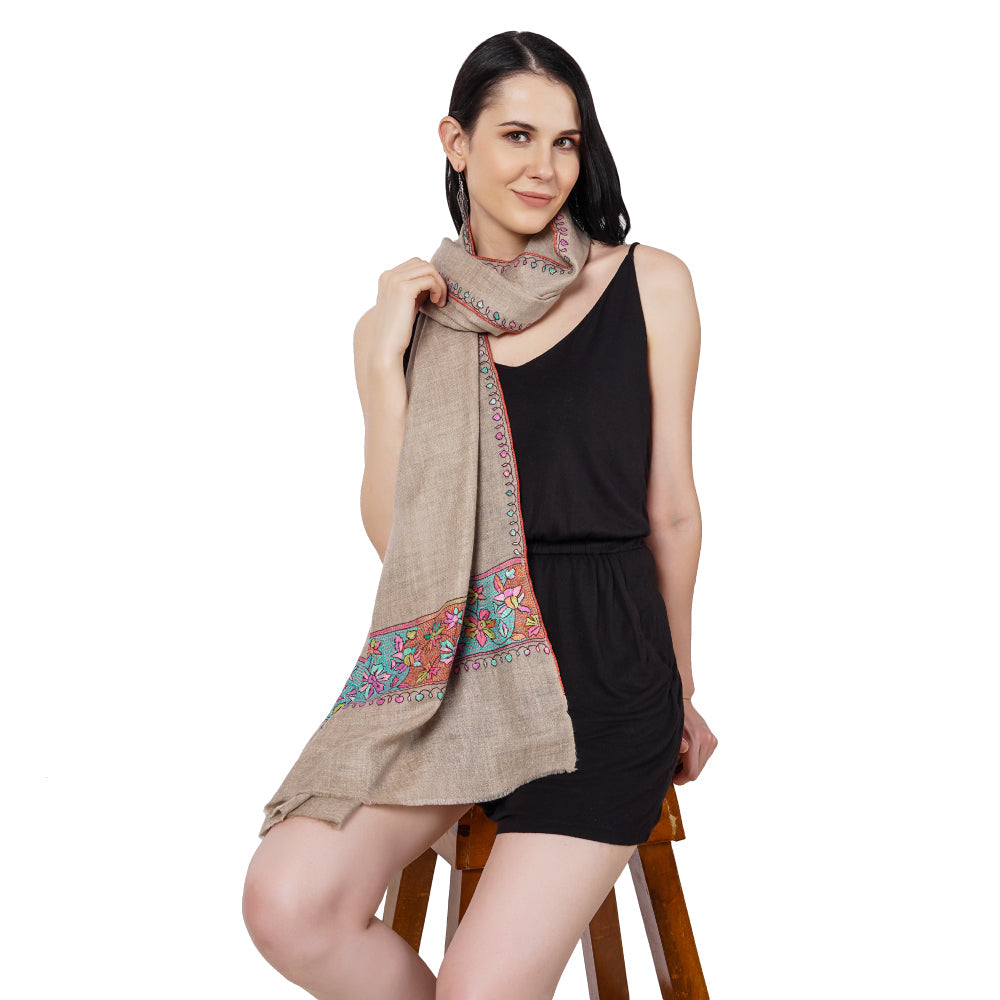
What has changed is what sits at the premium tier of the market — the position that Shahtoosh occupied for those decades before enforcement closed the visible trade. Today that position is occupied, imperfectly and unevenly, by authenticated Pashmina: GI-certified, documented, honestly described, priced by the craft and fiber quality that makes it extraordinary rather than by a story about an animal on a distant plateau.
The honest premium market for fine Kashmir textiles is the market our family has always been in. The same families, the same lanes, the same craft — just without the layer of illegal product and constructed mythology that the Shahtoosh trade required. We did not mourn the contraction of the Shahtoosh trade. We watched it close, we continued in Pashmina, and we are still here — in the same streets, with the same fiber, for buyers who want the real thing, which was always what it was.
The lanes are still there. The craft is still there. The families are still there.
What is gone is the story that was never true — and the product that required killing to exist.
Frequently Asked Questions
Yes, through the 1980s and into the 2000s. Not typically in the shops that fronted directly onto the main square — those were too visible — but in the private upper-floor showrooms of established textile shops in the lanes surrounding it, and in the shop-adjacent private rooms of traders in the Nowhatta and Masjid quarter. The transaction was not conducted in the open street but in the invited, private settings that characterized the premium tier of the tourist textile trade across the old city bazaar. The geography of the trade was designed around qualification and private showing, not public display.
The Srinagar textile market today is a Pashmina market. The same lanes, the same families, the same shops — but the premium tier that Shahtoosh occupied is now occupied by GI-certified authenticated Pashmina, which has built an international luxury reputation through certification and documentation rather than through the story and demonstration that characterized the Shahtoosh transaction. The market continues to serve both local and international buyers with genuine fine Kashmir textiles. Shahtoosh does not appear in the accessible tourist-facing market.
No. The decision about whether to handle Shahtoosh was made by each trading family individually, and it was visible to the community around them. Some long-established families chose not to participate — on commercial grounds (no sustainable supply chain), on ethical grounds (knowing what the trade required), or on grounds of trade reputation (the legal risk to a business built across generations was not worth the premium income). Our family was among those who did not participate. Other families did. The choice was neither universal nor invisible in the close professional community of the Valley's textile trade.
Yes. The Kashmir Valley's Pashmina trade continues, and genuine GI-certified Kashmiri Pashmina is available through established traders in the old city bazaar and through online channels that have grown significantly since the 2010s. The authentication infrastructure — GI certification, documented artisan provenance — that was absent during the Shahtoosh era now exists and provides a basis for verified purchase that the tourist market of the 1980s–1990s never could. Buying from established direct-to-consumer channels like Pashwrap additionally provides traceable fiber sourcing and artisan documentation that the bazaar retail environment cannot always offer.
The craft those lanes still produce
Same streets. Same families. Same looms.
Genuine Pashmina — honestly described.
The Kashmir Valley's textile tradition is unchanged. What has changed is what sits at the premium tier — authenticated, GI-certified Pashmina, documented from the Changthang Plateau to the weaver's bench. What the Shahtoosh era's finest pieces were claimed to be. What genuine Pashmina actually is.