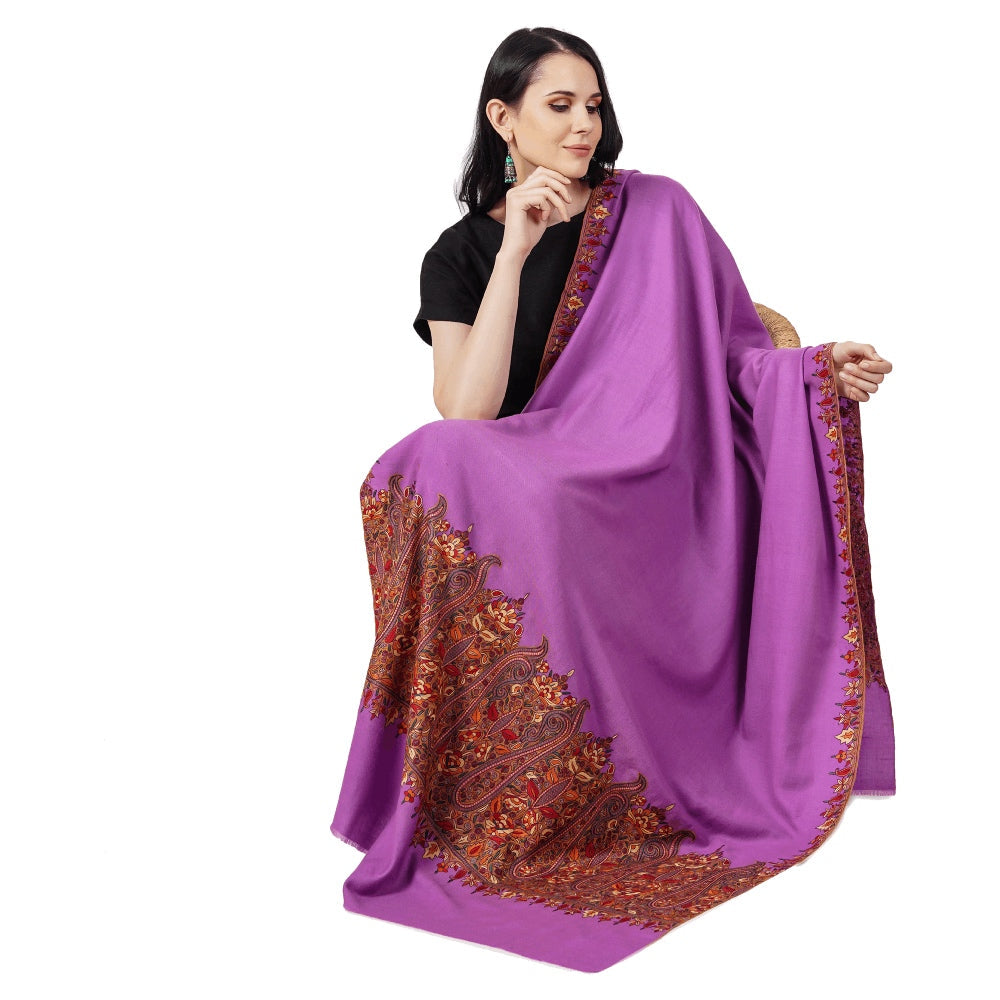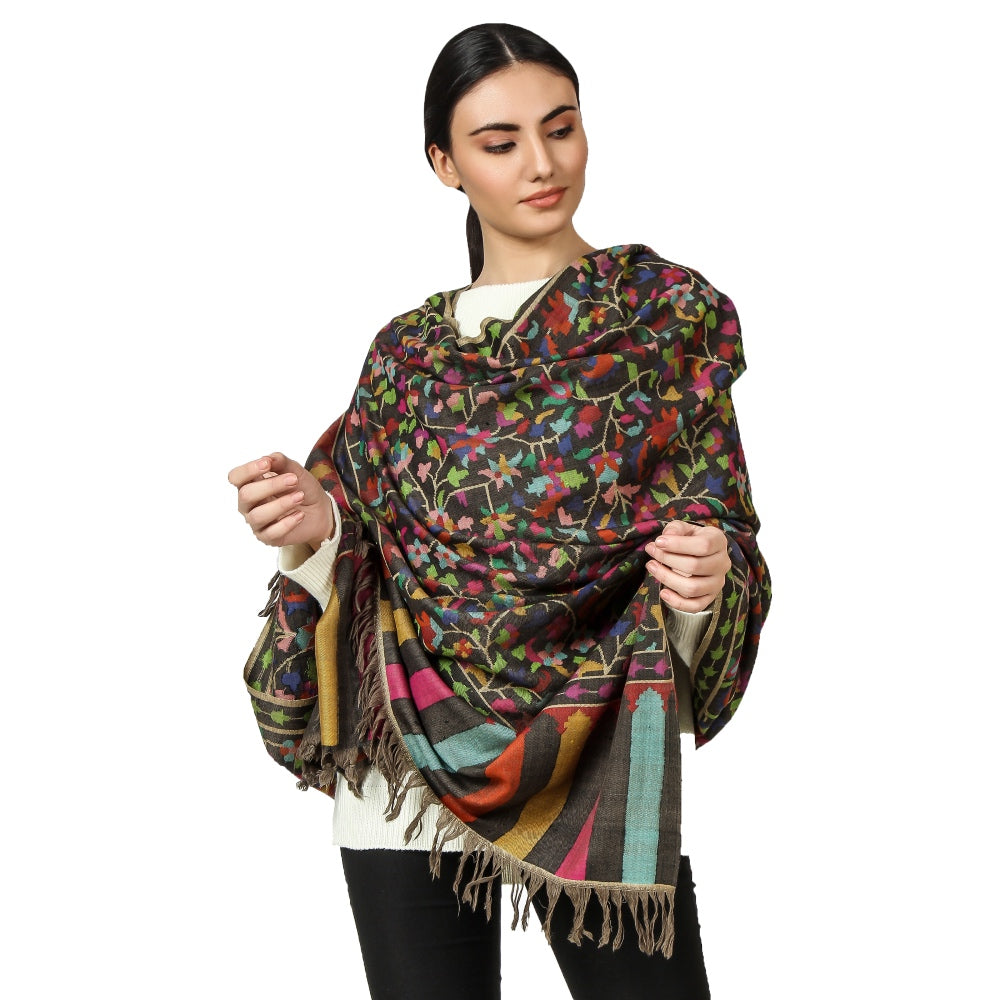

The Changing Market in Kashmir: What 2012 Enforcement Meant for the Pashmina Trade
The Shahtoosh trade did not end with a single raid. It ended with a slow, grinding exhaustion — a decade-long process that culminated in 2012, when sustained enforcement finally broke the market's belief that it could outlast the law. For the Pashmina trade, 2012 was not a tragedy. It was an amputation that saved the patient's life.
The Year the Market Split
- 01 The Lingering Shadow: Why 2012 Mattered More Than 2003
- 02 What the 2012 Enforcement Actually Looked Like
- 03 The Price Shock: When Shahtoosh Money Disappeared
- 04 The Quality Awakening: Pashmina Without the Crutch
- 05 The Artisan Transition: From Back Rooms to Open Workshops
- 06 The Tourist Market Transformation
- 07 The GI Tag: How 2012 Forced Certification
- 08 The Long-Term Gain: A Market Worth Having
Most accounts of the Shahtoosh trade's end focus on the dramatic enforcement raids of 2000 to 2003. Those raids were real, and they were shocking. But they did not end the trade. They drove it underground, suppressed it, and made it more expensive — but they did not kill it. The trade survived in a diminished, cautious form for nearly a decade. It took the sustained, systematic enforcement campaign of 2012 to finally break the market's belief that it could outlast [the legal status of Shahtoosh](https://www.pashwrap.com/blogs/news/is-shahtoosh-illegal). For the Pashmina trade, 2012 was the year the market split into two entirely different businesses: the one that had depended on Shahtoosh money, and the one that would be built entirely on [genuine Kashmiri Pashmina](https://www.pashwrap.com/pages/kashmiri-pashmina).
The Lingering Shadow: Why 2012 Mattered More Than 2003
To understand 2012, you have to understand what happened between 2003 and 2011. The raids of 2000-2003 were intense but relatively brief. Law enforcement, working with wildlife NGOs, targeted specific workshops in the old city of Srinagar. Looms were sealed. Stocks were seized. A number of weavers and middlemen were arrested. The message was clear. But the message was delivered in bursts, not continuously.
In the aftermath of the 2003 raids, the market did what markets do when disrupted by a shock: it adapted. The most visible Shahtoosh operations — the large workshops, the known dealers, the established middlemen — shut down or shifted entirely to Pashmina. But a residual trade persisted. It became quieter, more dispersed, and more exclusive. Instead of weaving full shawls in back rooms, the remaining operators dealt primarily in raw wool — small quantities moving through trusted networks to a handful of buyers, mostly from outside India, who placed orders through indirect channels. The looms went silent. The raw wool trade continued, but at a fraction of the peak volume.
By 2008-2009, there was a pervasive belief in the Srinagar textile community that the worst was over. The enforcement pressure had eased. The international attention had shifted to other wildlife crises. The middlemen who had survived 2003 had learned how to operate with less visibility. A cautious, low-volume trade re-established itself. It was a shadow of the 1990s boom, but it was real, and it was profitable enough to sustain a small network of dealers and their extended supply chains. The market had not recovered. But it had stabilised. 2012 destroyed that stability permanently.
What the 2012 Enforcement Actually Looked Like
The 2012 enforcement campaign was different in structure, scale, and duration. It was not driven primarily by local Kashmir police, who had historically been inconsistent in their application of wildlife law. It was driven by the Wildlife Crime Control Bureau (WCCB) — a federal Indian agency with national resources, investigative capacity, and no local political relationships to complicate enforcement.
The WCCB's approach was not to raid workshops. It was to follow the money. They identified the remaining buyers, traced their communication networks, intercepted shipments at transit points outside Kashmir — primarily in Delhi and Punjab — and used that evidence to work backward toward the Srinagar suppliers. This was an intelligence-led operation, not a reactive one. The dealers who had survived 2003 by becoming less visible were now being targeted through their financial and communication trails, which were harder to conceal than a loom.

Simultaneously, the Jammu and Kashmir government intensified its own enforcement, but with a different focus. Instead of targeting weavers — the most visible and vulnerable point in the chain — they targeted the raw wool supply. Checkpoints on the roads leading into the Valley were upgraded with fiber-testing equipment. The raw wool bales that had historically moved with routine commercial shipments were now subject to random OFDA (Optical Fiber Diameter Analysis) testing. If a bale contained Shahtoosh, the entire shipment was seized, and the consignee was prosecuted. This attacked the supply at its entry point, before it reached any workshop.
The combined effect was devastating to the residual trade. The 2003 raids had attacked the production. The 2012 campaign attacked the supply and the distribution simultaneously. The dealers could not get raw wool in reliably, and they could not get finished product out reliably. The risk at every node of the chain — procurement, production, transport, sale — became simultaneously high. This was the structural difference. In 2003, the risk was concentrated at the workshop. In 2012, the risk was distributed across the entire network. A distributed risk is much harder to manage than a concentrated one.
The Price Shock: When Shahtoosh Money Disappeared
The economic impact of 2012 on the Kashmir textile market was immediate and severe — but not in the way most outsiders assume. The common narrative is that the end of Shahtoosh hurt the Pashmina trade by removing a source of revenue. The reality is more complicated: the Shahtoosh trade had been artificially inflating the entire Kashmir textile market, and its removal caused a painful but necessary price correction.
For families like ours — Pashmina-only houses that had refused Shahtoosh — 2012 was initially painful and ultimately validating. We had spent decades competing against dealers whose cost structure was partially underwritten by illegal profits. They could sell Pashmina cheaper than we could because their real profit came from the back room. When the back room closed, their cost structure collapsed too. The short-term effect was a market flooded with cheap Pashmina as they liquidated inventory. The medium-term effect was a market that finally reflected the true cost of artisan production.
"We knew dealers in our neighbourhood who lived well in the 2000s — better than their Pashmina business alone could explain. They had nice houses, sent their children to good schools, took foreign holidays. After 2012, some of them struggled visibly. Not because their Pashmina business collapsed — but because their Pashmina business was never their real business. The real business was in the back room. When the back room closed, the front room couldn't support the lifestyle they had built. That was the market correcting itself. It was brutal to watch, but it was necessary."
The Quality Awakening: Pashmina Without the Crutch
Before 2012, the easy availability of Shahtoosh — even in its diminished post-2003 form — had a corrosive effect on Pashmina quality standards. Here is how: a dealer who could sell a Shahtoosh shawl for the equivalent of $5,000 had no incentive to invest in the highest-grade Pashmina. They could sell a mid-grade or even low-grade Pashmina shawl for $500, and the buyer, awed by the Shahtoosh they had just been shown in the back room, would perceive the Pashmina as extraordinary by association. The Pashmina did not have to be genuinely excellent. It just had to seem excellent in the shadow of the illegal product.
When Shahtoosh disappeared as a sales tool in 2012, Pashmina had to sell itself on its own merits for the first time in decades. And the initial result was ugly. Buyers who had been trained to associate the Srinagar market with Shahtoosh-backed prestige suddenly found that the Pashmina being offered was often not what it had been represented as. The "pure Pashmina" that had seemed so impressive when viewed next to a Shahtoosh shawl looked distinctly ordinary when viewed on its own. Complaints increased. Returns increased. Reputation suffered.
✦ The Filter Effect
2012 acted as a brutal quality filter. Dealers who had relied on Shahtoosh prestige to sell mediocre Pashmina were exposed. Dealers who had always invested in genuine quality — who could explain the difference between 12-micron and 16-micron fiber, who knew their spinners by name, who understood weave structures — found that their product suddenly spoke for itself. Without the Shahtoosh distraction, buyers began evaluating Pashmina on its actual properties: fineness, weave density, softness, and craftsmanship. The honest producers gained market share. The bluffers lost it.
This was the beginning of the market we operate in today: one where [pure Pashmina shawls](https://www.pashwrap.com/pages/pure-pashmina-shawls) must justify their price through demonstrable quality, not through association with an illegal product. It is a harder market. It is a healthier one.
The Artisan Transition: From Back Rooms to Open Workshops
The most significant human impact of 2012 was on the artisans. The weavers and spinners who had been involved in the Shahtoosh trade — even peripherally — faced a stark choice: transition fully to Pashmina or find another livelihood. For most, there was no realistic alternative. Weaving was their skill. The Pashmina loom was the same loom. The spinning wheel was the same wheel. The transition was not a change of craft. It was a change of material.
For the master weavers who had handled both fibers, this transition was technically straightforward, though economically painful. A weaver who had earned a premium for Shahtoosh work now had to accept Pashmina rates — lower, but legal and sustainable. For the secondary participants — the raw wool sorters, the back-room assistants, the people whose roles existed only because the Shahtoosh economy required hidden, compartmentalised operations — the transition was harder. Some left the trade. Some moved into other forms of textile work. The human cost of enforcement, as we have noted elsewhere, falls disproportionately on the lowest-paid participants.
But there was a positive structural shift. Before 2012, the best weavers in Kashmir were divided: some worked openly on Pashmina, others worked in concealment on Shahtoosh. After 2012, all the best weavers were working on Pashmina, openly, in the same workshops, under the same daylight. This concentration of skill on a single legal fiber raised the overall quality ceiling of the Kashmir Pashmina industry. The craft knowledge that had been split between two fibers was unified under one. The artisan community, as a whole, became stronger at the one thing it could legally do.
The Tourist Market Transformation
The Srinagar textile market is heavily dependent on tourism. Before 2012, the tourist experience in many Srinagar showrooms followed a predictable script: the visitor would be shown Pashmina shawls, praised for their quality, and quoted a price. Then, if the dealer assessed the visitor as a serious buyer with sufficient funds, the conversation would shift. "But you should really see the special thing we have." The visitor would be taken to a back room, offered tea, and shown a Shahtoosh shawl — or, increasingly often after 2003, a high-grade Pashmina falsely labelled as Shahtoosh. The sale of the Shahtoosh (or the fake Shahtoosh) validated the entire showroom experience. The visitor left feeling they had accessed something exclusive and secret.
2012 ended this script permanently. The back rooms closed. The "special thing" disappeared. And for a period of perhaps two to three years, the tourist market struggled with an identity crisis. Without the clandestine thrill, what did a Srinagar textile showroom actually offer?
The answer, it turned out, was the truth. Showrooms that could demonstrate genuine craftsmanship — that could show a visitor a Kani loom in operation, explain the difference between machine-spun and hand-spun yarn, articulate why 12-micron Changthangi Pashmina was different from 16-micron machine-made alternatives — found that many tourists were perfectly happy to buy genuine Pashmina without the Shahtoosh theatre. The tourists who demanded the "special thing" were the tourists the market was better off without. The tourists who wanted to understand the craft were the ones who became long-term customers. The 2012 enforcement forced the tourist market to transition from a model based on secrecy and exclusivity to a model based on transparency and education. It was a better model. It just took time for the market to realise it.
The GI Tag: How 2012 Forced Certification
The enforcement campaign of 2012 created a vacuum of trust. If Shahtoosh was gone, and if the market had been exposed as riddled with misrepresentation, how could a buyer anywhere in the world trust that a "Kashmir Pashmina" shawl was actually what it claimed to be? The answer was the Geographical Indication (GI) tag — a certification system that had existed on paper for years but became commercially critical only after 2012.
The Kashmir Pashmina GI tag, certified by the Geographical Indications Registry under the Department of Industry and Commerce, Government of India, certifies that a product is genuinely manufactured in the Kashmir region using traditional Pashmina processes: hand-spinning of Changthangi goat wool, hand-weaving on traditional looms, and finishing within the defined geographical area. Before 2012, few dealers bothered with GI certification because the Shahtoosh-backed prestige narrative was more effective as a sales tool. After 2012, GI certification became the primary way for a legitimate Pashmina house to distinguish itself from the bluffers.
The GI tag did not eliminate fraud — no certification system does. But it shifted the burden of proof. Before 2012, the buyer had to prove a shawl was fake. After 2012, the seller had to prove it was genuine. This inversion is one of the most important structural changes in the Kashmir Pashmina trade's modern history, and it was a direct consequence of the enforcement that destroyed the Shahtoosh-backed trust model.
The Long-Term Gain: A Market Worth Having
Was 2012 painful for the Kashmir textile trade? Yes. Artisans lost income. Dealers lost businesses. The short-term economic disruption was real, particularly for those who had been most deeply embedded in the Shahtoosh economy. We do not minimise this. We saw neighbours struggle, and we saw some not recover.
But the long-term gain is undeniable. The pre-2012 market was a market built on a lie — the lie that an illegal, endangered-species fiber was a legitimate luxury product, and the corresponding lie that Pashmina's value derived from its proximity to that illegal product. A market built on a lie is inherently fragile. It can be disrupted by enforcement at any moment, as 2012 demonstrated. It cannot build lasting brand value, because its core proposition is hidden. It cannot attract genuine loyalty, because its customers are buying into a deception.
The market that emerged after 2012 is smaller, slower, and more honest than the one that preceded it. It is also the first Kashmir Pashmina market in modern history that is built entirely on the truth about what the fiber is, where it comes from, and how it is made. That is not a small achievement. It is the foundation of everything we are trying to build.
The shadow is gone. The craft remains.
The Shahtoosh trade was a parasite on the Pashmina market. It fed on Pashmina's infrastructure, Pashmina's artisans, and Pashmina's reputation, while delivering its profits into a hidden economy that benefited a fraction of the trade's participants. When the parasite was removed, the host was weakened temporarily. But a host that is no longer being parasitised is stronger than one that is. The 2012 enforcement did not destroy the Kashmir Pashmina trade. It forced the trade to become what it should have been all along: a legitimate, quality-driven, transparent craft industry that stands on its own merits and sells a product that needs no illegal comparison to justify its value.
Frequently Asked Questions
Did Pashmina prices go up or down after 2012? +
Both, in sequence. In the immediate aftermath of 2012, prices for Pashmina dipped as former Shahtoosh dealers liquidated their Pashmina inventory to raise cash. This created a temporary buyer's market. Within 18–24 months, as that excess inventory was absorbed and the market recognised that genuine artisan Pashmina had a real, non-subsidised cost, prices began to rise. By 2015, the price of genuine handwoven Pashmina had exceeded pre-2012 levels in many categories, because the price now reflected the actual cost of artisan production rather than the artificially suppressed costs of a cross-subsidised market.
Are there still people in Kashmir trying to sell Shahtoosh? +
Occasionally, someone will test the waters — usually by approaching a foreign tourist with a whispered offer. These approaches are rare, risky for both parties, and almost always involve fake Shahtoosh (high-grade Pashmina mislabelled) rather than the genuine fiber. The genuine supply chain is effectively dead. What persists is the deception, not the product. The [complete guide to the legal status of Shahtoosh](https://www.pashwrap.com/blogs/news/is-shahtoosh-illegal) explains why any such offer is a legal trap for the buyer regardless of whether the fiber is genuine.
How did the 2012 enforcement affect the Changpa herders in Ladakh? +
Indirectly but positively. The Changpa herders on the Changthang Plateau produce Pashmina, not Shahtoosh. They were never directly involved in the Shahtoosh trade. But the artificially low Pashmina prices caused by Shahtoosh-era market distortions meant that herders were receiving less for their raw wool than the genuine market value. As Pashmina prices corrected upward after 2012, the raw wool price followed. A healthier, more honest downstream market eventually translated into better prices at the source. The Changthang ecology also benefited from the reduced poaching pressure described in our article on the Tibetan antelope population.
What is the GI tag, and should I only buy Pashmina with one? +
The GI (Geographical Indication) tag certifies that the product was made in Kashmir using traditional processes. It is a useful baseline indicator of authenticity, but it is not a guarantee of quality — a GI-tagged shawl can still be made with lower-grade wool or less skilled weaving. A reputable Pashmina house will have GI certification *and* will be able to demonstrate the specific quality of their fiber, spinning, and weaving beyond what the tag requires. The tag is a necessary condition for confidence. It is not a sufficient one. Look for the tag, but also look for the house's reputation, transparency, and willingness to explain their craft.
Did the 2012 enforcement change how international buyers viewed Kashmiri Pashmina? +
Yes, fundamentally. Before 2012, international buyers who knew about Shahtoosh often viewed the Kashmir Pashmina market with suspicion — they knew that "Pashmina" was sometimes used as a cover for Shahtoosh sales or that the market's pricing was distorted by the illegal trade. After 2012, as the enforcement became known internationally and the GI tag system gained credibility, international buyers began to treat Kashmir Pashmina as a legitimate, certifiable luxury product rather than a suspiciously cheap alternative to an illegal one. The market's international reputation actually improved after the illegal component was removed. The smuggling routes that once connected Kashmir to the world's boutiques closed, but the legitimate supply routes that remained became more trusted.
Continue Reading — The Shahtoosh Series
Legal Sub-Pillar · The Law
Is Shahtoosh Illegal? A Country-by-Country Legal Guide for 2026
M2·07 · Trade History
How Shahtoosh Was Smuggled: Trade Routes from Tibet to Kashmir to the World
M2·06 · Conservation Data
Tibetan Antelope Population: From One Million to 100,000 — The Data Story
M2·01 · History Pillar
The Complete History of Shahtoosh: From Mughal Courts to Modern Ban
Built on the market that survived
Genuine Kashmiri Pashmina.
No back rooms. No secrets. No illegal crutches. Just the craft.
We built our business in the post-2012 market — a market that requires every claim to be true, every fiber to be verifiable, and every price to reflect real artisan value. We do not need a hidden product to make our Pashmina seem impressive. The Pashmina speaks for itself. We just translate.