
Lightweight Cashmere Scarf for Spring – Is It Worth Buying?
Most "lightweight spring scarves" sold as cashmere are cheap synthetics that feel right in the shop and collapse by summer. The cruel irony: genuine Pashmina is naturally the perfect spring weight — light enough for 18°C, warm enough for a sharp April morning, and nothing like what most buyers have been sold under that name.
Every spring, the same transaction plays out in thousands of shops, markets, and online checkout pages. A buyer picks up something described as a lightweight cashmere or Pashmina scarf. It feels right — soft enough, light enough, the right kind of drape for the season. They buy it. They wear it a handful of times. And then, somewhere between the first wash and the end of the season, it becomes something else — pills, loses its drape, sheds whatever softness it had, and gets quietly retired to the back of the drawer.
The conclusion most buyers reach is that lightweight cashmere is not worth it. That it cannot hold up. That it is a seasonal indulgence that does not justify the price.
That conclusion is correct — about what they bought. It is completely wrong about genuine Pashmina.
What those buyers purchased was not cashmere. It was acrylic, viscose, a wool blend, or low-grade machine-spun fiber sold under a label with no legal protection in most markets. The real product — genuine Pashmina at 12–14 microns, hand-spun, handwoven — is not only worth buying for spring. It is, structurally and biologically, the most naturally perfect spring-weight scarf that exists.
Genuine Pashmina is not lightweight despite being warm. It is lightweight because of how it is warm — through hollow-core fiber structure, not through mass. Spring is where this advantage is most visible.
The Changthangi goat of the Changthang Plateau does not produce Pashmina fiber for the benefit of the fashion industry. It produces it to survive a high-altitude environment where winters reach −40°C and springs are brief, variable, and cold at altitude even when warm at lower elevations. The fiber's biological properties — fine diameter, hollow core, natural crimp — were optimised by evolution for exactly the challenge that a spring scarf buyer faces: unpredictable temperature, cold mornings, warm afternoons, and the need for a layer that adapts rather than commits.
At 12–14 microns — finer than the finest human hair — Pashmina fiber creates a fabric that is simultaneously light enough to feel like almost nothing against the skin and warm enough to provide real insulation when the temperature drops. This is not a contradiction. It is the hollow-core effect: each fiber traps air within its own structure, providing warmth through thermal resistance rather than thermal mass. The result is a scarf that weighs 95–100 grams, folds into a jacket pocket, and yet provides meaningful warmth on a 10°C morning — and then feels perfectly comfortable when the afternoon rises to 18°C.
No synthetic, no wool blend, and no commercial cashmere alternative can match this temperature adaptability — because none of them achieve warmth the same way. Mass-based insulation has an on/off threshold. Hollow-core insulation scales with the temperature differential. For spring, that difference is everything.
Spring Is Where the Hollow Core Shines Brightest
In winter, the hollow-core advantage is expressed as exceptional warmth from a light piece. In spring, the same property expresses differently: the fiber responds to smaller temperature variations more precisely, warming when needed and breathing when not, because the air-trap mechanism is proportional rather than absolute. A genuine Pashmina scarf on a spring morning feels warmer than its weight suggests it should. On a spring afternoon, it does not feel stifling — it breathes. No heavy wool achieves this. No synthetic approximates it.
A 95–100g Pashmina scarf at 12–14 microns performs across the full spring temperature range — worn as a double wrap in the morning, draped over the shoulders by afternoon. No other fiber manages this range at this weight.
The spring scarf market is where cashmere fraud is most concentrated — and most effective. The reasons are specific to the season. Spring buyers are looking for something light, soft, and inexpensive. They are not expecting deep warmth. They are not testing for pilling resistance. They are buying with the expectation that the piece is seasonal and disposable — which creates the perfect cover for selling something that is genuinely disposable, just not for the reasons advertised.
🌸 Why Spring Is the Highest-Fraud Season
Spring buyers tolerate more degradation before noticing it — a scarf worn five times over a mild April is not tested the way a scarf worn daily through January is. Sellers know this. The typical spring "cashmere" scarf is calibrated to hold up through its selling season and fail just after. By the time the buyer notices the pilling, the drape loss, and the diminished softness, the season is over and the return window has closed.
A genuine Pashmina scarf has no such shelf life — it does not degrade seasonally. It will look and feel the same next spring, and the spring after that, and twenty springs from now.
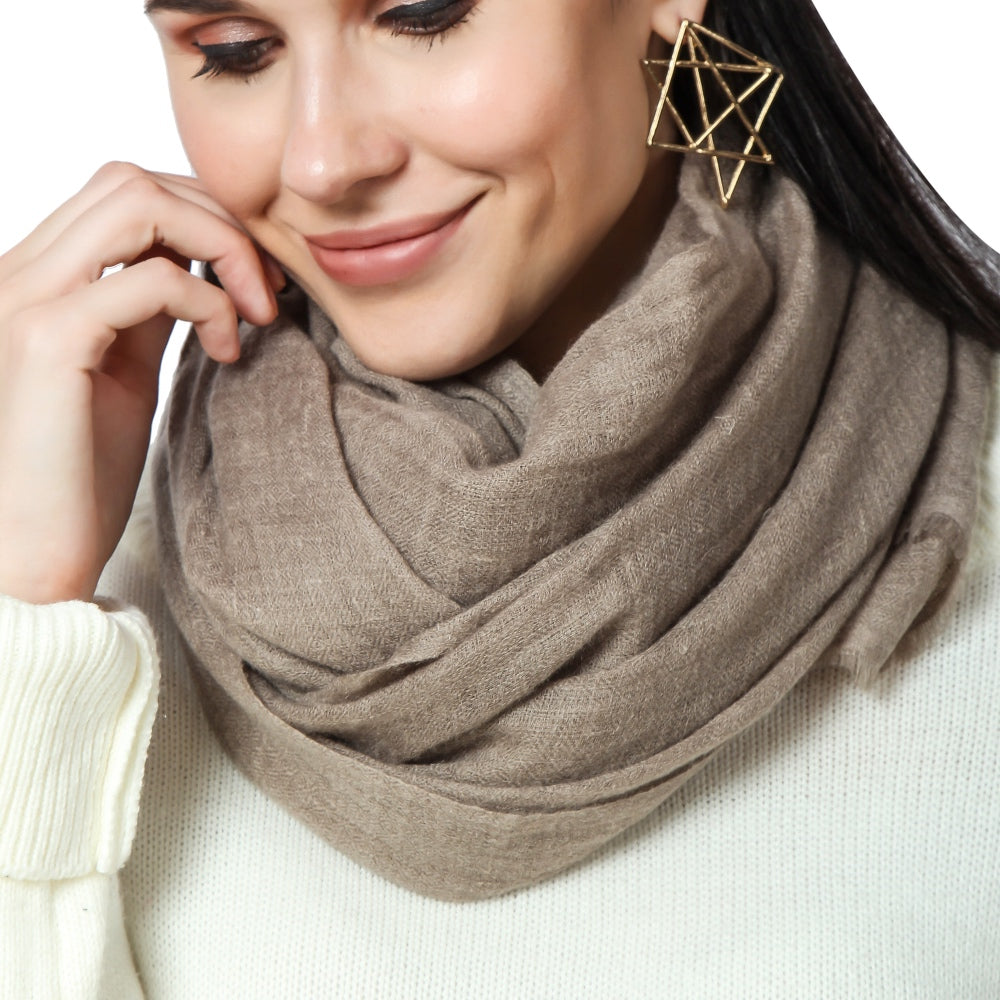
When a genuine Pashmina seller describes a scarf as lightweight, they are describing a specific, measurable property — not a marketing adjective. Lightweight in Pashmina means a piece woven to a lower weight-per-square-metre than a standard scarf, using the same 12–14 micron hand-spun yarn but with a slightly more open weave structure that reduces total gram weight while preserving the hollow-core thermal efficiency of every individual fiber.
What this means in practice: a lightweight Pashmina spring scarf at 70–85 grams is genuinely light — lighter than most synthetic spring scarves of the same size — and yet warmer per gram than any of them, because the hollow-core fiber structure is unchanged regardless of weave density. You are not getting less warmth for the lighter weight. You are getting the same warmth mechanism in a thinner, more breathable fabric.
🌿 Pashmina Weight Guide — Spring to Winter
The weight spectrum above illustrates the key point: a spring Pashmina scarf at 70–85g is lighter than a wool scarf by a factor of three to five — yet warmer for its weight due to hollow-core fiber. The buyer who picks up a genuine 80g Pashmina spring scarf and compares it to a 300g wool scarf is not choosing between weight and warmth. They are choosing between two entirely different mechanisms of warmth — one based on mass, one based on biology.
The answer depends entirely on what you are buying. Here it is for each tier of the market, without qualification.
✗ Under $70 — "Pashmina" or "Cashmere"
No. Not worth it at any price in this range. What you are buying is almost certainly synthetic, wool blend, or low-grade fiber that will degrade within a season. The word "lightweight" here means "thin and insubstantial" — not "fine and thermally efficient." You will replace it. The replacement will also disappoint you.
✓ Above $100 — Verified Pashmina
Yes. Completely, and for the rest of your life. A genuine Pashmina spring scarf at 70–85g from a transparent direct-source seller is the last spring scarf you will ever need to buy. It will be more comfortable, more versatile, and more beautiful every spring for twenty years. The per-wear cost across that lifespan approaches zero.
The One-Scarf Argument for Spring
A genuine Pashmina spring scarf at 70–85g covers every scenario the season presents. Cold morning commute — double-wrapped at the neck, it provides real warmth. Mild afternoon in the park — draped over one shoulder, it is decorative and comfortable without being warm. Cool evening outdoors — crossed over the chest, it is a genuine layer. Air-conditioned office in summer — the same piece that was too warm outside is exactly right indoors.
No synthetic, no wool blend, and no commercial cashmere piece spans this range with the same ease — because none of them achieve warmth proportionally. A wool scarf is either warm or unnecessary. A synthetic scarf is either uncomfortable or useless. A genuine Pashmina scarf is always appropriate, because the hollow-core fiber responds to the temperature differential present rather than operating at a fixed thermal output.
✓ The Spring Pashmina Specification
Weight: 70–85g for a dedicated spring piece · 95–110g for a scarf worn spring through autumn
Size: 70×200cm minimum — large enough to wrap or drape across both scenarios
Fiber: 12–14 micron Changthangi Pashmina — the hollow core is non-negotiable for spring performance
Weave: Plain handwoven on the khaddi loom — the open weave structure that gives spring pieces their breathability
Price: Above $100 from a seller who can name the fiber origin, confirm hand-spinning, and state the micron count
The spring scarf market is the most deceptive in the cashmere category. These four tests, performed before purchase, will separate the genuine from the fraudulent without requiring specialist equipment or laboratory analysis.
The Warmth Speed Test — Hollow Core Confirmation
Hold the fabric completely still against the inner wrist for fifteen seconds without rubbing. Genuine Pashmina with an active hollow core begins reflecting body heat within seconds — you feel warmth before the fabric has had time to warm through conduction. A synthetic or low-grade wool "spring scarf" warms slowly through mass, not immediately through thermal reflection. If you feel nothing in fifteen seconds of still contact, the hollow core is absent or negligible. This test works in any shop, at any season, in under a minute.
The Drape and Recovery Test
Scrunch a section of the fabric firmly in your fist for ten seconds, then release and watch what happens. Genuine hand-spun Pashmina has natural crimp in the fiber that gives it memory and recovery — it springs back toward its original drape almost immediately, with only minimal creasing. Synthetic and low-grade commercial cashmere retain the crease longer and recover more slowly, because the fiber lacks the natural crimp structure that genuine Pashmina preserves through hand-spinning. Spring scrunch creases that linger for more than a few seconds indicate low-quality fiber.
The Weight-to-Size Check
A genuine lightweight Pashmina scarf at 70×200cm should weigh between 70 and 90 grams — less than a bar of soap. If a "lightweight cashmere" scarf at the same dimensions feels noticeably heavier than this, it is not made from fine hollow-core fiber. It is made from a denser, heavier material — wool, synthetic, or coarse cashmere — that achieves lightness by being cut small rather than by using fine fiber. Genuine spring Pashmina feels almost weightless for its coverage. If it does not, it is not the real thing.
Ask the Three Questions
What is the fiber diameter in microns? Is the yarn hand-spun? Where specifically does the fiber come from? A seller of genuine Pashmina answers all three immediately and specifically: 12–14 microns, hand-spun on the yinder wheel in the Kashmir Valley, from Changthangi goats on the Changthang Plateau of Ladakh. A seller who responds with "finest quality Himalayan cashmere" or "traditionally crafted in the mountains" is offering atmosphere, not information. At any price above $100, this question should have a specific, verifiable answer.
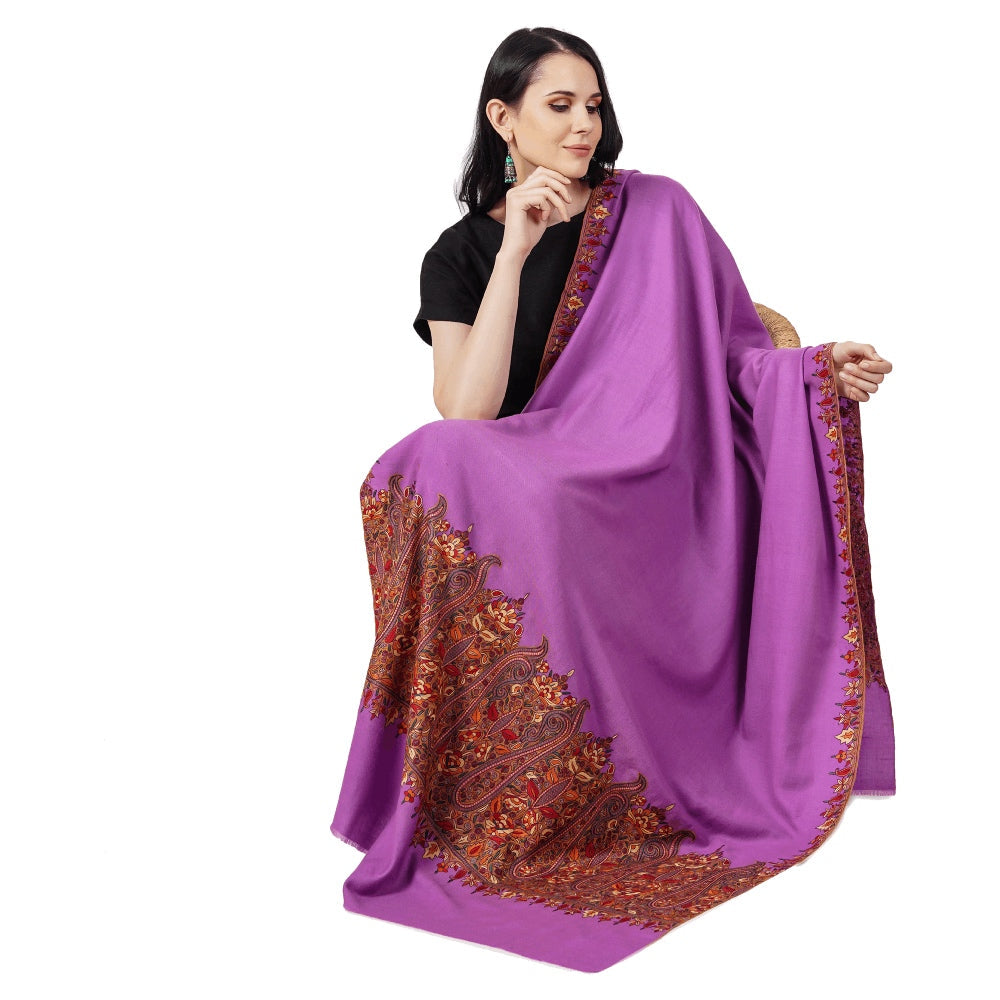
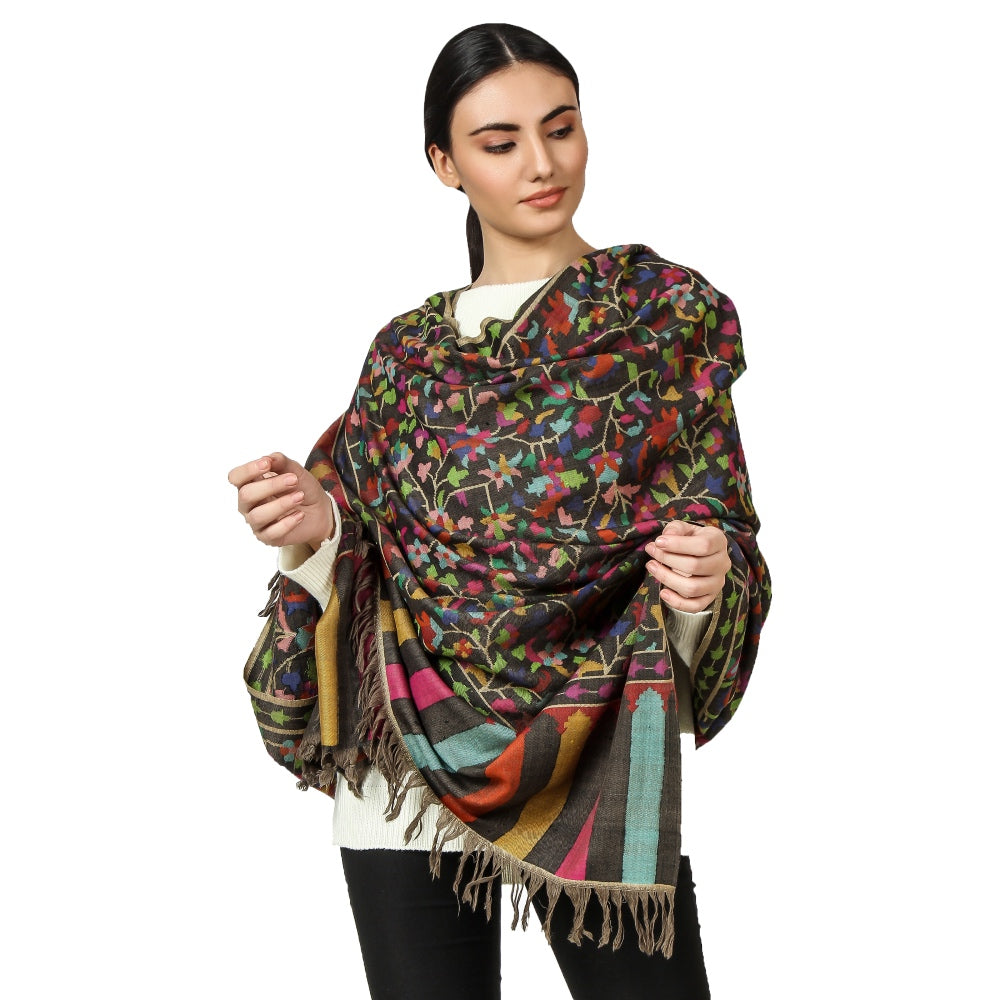
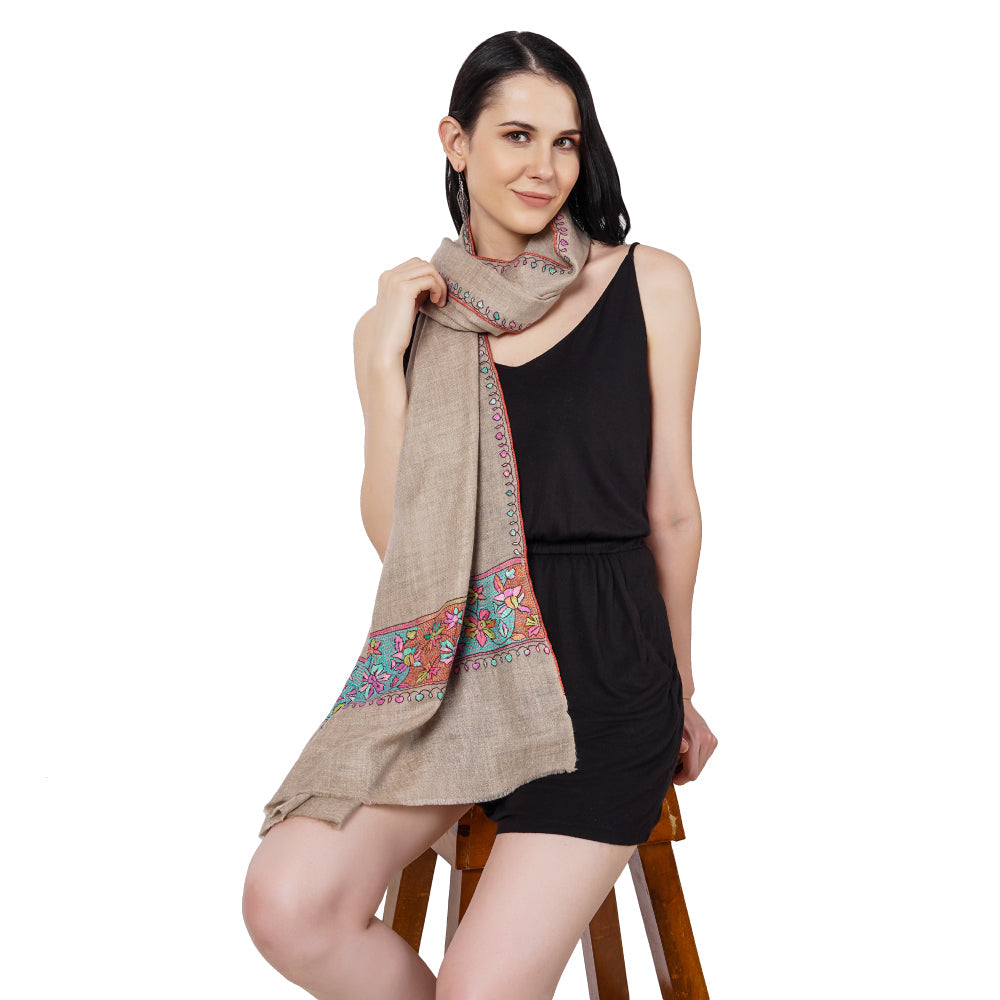
The versatility of genuine Pashmina in spring is not accidental — it is a direct consequence of the hollow-core thermal adaptability that makes the fiber respond proportionally to temperature. These three wearing methods cover every spring scenario from sharp morning to warm afternoon.
The Spring Scarf Market — Full Comparison
| Product | Typical Price | Spring Warmth | Breathability | After 1 Season | Worth It? |
|---|---|---|---|---|---|
|
Genuine Pashmina 12–14µm · Hand-spun |
$100–$250 | Excellent | Excellent | Unchanged | Yes — for life |
|
Grade A Cashmere 15–16µm · Hand-spun |
$80–$180 | Very Good | Very Good | Minimal change | Yes |
|
Commercial Cashmere Machine-spun · 17–19µm |
$50–$120 | Moderate | Moderate | Pilling begins | Marginal |
|
Lambswool Blend Often sold as cashmere |
$30–$70 | Moderate | Poor | Significant pilling | No |
|
Acrylic / Viscose Sold as "Pashmina" |
$10–$40 | Poor | Very Poor | Degraded or binned | Never |
⚠️ The Spring Market Warning
More than 90% of scarves sold as "lightweight Pashmina" or "spring cashmere" in tourist markets, fast fashion retailers, and mass-market online platforms contain no genuine Pashmina fiber. The word "Pashmina" carries no legal protection in most markets. Any product can carry the label. The only protection a buyer has is knowing what genuine Pashmina costs, what it feels like, and what questions to ask before buying.
The Answer
Is a lightweight cashmere scarf worth buying for spring? If it is genuine Pashmina — yes. Without qualification, without caveat, and for reasons that have nothing to do with luxury signalling and everything to do with fiber physics. The hollow-core structure of genuine Changthangi Pashmina is the most naturally appropriate technology for spring temperature variation that exists in textile form. Light enough to feel like nothing. Warm enough to be genuinely useful. Breathable enough for warm afternoons. Adaptable enough to span the full spring range in a single piece that will still be performing the same way in twenty years.
If it is not genuine Pashmina — no. Not at any price. The "lightweight spring cashmere" market is where cashmere fraud is most concentrated and most effective, because spring buyers are the least likely to test their purchase thoroughly before the selling season ends. The piece that felt right in the shop will not feel right by summer. And the conclusion drawn — that lightweight cashmere is not worth it — will be correct about the product and wrong about the fiber.
To understand why genuine Pashmina holds up across all seasons while commercial alternatives do not, read our article Is a Cashmere Scarf Worth It? To identify what you are holding before you buy it, read How to Check Cashmere Quality at Home. To understand the full science behind why Pashmina performs the way it does across seasons, read The Science Behind Cashmere Softness. To understand the honest price of what you are looking for, read How Much Should a Real Cashmere Scarf Cost?
To find the spring Pashmina that performs the way this article describes — visit the Pashwrap collection.