
The Benefits of Owning a Cashmere Scarf
Beyond warmth — the sensory, psychological, and lasting rewards of owning something genuinely exceptional.
Most of what we own serves a purely functional purpose. A kettle boils water. A coat blocks wind. A phone connects us. These objects perform tasks, and when they fail, we replace them with identical versions. There is no relationship, no attachment, no lingering satisfaction in their use.
A cashmere scarf operates in a different category entirely. Yes, it keeps you warm — but a £15 synthetic scarf also keeps you warm. The benefits of owning a luxury cashmere scarf extend far beyond thermoregulation. They encompass sensory pleasure, psychological comfort, sartorial elevation, and a quiet sense of satisfaction that permeates your daily routine.
These benefits are not marketing abstractions. They are measurable, experiential, and cumulative. The first time you wear real cashmere, you notice the softness. The tenth time, you notice how it has begun to mould to your movements. The hundredth time, you cannot imagine your winter without it.
1. The Tactile Reward: A Daily Sensory Experience
We underestimate the psychological impact of what we touch. Our hands and neck are among the most nerve-dense regions of the body. The textures we interact with continuously — our clothing, our accessories, our bedding — exert a subtle but constant influence on our baseline stress levels and overall sense of wellbeing.
Cashmere provides a tactile experience that is categorically different from other textiles. The science behind cashmere softness is rooted in its ultra-fine fibre diameter — typically 12 to 15 microns for the best Kashmiri cashmere, well below the human skin's threshold for detecting individual fibres. When you touch cashmere, your nerve endings do not register a texture. They register an absence of texture — a smoothness so complete it borders on the surreal.
This is not a minor pleasure. Reaching for a cashmere scarf on a cold morning and feeling that specific, weightless softness against your neck is a micro-moment of luxury that recalibrates your mood for the hours ahead. It is the textile equivalent of slipping into a perfectly heated bath — a small, daily indulgence that signals to your nervous system that you are cared for.
Machine-spun cashmere sacrifices a degree of this softness for speed. Our handmade pashmina scarves are spun on traditional wheels by artisans who adjust their touch fibre by fibre. The resulting yarn preserves a loft and softness that machines simply cannot replicate.
2. Effortless Elevation: The Ultimate Style Multiplier
The defining characteristic of truly elegant dressing is that it appears effortless. It looks considered without looking contrived. Cashmere achieves this paradox instantly.
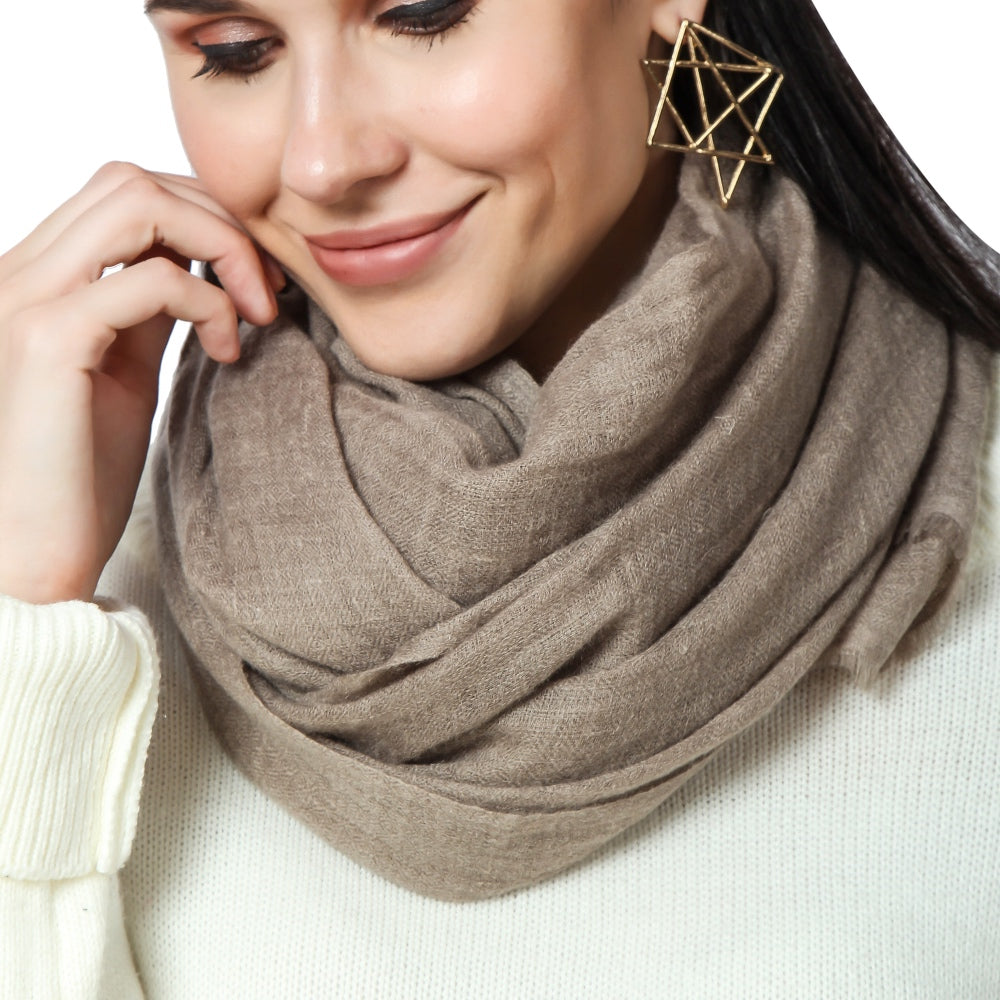
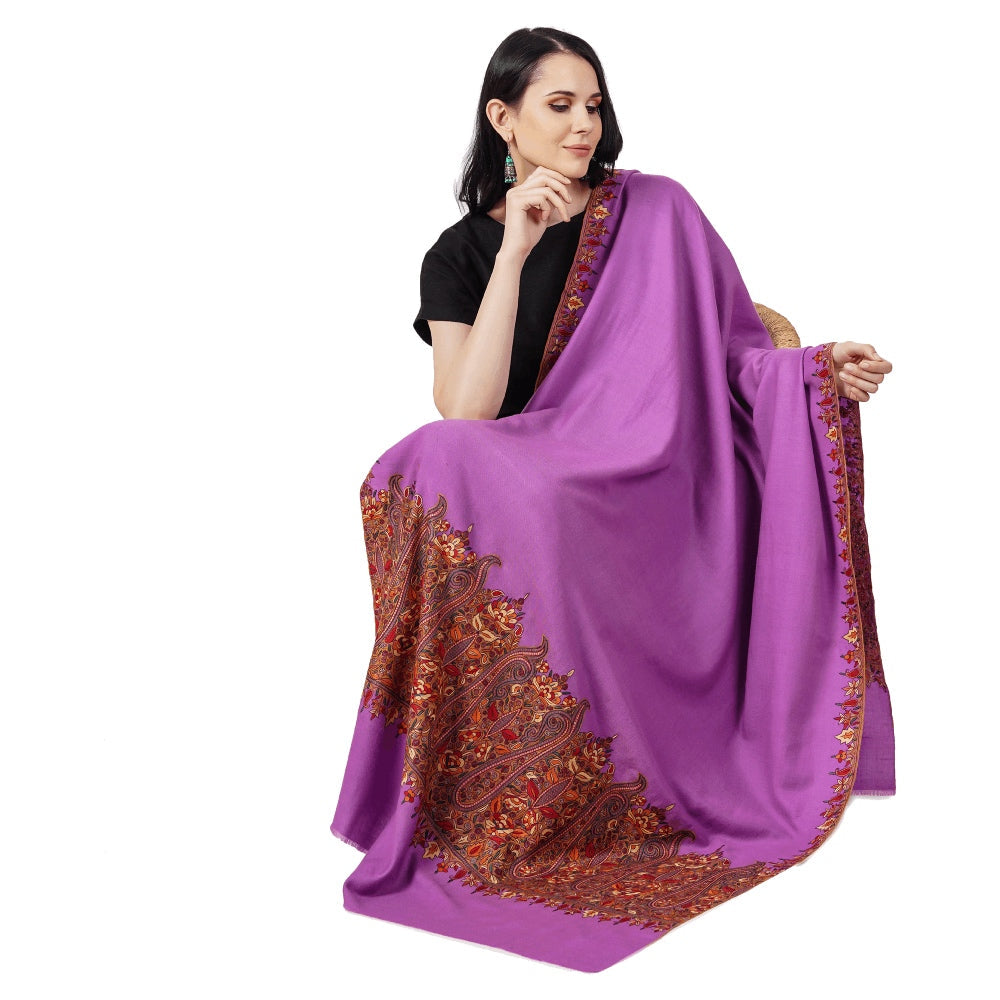
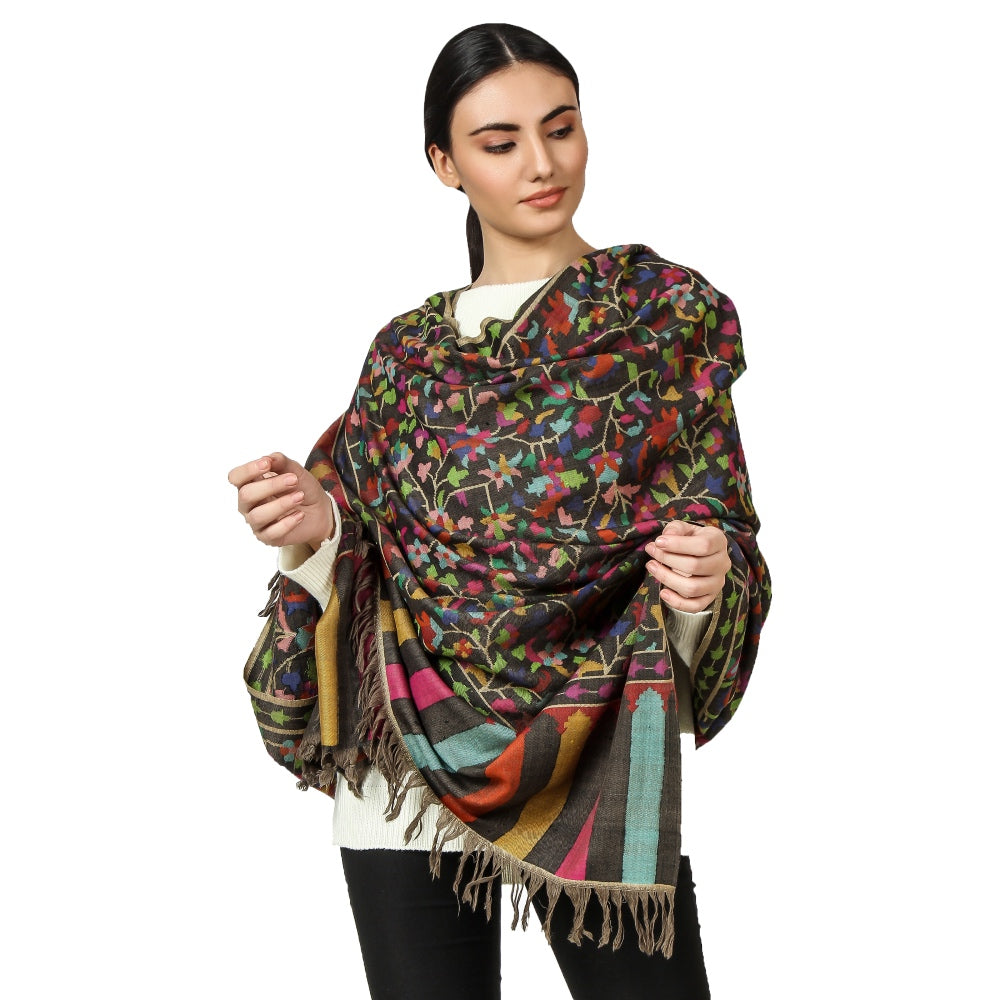
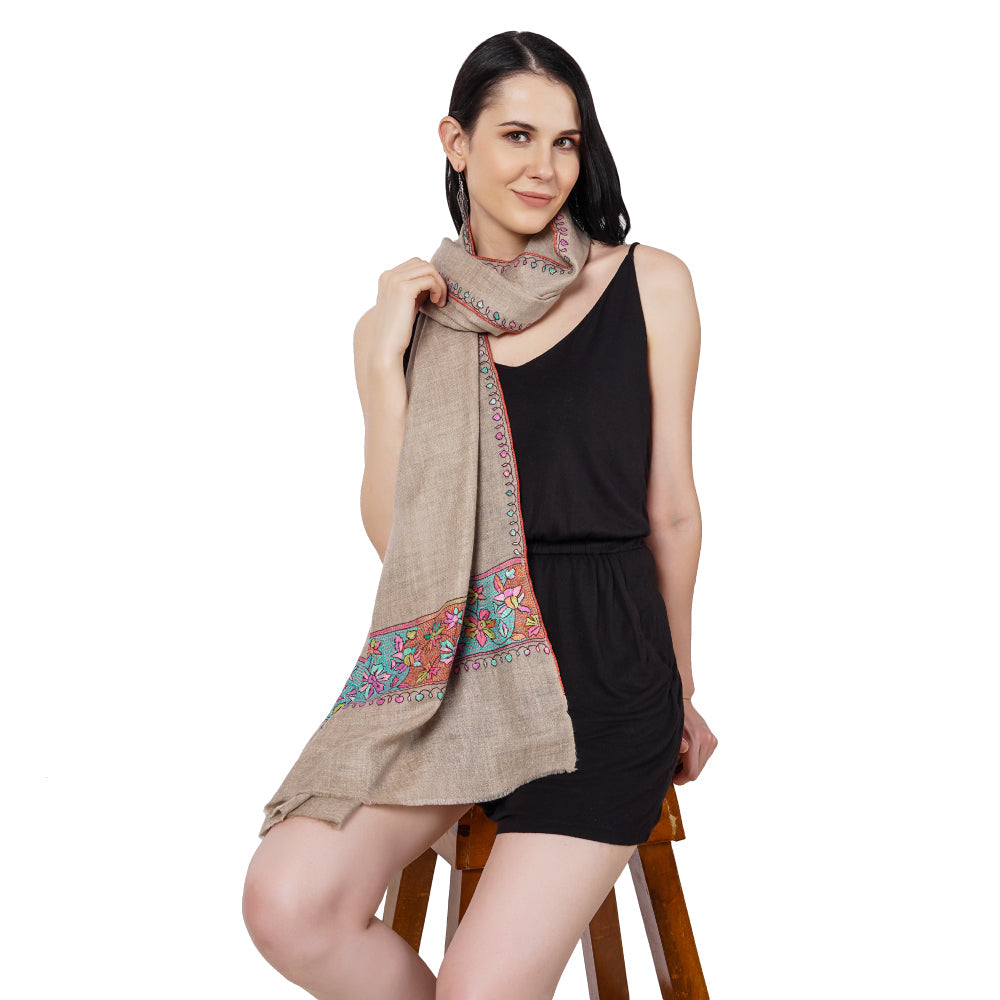
Drape a cashmere scarf over a simple navy jumper and jeans, and the entire outfit shifts from casual to intentional. Pair it with a grey overcoat, and suddenly you look like you stepped from a street-style photograph in Milan. The fabric's natural drape — its ability to fall into soft, cascading folds rather than holding a rigid shape — does the aesthetic work for you.
This is because cashmere interacts with light differently than coarser fabrics. Its fine fibres create a surface that absorbs and reflects light softly, producing a subtle lustre rather than a harsh shine. It adds depth to flat outfits and texture to smooth ones. It is the single most effective accessory for transforming basic wardrobe staples into outfits that look considered and expensive — without requiring any additional effort.
Unlike statement jewellery or bold patterns, which demand a specific outfit context, a well-chosen cashmere scarf in a neutral tone — charcoal, ivory, camel — works with virtually everything you own. It is not a styling decision you have to think about. It is a styling decision that simply works, every single time.
3. Skin Health and Wellbeing: Comfort That Heals
Winter takes a visible toll on skin. Cold air strips moisture, indoor heating exacerbates dryness, and rough fabrics — particularly wool and synthetic blends — create micro-abrasions that compound the damage. By January, the skin on your neck and face often feels raw, tight, and irritated.
Cashmere actively mitigates this damage. Because its fibres fall below the threshold of tactile detection, they do not abrade the skin. More importantly, cashmere is highly hygroscopic — it can absorb up to 30% of its weight in moisture without feeling damp. This means it draws perspiration away from your skin while maintaining a dry, comfortable microclimate against your neck and face.
For individuals with sensitive skin, eczema, or wool allergies, this benefit is transformative. Many people who cannot tolerate any wool against their skin can wear Kashmiri pashmina without discomfort — precisely because the fibre diameter is so fine that the immune system does not register it as an irritant. A pure pashmina shawl is not merely warm; it is genuinely therapeutic for compromised skin.
Experience the sensory and aesthetic benefits of hand-spun Kashmiri cashmere — crafted to transform your daily routine.
Shop Cashmere Scarves4. The Psychology of Quiet Luxury
We are living through the era of quiet luxury — a deliberate reaction against decades of logo-saturated, conspicuously branded fashion. The modern luxury buyer does not want to advertise their spending. They want to know they are wearing something exceptional, and they want that knowledge to be enough.
A cashmere scarf is the quintessential quiet luxury accessory. It carries no visible logo. It broadcasts no brand name. Yet to anyone who understands textiles — and in sophisticated social and professional circles, that is a significant number of people — its quality is immediately apparent. The drape gives it away. The lustre gives it away. The way it moves when you walk gives it away.
This creates a specific kind of confidence. You are not dressing to impress others with a label; you are dressing to impress yourself with quality. The reason Kashmiri pashmina is expensive is precisely because it offers this rare combination: it is invisible to the untrained eye and unmistakable to the discerning one. That is the hallmark of true luxury.
"Loud luxury asks for attention. Quiet luxury commands respect. And respect, unlike attention, does not diminish with familiarity — it deepens."
5. Year-Round Versatility: One Accessory, Every Season
Most winter accessories have a strict shelf life. Woollen scarves emerge in November and are banished by March. Cashmere obeys no such calendar.
Its thermoregulating properties — the ability to trap heat when cold and release it when warm — mean that a lightweight cashmere scarf or pashmina wrap is wearable across three, sometimes four, seasons. In deep winter, it provides formidable insulation. In spring and autumn, it offers a comfortable layer against changeable temperatures. In summer, worn loosely over the shoulders during an evening outdoors or in an air-conditioned restaurant, it serves as an elegant wrap.
This versatility directly addresses a common objection to luxury purchases: "I won't get enough use out of it." A quality cashmere scarf is not a seasonal purchase. It is an everyday accessory that adapts to your wardrobe across the entire year. For the best cashmere scarf for winter, choose a 2-ply in a dark neutral. For year-round versatility, a single-ply in ivory or a soft pastel pairs beautifully with transitional wardrobes.
6. A Heirloom in the Making: The Benefit of Permanence
We live in a culture of planned obsolescence. Fast fashion is designed to degrade. Electronics are designed to slow down. Even high-end goods are often produced with materials that have a defined useful life. In this context, owning something built to outlast you carries a profound psychological weight.
A genuine Kashmiri cashmere scarf, properly cared for, will last fifteen to twenty years — often longer. It does not degrade with washing; it softens. It does not lose its shape; it moulds to your body. It develops a patina of wear that makes it more yours with each passing season. This is not a speculative claim — the history of cashmere in Kashmir includes shawls that have been passed through generations and remain functional after centuries.
When you own a cashmere scarf, you are not consuming a product. You are acquiring a permanent addition to your life. It becomes part of your routine, part of your winters, part of your personal narrative. There is a deep, quiet satisfaction in owning something that will never need replacing — a permanence that is increasingly rare and increasingly valuable.
The process of how pashmina shawls are made in Kashmir involves up to fifteen hand-finished stages over several weeks. This labour-intensive approach is not romantic indulgence — it produces a structural integrity that machine manufacturing cannot match, which is precisely why these pieces last for decades.
7. The Ethical High Ground: Wearing Your Values
The luxury consumer of today is also a conscious consumer. You are aware — perhaps uncomfortably so — of the environmental and human costs that underpin fast fashion. You want your purchases to reflect not just your aesthetic preferences but your values.
When you buy a Kashmiri cashmere scarf from a transparent, ethical source, you are making a statement that extends far beyond personal style. You are supporting a supply chain that is inherently sustainable by design: nomadic herding at low density on the Changthang plateau, hand-combing that causes no harm to the goats, and artisanal processing that uses minimal energy and produces zero chemical runoff.
You are also supporting the survival of a craft. The question of whether cashmere is ethical has a clear answer when applied to the Kashmiri model: this is one of the most socially just textile systems in the world. Each scarf directly supports the livelihood of spinners, weavers, and finishing artisans — predominantly women working from their homes. Your purchase does not fund a corporation; it funds a family, a tradition, a way of life that has endured for centuries.
The benefit here is not abstract altruism. It is the genuine, personal satisfaction of knowing that the beautiful object around your neck was made fairly, made to last, and made by people who were compensated with dignity for their extraordinary skill.
Every Kashmiri pashmina in our collection carries these benefits — traceable, ethical, and crafted to last a lifetime.
Explore Kashmiri PashminaThe Compounding Returns of Quality
There is a concept in finance called compound interest — the idea that small, consistent gains accumulate into something significant over time. The same principle applies to owning quality objects. The benefit of a cashmere scarf is not a one-time event that occurs the moment you first wear it. It is a benefit that compounds:
Year one: You discover the tactile pleasure and aesthetic elevation.
Year three: The scarf has softened to your specific touch. It feels like an extension of your wardrobe rather than an addition to it.
Year seven: Every inferior scarf you used to own has long been discarded. This one remains. The cost-per-wear has dropped to pennies. The satisfaction has only deepened.
Year fifteen: It has become a personal artifact — something uniquely yours, carrying the memory of a thousand cold mornings, travels, and quiet moments. No mass-produced object can replicate this.
The question of whether a cashmere scarf is worth it ultimately resolves into a different question: what is the value of a daily pleasure that deepens over time, never degrades, and aligns with your values? If that value is measurable, then cashmere is not an expense. It is one of the most rewarding investments you can make in your daily life.
Of course, these benefits only materialise if the cashmere is genuine. The market is saturated with blends and mislabelled fibres. Knowing how to check cashmere quality at home is essential, as is understanding what real cashmere should cost. And understanding the fundamental difference between cashmere and pashmina ensures you are purchasing the tier of quality that actually delivers these transformative benefits.
Frequently Asked Questions
The primary benefits are extraordinary softness against the skin, effortless aesthetic elevation of any outfit, thermoregulating warmth without bulk, hypoallergenic comfort for sensitive skin, year-round versatility, and exceptional longevity — often 15+ years with proper care.
Yes, particularly for skin health. Cashmere's fine fibres (12–15 microns) do not irritate sensitive skin or conditions like eczema, unlike coarser wools. Its hygroscopic properties wick moisture away from the skin, preventing the chafing and dryness common with synthetic winter accessories.
Cashmere drapes in soft, fluid folds rather than holding a rigid shape. It interacts with light to create a subtle, expensive lustre. This natural drape and sheen add visual depth and intention to even the simplest outfits without requiring any styling effort.
Absolutely. Cashmere is naturally thermoregulating — it traps heat when cold and releases it when warm. A lightweight pashmina wrap is exquisite in spring and autumn, and serves as an elegant evening layer in summer. It transcends seasonal wardrobes entirely.
Unlike synthetic fabrics that degrade with washing and wear, cashmere improves over time. The fibres soften, the drape deepens, and the piece moulds to your body. A genuine Kashmiri cashmere scarf will deliver its full range of benefits for 15 to 20 years or more.
When sourced ethically from Kashmir, yes. One durable cashmere scarf replaces 10–15 disposable alternatives over its lifetime. The Kashmiri supply chain — nomadic herding, hand-combing, artisanal processing — has a dramatically lower environmental footprint than industrial cashmere farming or synthetic textile production.
Choose a piece that will transform your daily routine for years to come.
PASHWRAP — Authentic Kashmiri Pashmina & Cashmere
Handcrafted in the Valley. Delivered to Your Door.