
What Is Double-Ply Cashmere?
What ply actually means technically, how single and double-ply yarn differ in structure and behaviour, when double-ply is genuinely the better choice — and when it is not — and why single-ply is the correct construction for a fine woven Pashmina scarf.
"Double-ply cashmere" appears frequently in product descriptions as a premium signal — implying more material, more durability, more quality. Sometimes that implication is accurate. Often it is not. Ply count is a construction specification, not a quality grade — and applying it without context to claim superiority is one of the more common sleights of hand in cashmere marketing.
This article explains what ply means precisely, what the difference between single-ply and double-ply cashmere actually is at the yarn and fabric level, where each construction genuinely performs better, and when "double-ply" is being used as a price justification rather than a meaningful quality distinction.
1. What Ply Actually Means — The Technical Definition
Ply refers to the number of individual spun yarn strands twisted together to form the final yarn used in weaving or knitting. A single-ply yarn is one strand of spun fibre. A double-ply yarn is two single strands twisted together. A three-ply yarn is three strands, and so on.
The single strand — before plying — is called the singles yarn or simply the single. It is produced by the spinner drafting fibres from the prepared fibre supply and twisting them into a continuous thread. In Kashmiri Pashmina production, this single is hand-spun on the yindeer at 12 to 14 microns — one continuous strand that forms the fundamental unit of the fabric.
The plying process itself — twisting singles together — introduces a second twist in the opposite direction to the original spinning twist. This counter-twist is what holds the plied yarn together and gives it structural stability. A plied yarn is more balanced and more resistant to untwisting than a single yarn of equivalent diameter.
🔬 S-Twist and Z-Twist — The Geometry of Plying
Every spun yarn has a twist direction — either clockwise (Z-twist, named because the diagonal of the letter Z follows the twist angle) or anticlockwise (S-twist). The spinner determines this during spinning. When singles are plied, the plying twist runs in the opposite direction to the singles twist: Z-spun singles are plied with S-twist, and vice versa. This counter-twist locks the plied yarn into a stable, balanced structure. If both twists ran in the same direction, the yarn would be over-twisted — stiff, prone to kinking, and unstable in the finished fabric.
In traditional Kashmiri hand-spinning on the yindeer, the singles are spun with a specific twist direction that the spinner calibrates to the intended end use. A single intended for a woven scarf is spun at a lighter twist than one intended to be plied — because the weave structure itself provides fabric stability, eliminating the need for the additional structural support that plying provides.
2. How Plying Changes the Yarn — and Why It Matters for Fabric
Plying is not simply making yarn thicker by combining strands. The structural changes plying introduces affect the yarn's behaviour in fabric in several specific ways — some advantages, some trade-offs.
Tensile strength. Two strands twisted together are significantly stronger than a single strand of equivalent weight. If one fibre breaks under stress, the twist structure redistributes load across the remaining strand. This is why plied yarn is more resistant to breakage during wear and washing.
Abrasion resistance. The twisted surface of plied yarn presents a rounded, more even surface to friction than a single strand. Friction is distributed across the twist structure rather than concentrated on a flat surface. The result is better resistance to the abrasion that causes pilling and surface wear.
Stitch definition. In knitted construction, plied yarn produces cleaner, rounder stitch loops with better visible stitch definition. This is why luxury knitwear — sweaters, cardigans — almost universally uses plied yarn. The stitches look neater, hold their shape better, and the fabric surface has a more consistent texture.
Drape and fluidity. A plied yarn is structurally stiffer than a single of equivalent weight — the counter-twist locks the yarn into a more cylindrical, less flexible structure. In woven fabric, this translates to reduced drape: the fabric falls with slightly more body and slightly less fluid flow. For a scarf or shawl, this is a meaningful reduction in one of the defining properties of the product.
Weight. Two plied strands weigh more than one single of equivalent fabric coverage. A double-ply woven scarf at the same thread count as a single-ply will be noticeably heavier. For a product worn at the neck that should feel weightless, this matters.
Softness perception. The rounded, structured surface of plied yarn is fractionally less soft against skin than the open, relaxed surface of a fine single. At 12 to 14 microns, both feel exceptional — but the distinction is real and perceptible to an attentive hand.
3. Single-Ply vs Double-Ply — The Complete Property Comparison
4. When Single-Ply Is Right and When Double-Ply Is Right
The question is never which construction is better in the abstract — it is which construction is appropriate for the specific product and its intended use. Here is the honest use-case guidance.
Single-ply is the correct choice for —
Woven scarves and wraps
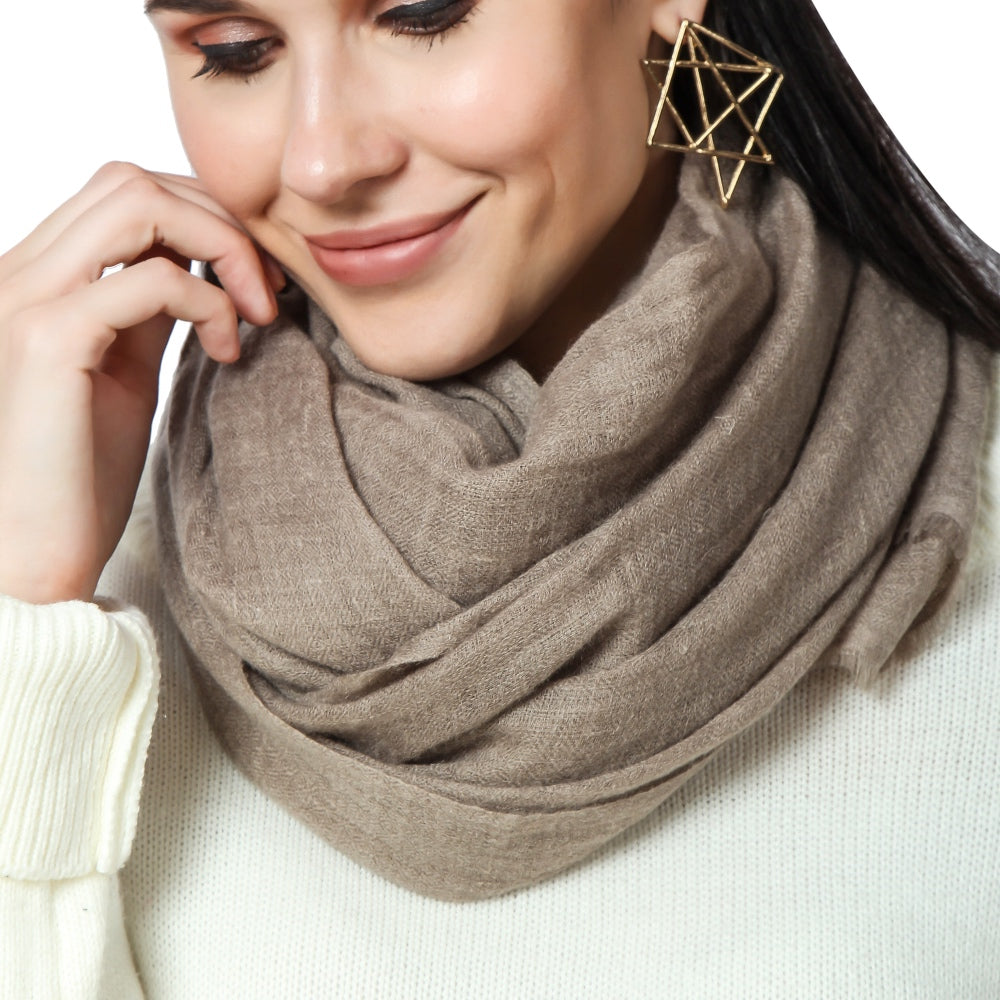
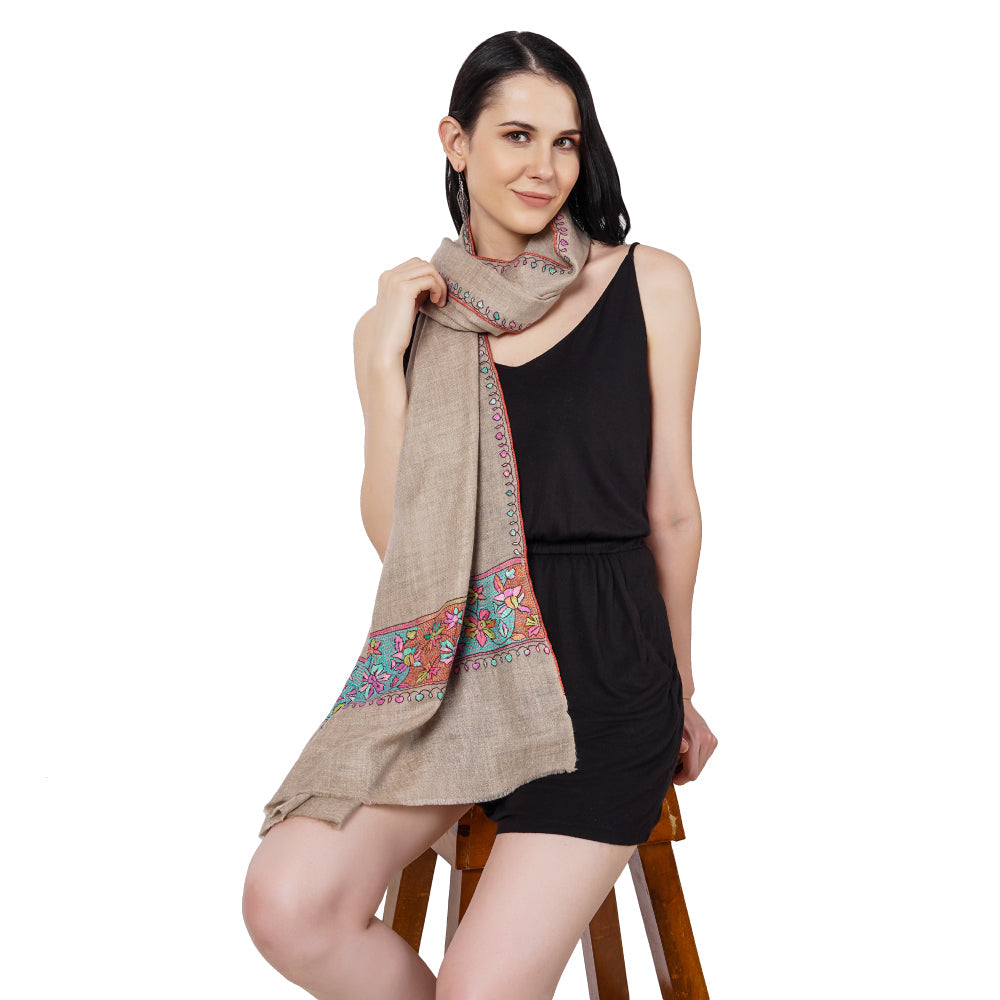
A woven scarf worn at the neck needs to be light, fluid, and maximally soft against the skin of the face and neck. The weave structure itself provides the fabric stability that plying would otherwise need to supply. Single-ply in woven construction gives the superior drape and weight profile for this product category. Pashwrap uses single-ply yarn in all scarves and wraps — this is the right choice for the product, not a cost-saving decision.
Woven shawls and fine wraps
The same logic applies to larger woven pieces. A Pashmina shawl worn over the shoulders as an evening wrap — or a prayer shawl, or a travel blanket — needs fluid drape and light weight above all else. Single-ply woven construction is how the finest Kashmiri shawls have been made for five centuries. The tradition did not use double-ply by accident.
Double-ply is the correct choice for —
Cashmere sweaters and cardigans
A knitted sweater is worn and washed repeatedly, subjected to sleeve friction, shoulder wear, elbow contact. It needs tensile strength and abrasion resistance that single-ply knitted yarn cannot reliably provide. Double-ply is the industry standard for quality cashmere knitwear for this reason — it is genuinely the better construction for a garment that must perform under repeated wear and laundering.
Cashmere accessories under stress — gloves, hats, socks
Cashmere gloves, hats, and socks are subject to higher mechanical stress than scarves — they are pulled on and off, compressed, stretched, and abraded repeatedly. Double-ply construction provides the durability these use patterns demand. Single-ply knitwear in these categories will show wear and breakage significantly sooner.
Cashmere blankets and throws
A cashmere blanket needs warmth — which requires more material — and durability under washing and surface use. Double or multi-ply construction is appropriate for heavier-weight pieces where drape is less critical than thermal performance and longevity under frequent laundering.
5. When "Double-Ply" Is a Marketing Claim, Not a Quality Signal
Double-ply is a construction specification. It describes how the yarn was made — not how fine the fibre is, not how carefully it was processed, not how honestly it was sourced. In the hands of marketers who understand that "more" sounds like "better," ply count gets used to imply a quality premium that the construction does not inherently deliver.
⚠️ What to Ask When You See "Double-Ply"
Two questions cut through ply-count marketing immediately: "What is the fibre diameter in microns?" and "What is the weight of the finished scarf in grams?"
A lightweight, fluid scarf is almost certainly single-ply — which is what it should be. A double-ply woven scarf at the same dimensions will be noticeably heavier and will drape differently. If a seller is marketing a scarf as double-ply without disclosing the weight, they may be obscuring a heavier, stiffer product behind a premium-sounding construction claim.
6. Why Pashwrap Uses Single-Ply — The Honest Explanation
Every Pashwrap scarf and wrap is made from single-ply hand-spun Pashmina yarn. This is not a cost decision. Single-ply yarn requires less spinning time than two singles that must then be plied — but the saving is marginal compared to the 24 hours of hand-spinning required per 100 grams of yarn regardless of ply structure. If double-ply produced a better scarf, Pashwrap would use it.
The reason single-ply is the correct construction for a Pashmina-grade woven scarf comes down to three properties that define what a scarf is for:
In a woven construction, the interlocking of warp and weft threads across thousands of intersections provides the fabric with its structural stability. The yarn does not need to supply its own structural stability through plying — the weave does that. Single-ply yarn in a well-executed woven structure is a complete, stable, durable product. The durability argument for double-ply applies to knitted construction, where individual yarn carries all structural load. It does not apply to woven construction in the same way.
This is why the traditional Kashmiri woven scarf — produced on the khaddi loom, by artisans who have been making this product for five centuries — has always been single-ply. Not because they lacked the knowledge to ply. Because they understood, through generations of practice, what a woven scarf needs from its yarn and what it does not.
Double-ply is not better cashmere.
It is differently constructed cashmere.
The right construction depends on what the product is for.
For a woven scarf at Pashmina grade — single-ply is correct.
To understand the full yarn production process — from hand-spinning on the yindeer to the khaddi loom — read How Is a Cashmere Scarf Made? To understand the fibre quality that underlies all cashmere construction, read What Is the Micron Count of Cashmere Fiber? To explore Pashwrap's single-ply Pashmina-grade woven collection, visit Cashmere Scarves.