
How Many Goats Are Needed for One Cashmere Scarf?
A single Pashwrap Pashmina scarf requires the entire annual fiber yield of approximately four Changthangi goats. A plain shawl requires six. An embroidered or Kani shawl requires eight to nine. Here is the complete fiber mathematics — and what it means for the price, the rarity, and the value of what you are holding.
Most people who buy a cashmere scarf have never considered what went into producing the fiber it is made from. The question — how many animals contributed to this single piece of fabric? — simply does not arise in conventional retail contexts. It should. Because the answer, for genuine Pashmina-grade cashmere, is not one. It is not two. For a standard Pashwrap scarf, the answer is four goats — and their entire year's fiber yield.
That number carries weight when you understand what it means. Each Changthangi goat on the Changthang Plateau of Ladakh produces between 80 and 170 grams of usable Pashmina fiber per year — after the fiber has been hand-combed, cleaned, and de-haired. The fiber yield is not expandable. The animal produces what it produces. There is no way to increase the output without increasing the number of animals — and the number of animals is constrained by the carrying capacity of the plateau and the sustainable grazing practices that have governed these herds for centuries.
This article explains the complete fiber mathematics behind every Pashwrap product — from plain scarf to embroidered shawl — and the specific reasons why Pashmina's fiber requirements are higher than any other commercial cashmere product on the market.
The Pashwrap Fiber Count — At a Glance
Pashwrap Pashmina Scarf
70 × 200 cm · 95–105g
One full year's yield per goat
Pashwrap Plain Shawl
100 × 200 cm · ~150g
One full year's yield per goat
Embroidered / Kani Shawl
100 × 200 cm · densely woven
One full year's yield per goat
📋 Why These Numbers Are Higher Than Industry Averages
Standard industry figures for cashmere goat fiber requirements cite 2–4 goats for a plain shawl. Pashwrap's figures are higher — 4 goats for a scarf, 6 for a plain shawl — for two specific reasons: the fiber grade is finer (12–14 microns versus the 15–19 microns of commercial cashmere), meaning lower yield per animal after de-hairing; and the combing method is entirely natural, taking only what the animal sheds in its natural shedding season rather than shearing the full coat. Both factors reduce the usable fiber per animal — and both are non-negotiable quality and ethical commitments.
The relationship between a living animal on a high-altitude plateau and a finished scarf on a shop shelf involves several stages of processing, each of which reduces the usable fiber yield. Understanding those stages makes the final goat count not just plausible but inevitable.
Pashwrap Fiber Yield Calculation — Per Changthangi Goat
The numbers above reflect Pashwrap's specific fiber grade and processing method. At 12–14 microns, the de-hairing loss percentage is higher than for coarser commercial cashmere grades — because the finer the fiber, the more precisely the guard hairs must be separated, and the more carefully the process must be managed to avoid losing usable Pashmina fiber along with the coarse material being removed.
Why De-Hairing Loss Is Higher for Pashmina
Every raw cashmere fiber bundle contains two distinct fiber types: the fine, soft undercoat that is the target product, and the coarser outer guard hairs that must be removed before the fiber can be spun. In commercial cashmere production, mechanical de-hairing machines process large volumes quickly — accepting some loss of fine fiber as acceptable collateral damage in exchange for speed.
For Pashmina-grade fiber at 12–14 microns, mechanical de-hairing is too aggressive — the machinery cannot distinguish between fine Pashmina fibers and slightly less fine material without causing significant loss of the most valuable fiber. Hand de-hairing is more precise but produces a higher proportion of removed material relative to retained fiber. The result is a lower net yield per animal — which directly drives the higher goat count per finished piece.
Pashwrap's Changthangi goats are hand-combed during their natural spring shedding season — a practice that harvests only the fiber the animal is already releasing, without cutting the undercoat or taking fiber outside of the natural shedding cycle. Shearing — which cuts the entire fleece — produces a higher raw fiber weight per animal per harvest. But shearing collects coarser outer coat material along with the fine undercoat, increases de-hairing requirements, and is not aligned with the welfare standards Pashwrap maintains. The combing method produces a purer, finer fiber bundle — but a smaller one.
✓ Pashwrap — Hand-Combing Only
Natural shedding season only. Animal gives only what it is releasing. Lower raw weight per animal. Purer fiber bundle — less coarse contamination. Higher goat count per finished piece. Higher quality and ethical standard.
Commercial — Shearing
Higher raw weight per harvest. Entire fleece collected — mixed fine and coarse fiber. Higher de-hairing requirement. Lower purity of fine fiber in the raw bundle. Lower goat count per finished piece — but lower quality and ethical standard.
The variation in goat count between Pashwrap's different product types is not simply a function of size — though size is a factor. It is also a function of weave density, which varies specifically because of what the finished piece is designed for. Each product type has its own fiber requirement logic.
The Pashmina Scarf — 4 Goats
Pashwrap Pashmina Scarf — 70 × 200 cm · 95–105 grams
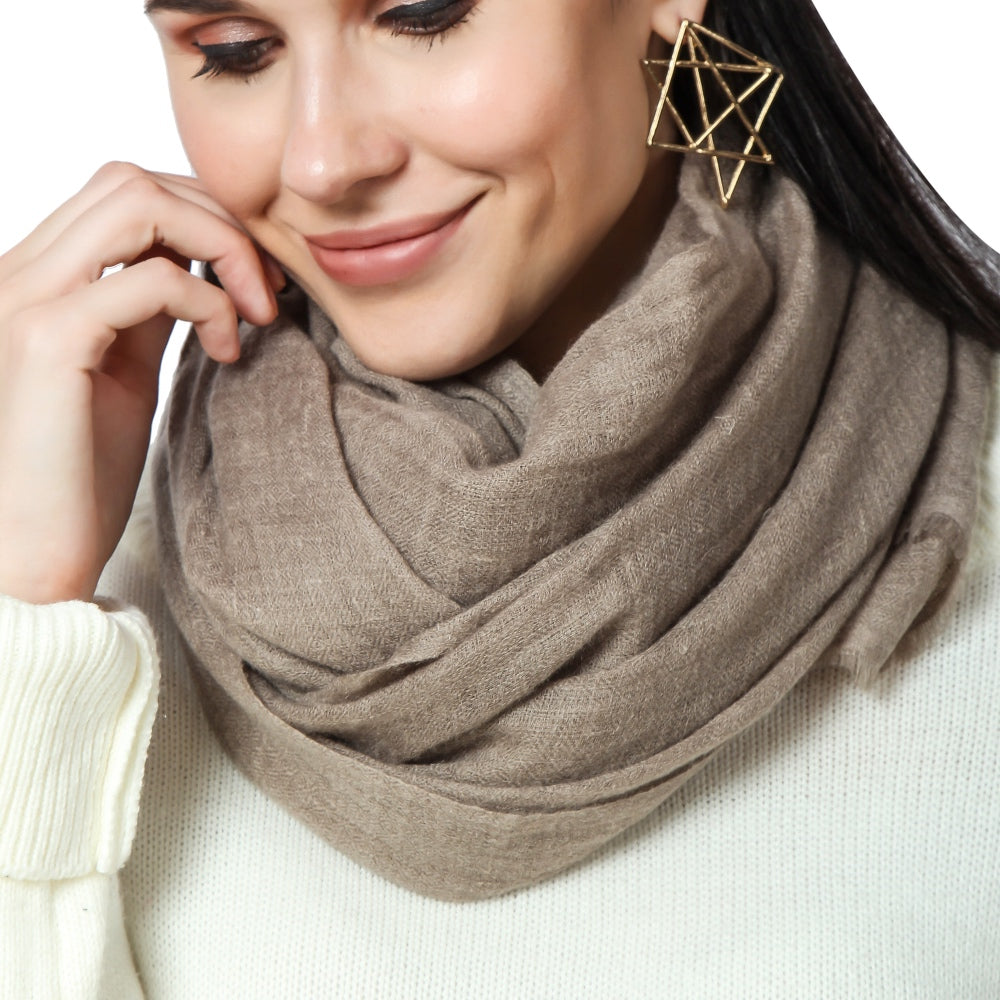
The Pashwrap scarf is woven in a plain twill weave at a thread count appropriate for a lightweight, draped accessory. At 95–105 grams finished weight and dimensions of 70 × 200 cm, it represents the minimum fiber requirement in the Pashwrap range — and still requires the full annual yield of approximately four Changthangi goats. The scarf is designed for versatility: worn as a neck scarf, draped over the shoulders, or used as a lightweight travel wrap. Its weight and weave are optimised for softness and drape over density.
The Plain Pashmina Shawl — 6 Goats
Pashwrap Plain Pashmina Shawl — 100 × 200 cm · ~150 grams
The plain shawl is larger in both dimensions than the scarf — 100 cm wide versus 70 cm — and at approximately 150 grams, carries proportionally more fiber. The weave density is similar to the scarf: a plain weave optimised for drape, softness, and the characteristic lightweight warmth of Pashmina. Six goats' annual yield is required to produce the fiber that, after de-hairing, hand-spinning, and weaving, becomes this single piece. A family of six goats on the Changthang Plateau gives one year of their lives, collectively, to each shawl of this type.
The Embroidered or Kani Shawl — 8 to 9 Goats
Pashwrap Embroidered / Kani Shawl — 100 × 200 cm · Densely Woven
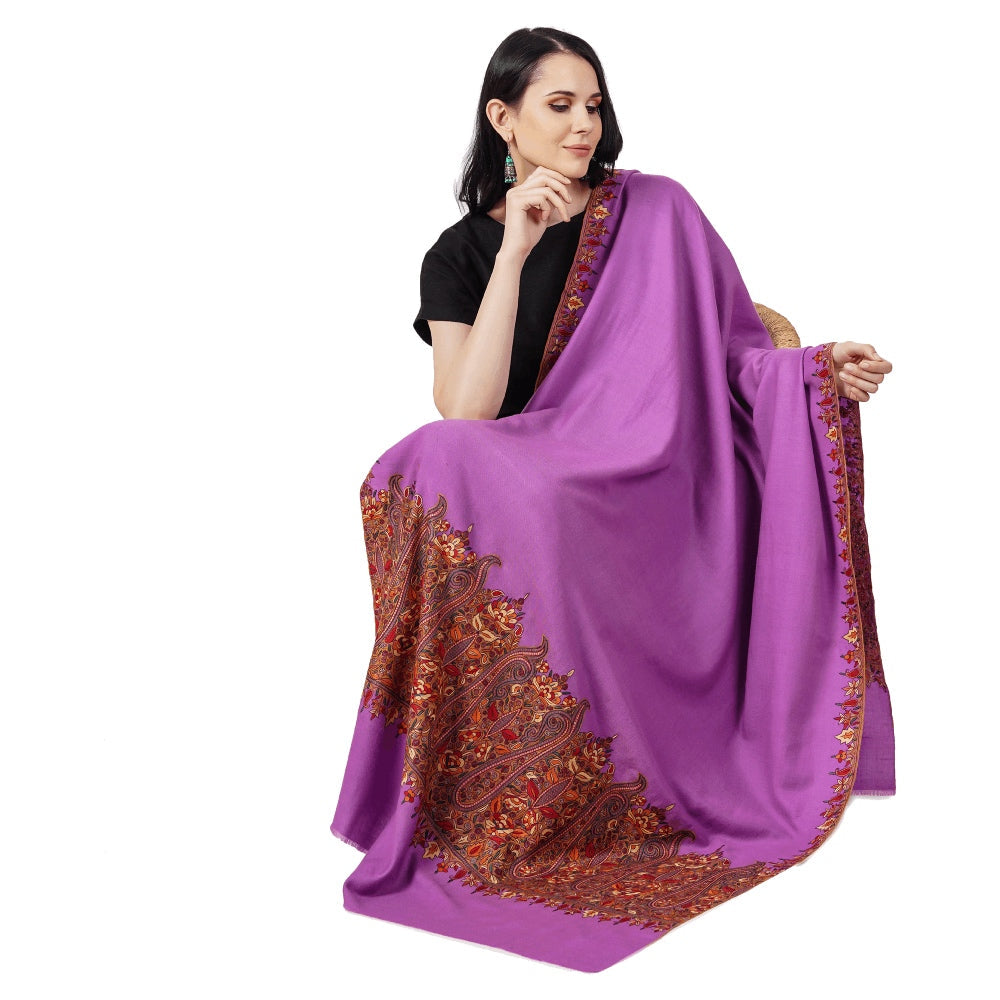
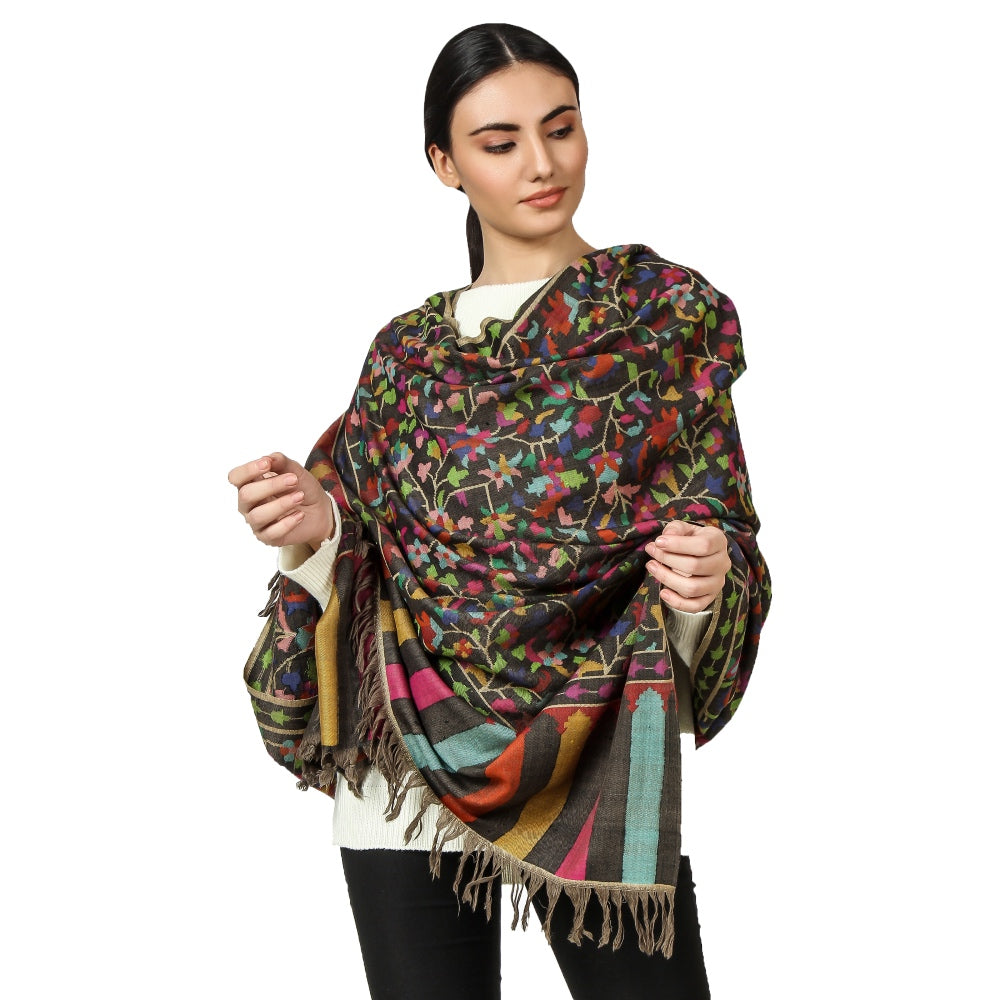
The fiber requirement for embroidered and Kani-woven shawls is significantly higher than for plain-weave pieces of the same dimensions — and the reason is specific. Both embroidery and Kani weaving require a denser base fabric than plain weave. In sozni embroidery, the needle must pass through a fabric that is tight enough to hold the embroidery thread without distorting the weave structure. In Kani weaving, where the pattern is integrated into the weave itself using small wooden needles called kanis, the interlocked weft threads require a denser warp structure to maintain pattern integrity across thousands of passes. This higher weave density requires more yarn per square centimetre — which requires more fiber per finished piece — which requires more goats. Eight to nine animals contribute their full annual yield to each piece of this type.
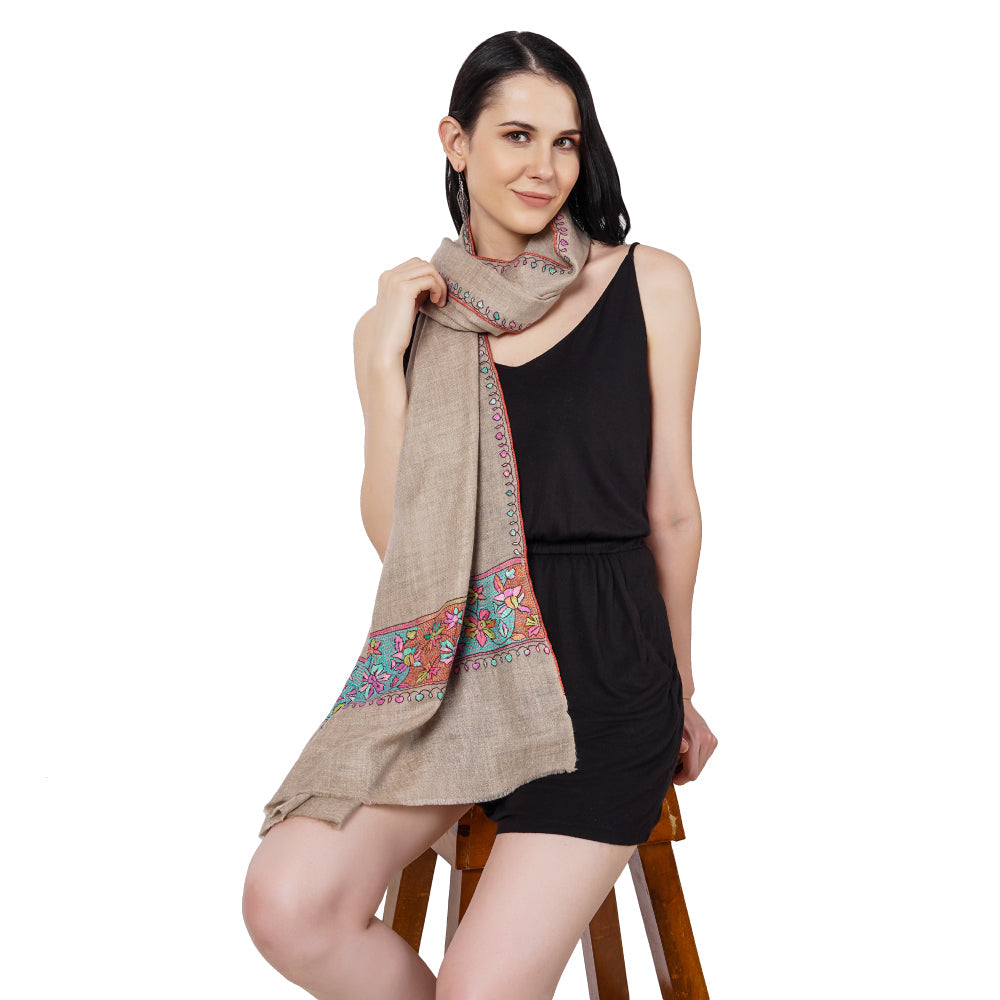
An embroidered Pashwrap shawl carries the fiber of 8 to 9 goats, woven densely enough to carry embroidery — and then the needle work of an artisan who may spend 200 to 400 hours completing the surface. The price reflects both.
The fiber mathematics above would be less significant if Pashmina fiber production could simply be expanded to meet demand. It cannot. The constraints are biological, geographic, and ecological — and they are permanent.
⚠️ What "Cheap Pashmina" Actually Means
When a product labelled "Pashmina" is priced at $30 or $50, the fiber mathematics make clear what that price implies. A genuine Pashmina scarf requires the annual yield of four Changthangi goats — combed by hand, de-haired, hand-spun, and handwoven. The raw fiber cost alone, before any processing, spinning, weaving, or margin, cannot be accommodated at those prices. A $30 "Pashmina" does not contain Pashmina fiber. The label is a commercial decision, not a material description. For the full price floor analysis, read our article Why Is Kashmiri Pashmina Expensive?
Fiber Requirements — Pashwrap vs. Commercial Cashmere
| Product Type | Pashwrap Pashmina (12–14 microns, hand-combed) |
Commercial Cashmere (17–19 microns, machine-sheared) |
Why Pashwrap Requires More |
|---|---|---|---|
| Scarf (70 × 200 cm) | ~4 goats' annual yield | ~1–2 goats' annual yield | Finer fiber = lower yield per animal after de-hairing. Combing = less raw fiber than shearing. |
| Plain Shawl (100 × 200 cm) | ~6 goats' annual yield | ~2–3 goats' annual yield | Same factors as above, scaled to larger dimensions. |
| Embroidered / Kani Shawl | ~8–9 goats' annual yield | ~3–4 goats' annual yield | Dense base weave required for embroidery and Kani pattern integrity adds significant fiber over plain weave. |
| Fiber Grade | 12–14 microns — Pashmina grade | 17–19 microns — commercial grade | Finer diameter = shorter fiber length = higher de-hairing loss percentage. |
| Harvest Method | Hand-combing — natural shedding season only | Machine shearing — year-round | Combing yields less raw fiber per harvest than shearing the full fleece. |
| De-hairing Method | Hand de-hairing — higher loss, higher purity | Machine de-hairing — lower loss, lower purity | Hand method is more precise but removes more material in the process of achieving higher purity. |
What You Are Actually Holding
The fiber mathematics of a Pashwrap piece are not presented here as a sales argument. They are presented because most buyers have no idea — and the gap between what they imagine and what is actually true is significant enough to change how a piece is valued, cared for, and understood.
When you hold a Pashwrap Pashmina scarf, you are holding the annual fiber yield of four Changthangi goats — animals that spend their lives at 4,500 metres altitude on one of the world's most remote and inhospitable plateaus, tended by herder communities whose relationship with the land and the animals follows traditions centuries old. That fiber has been hand-combed from those animals during their natural shedding season, cleaned and de-haired by hand, spun into yarn on a traditional wheel by a Kashmiri artisan, and woven thread by thread on a handloom into the piece you are holding.
Not one step in that process is replicable at industrial scale. Not one step has been shortcut. The four goats and the artisan hands are both in the fabric — and the price reflects both honestly.
To understand the full production journey from Changthang Plateau to finished piece, read our article How Pashmina Shawls Are Made. To understand why these production requirements make cheap "Pashmina" a mathematical impossibility, read Why Is Kashmiri Pashmina Expensive? To explore the full Pashwrap collection of authenticated Pashmina pieces, visit the Pashwrap collection.
To understand the sustainability practices behind Pashwrap's sourcing — and why the Changthang Plateau is not subject to the overgrazing that has damaged Mongolian cashmere production — read our article Sustainable Cashmere – Is It Ethical?