
How Rare Is Pure Cashmere?
By conservative estimate from those who source directly from Kashmir and Ladakh, fewer than 5% of products sold globally as pure cashmere or pure Pashmina actually contain what they claim. This is not a rounding error. It is the defining commercial reality of the cashmere market — and almost no one is talking about it honestly.
If you have ever bought a cashmere product — from a tourist market, from an online retailer, from a department store — the probability that what you purchased was genuinely pure cashmere is, at best, one in twenty. More likely, it was a blend, a substitute, or a synthetic product carrying a label it had no right to bear.
That figure — fewer than 5% of products labelled as pure cashmere actually being pure cashmere — comes not from a regulatory study or a laboratory survey, but from the direct sourcing experience of those who work within the authentic Pashmina supply chain in Kashmir and Ladakh. People who know what genuine cashmere costs to produce, how it behaves, and how the market for it actually functions. The 5% estimate is not pessimism. It is observation.
This article explains why that number is so low — the biological constraints that make pure cashmere genuinely rare, the economic incentives that drive the deception, the specific markets where buyers are most exposed, and what the 5% that is genuine actually looks like.
Before examining the market deception, it is worth understanding that pure cashmere — and Pashmina in particular — is genuinely, structurally rare. This is not a scarcity manufactured by brands to justify pricing. It is a biological and geographic reality that no commercial decision can alter.
The Animal Produces Very Little
A single Changthangi goat — the source of Pashmina-grade fiber at 12–14 microns — produces between 80 and 170 grams of usable fiber per year after combing, cleaning, and de-hairing. A standard Pashwrap Pashmina scarf weighing 95–105 grams requires the full annual yield of approximately four of these animals. A plain shawl requires six. An embroidered or Kani-woven shawl requires eight to nine.
These are not figures that can be improved by better farming practice or more efficient processing. They are set by biology. The Changthangi goat grows the fiber it grows. The plateau supports the herd it supports. The annual yield is what it is.
The global demand for cashmere products — driven by fast fashion's discovery that "cashmere" could be a mass-market label — far exceeds the supply of genuine cashmere fiber. The total global production of cashmere fiber is estimated at approximately 15,000–20,000 tonnes per year. Global sales of products labelled as cashmere are a multiple of what that fiber supply could produce at honest content levels. The gap between supply and labelled product is filled by blends, substitutes, and outright synthetic products carrying cashmere labels.
The Gap — What It Means
If genuine cashmere fiber supply were honestly allocated to labelled products, the price of every cashmere item would rise significantly and the volume available would fall dramatically. The current market volume at current prices is only possible because the majority of products contain far less genuine cashmere than their labels claim — or none at all.
Pashmina Rarity — Even Within Cashmere
Pashmina-grade fiber at 12–14 microns represents a small fraction of total cashmere production. The Changthangi goat population of Ladakh is limited by the plateau's carrying capacity. Genuine Pashmina is rare within the cashmere category in the same way that cashmere is rare within the broader luxury fiber market.
The Geography Cannot Be Replicated
Pure Pashmina fiber can only come from one place: the Changthang Plateau of Ladakh, at 4,000–5,000 metres altitude, from Changthangi goats whose fiber fineness is a direct biological response to the extreme cold of that specific environment. Relocate the animal, and the fiber changes. Replicate the altitude elsewhere, and the breed's centuries of adaptation to that specific ecosystem does not transfer.
Commercial cashmere from Mongolia and Inner Mongolia is genuine cashmere — but it measures 15–19 microns, not 12–14. It is a different grade from a different geography. The Pashmina category is geographically locked in a way that no other luxury fiber is — which makes the global proliferation of products claiming Pashmina provenance even more striking. There is simply not enough Changthangi fiber in existence to supply the volume of "Pashmina" products currently being sold.
There is not enough genuine Pashmina fiber produced in the world each year to supply even a fraction of the products currently sold under that name. The math does not work. It has never worked. The deficit is filled with deception.
Understanding why the cashmere market is so thoroughly dishonest requires understanding the economic incentives that make dishonesty so profitable and so difficult to punish.
The Margin on a Fake Is Extraordinary
A viscose scarf with a cashmere label costs approximately $3–5 to produce. It sells for $30–80 as "pure cashmere" or "pure Pashmina." The margin on that transaction is extraordinary — and it is available to any seller willing to misuse the label. Genuine Pashmina, by contrast, has a minimum input cost that makes a $30 retail price impossible to achieve honestly. The economic incentive to fake is enormous. The risk of being caught is minimal.
The profitability of selling fake cashmere under a genuine label is one of the most persistent incentive problems in the luxury textile market. The cost difference between producing a fake and producing the real thing is substantial — and the retail price gap between them is kept artificially narrow by buyers who do not know how to distinguish them.
Fake "Pure Cashmere" Economics
Production cost: $3–8 (viscose, acrylic, or cheap wool blend). Retail price: $30–80. Gross margin: 90%+. Risk of detection: very low without laboratory testing. Legal consequence in most markets: minimal.
Genuine Pashmina Economics
Raw fiber cost alone: $40–60+ for a plain scarf (4 goats' yield). Add hand-spinning, handweaving, artisan labor, finishing. Minimum honest retail price: $200+. Margin is honest — but cannot compete on price with a fake.
Labelling Enforcement Is Minimal
In most markets, fiber content labelling is self-reported by the manufacturer and subject to minimal routine enforcement. Regulatory bodies in the United States, European Union, and elsewhere have the authority to test and prosecute mislabelled fiber content — but the resources devoted to doing so are a fraction of what would be required to meaningfully police a global market of this size. A brand can print "100% Pure Cashmere" on a product containing 20% acrylic and face little practical consequence unless specifically targeted by a regulator.
The result is a market where honesty is commercially disadvantaged. Sellers who label accurately and price accordingly compete at a structural disadvantage against sellers who label fraudulently and price to match. The honest seller appears expensive. The fraudulent seller appears to offer equivalent value at lower cost. Without the knowledge to distinguish them, buyers choose on price — and the fraud wins.
The cashmere deception problem is not evenly distributed across all retail contexts. Based on direct sourcing experience within the authentic Kashmiri supply chain, three markets stand out — ranked here by the severity and frequency of the deception buyers encounter.
Tourist Markets — The Highest Risk
Online Retail — High Risk, Impossible to Inspect
High Street Retail — Sophisticated Deception
The 5% of cashmere products that genuinely contain what their label claims share a set of characteristics that are identifiable — not through specialist knowledge or laboratory testing, but through a combination of price awareness, seller transparency, and the physical tests that distinguish genuine fiber from substitutes.
Price That Reflects Reality
The single most reliable marker of genuine cashmere is a price that makes mathematical sense. The raw fiber cost, artisan labor, and production time involved in genuine Pashmina create a floor below which honest production is impossible. A Pashmina scarf priced below $150 is almost certainly not genuine. A plain shawl below $200 cannot be. An embroidered or Kani piece below $400 is making a claim the production economics cannot support.
These are not arbitrary luxury premiums. They are the cost of four goats' annual yield, a week of a spinner's skilled labor, several days at a handloom, and the finishing process — before any margin is added. For the full cost breakdown, read our article Why Is Kashmiri Pashmina Expensive?
Seller Transparency That Goes Beyond Marketing
Physical Characteristics That Confirm the Fiber
Even without laboratory testing, the physical tests available to any buyer at the point of purchase are sufficient to identify obvious fakes and narrow the field significantly. The softness gradient test, warmth test, sheen test, burn test, and price authenticity check together create a converging body of evidence that distinguishes genuine cashmere from the majority of substitutes.
For the complete guide to performing these tests at home and in a retail environment, read our article How to Check Cashmere Quality at Home.
The Cashmere Market — What You Are Most Likely Buying
| Where You Buy | What You Are Most Likely Getting | Probability of Genuine Cashmere | Primary Deception |
|---|---|---|---|
| Tourist market (Kashmir, Nepal, Turkey) | Viscose, acrylic, or coarse wool blend | Near zero | "Pashmina" used as a scarf size description, not a fiber standard |
| Online platform (Amazon, AliExpress, Etsy) | Synthetic blend or low-grade commercial cashmere | Very low — under 5% | "100% Pure Cashmere" label on products priced below production cost floor |
| High street / department store | Low-grade commercial cashmere (17–19µm) or undisclosed blend | Possible — but grade rarely disclosed | Commercial cashmere marketed with premium language; micron count never disclosed |
| Mainstream luxury brand | Commercial or Grade A cashmere — genuine but not Pashmina grade | Likely genuine cashmere — not likely Pashmina | Grade and origin opaque; "cashmere" claim honest but quality tier not disclosed |
| Verified direct-source brand (e.g. Pashwrap) | Documented Pashmina-grade fiber, hand-spun, handwoven | Genuine — supply chain documented | None — fiber origin, micron count, and production method disclosed |
In a market where 95% of products claiming to be pure cashmere are not, the only protection a buyer has is knowledge — of what genuine cashmere costs, what it feels like, and what questions to ask the seller before purchasing.
Why Rarity Is Not an Argument Against Buying — It Is an Argument for Buying Correctly
The rarity of pure cashmere is not a reason to avoid the category. It is a reason to understand it — and to buy from the 5% of the market that is honest about what it sells, rather than from the 95% that is not.
A genuine Pashmina piece is one of the most extraordinary objects available in the luxury textile market. It is the product of a specific animal on a specific plateau, handled by skilled hands at every stage of a production chain that has not fundamentally changed in centuries, and finished without chemical intervention into a fabric of softness and warmth that no synthetic and no industrial process can replicate. Its rarity is structural and permanent — which means its value is structural and permanent.
The 95% that is fake exists because the 5% that is genuine commands the kind of desire that makes deception profitable. The best response to that deception is not cynicism about the category. It is the knowledge to navigate it correctly.
To understand exactly what genuine Pashmina is and how it differs from all grades of commercial cashmere, read our article What Is the Difference Between Cashmere and Pashmina? To learn how to identify genuine cashmere at home using physical and sensory tests, read How to Check Cashmere Quality at Home. To understand the complete sourcing and production ethics behind Pashwrap's pieces, read Sustainable Cashmere — Is It Ethical?
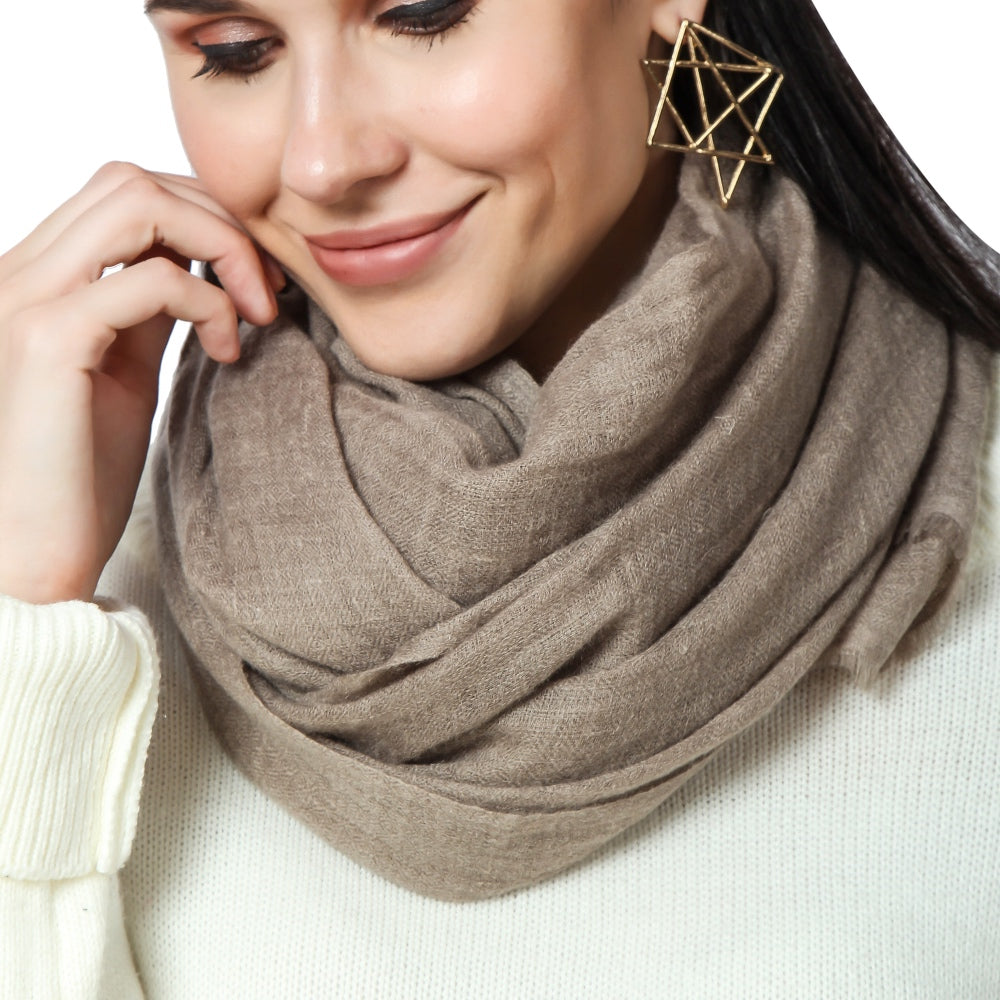
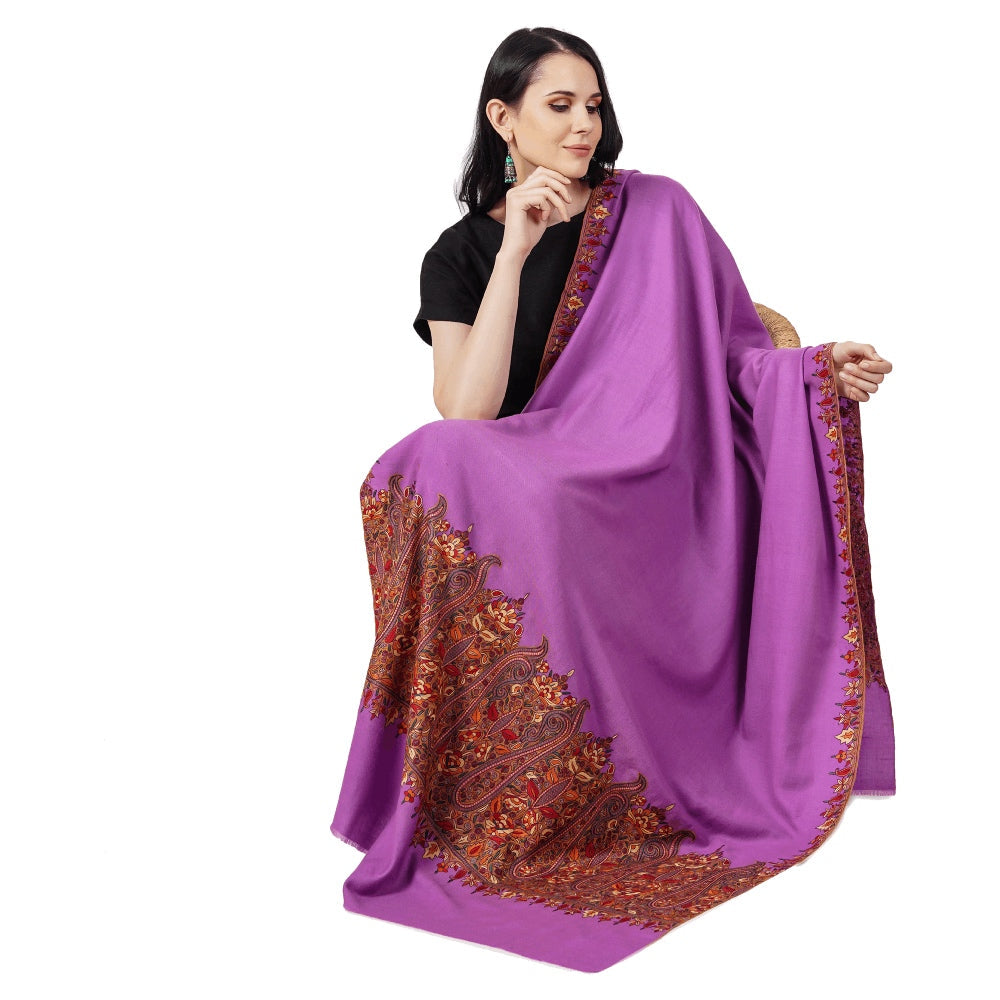
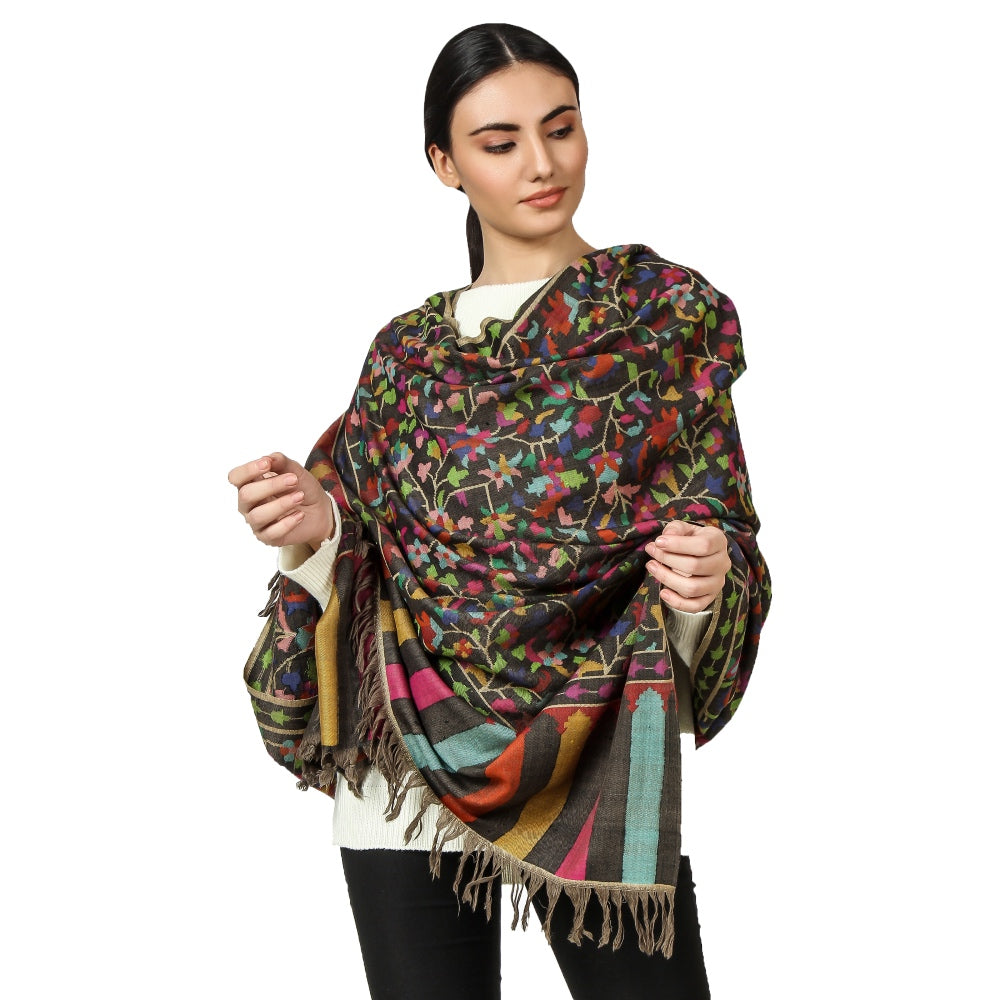
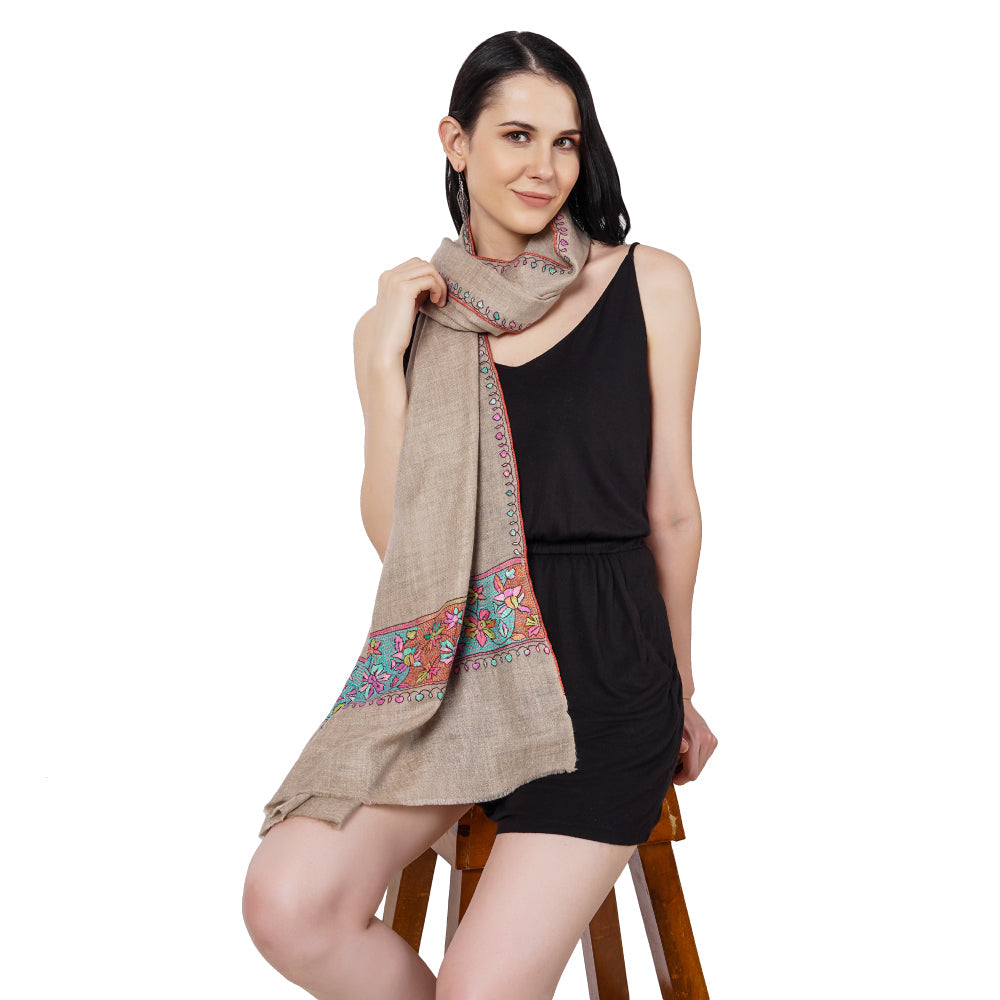
To explore the 5% — authenticated Pashmina sourced directly from Kashmir and Ladakh — visit the Pashwrap collection.