
Shahtoosh in France and Italy: How European Luxury Houses Drove Demand
The demand for Shahtoosh did not originate in Kashmir. It was manufactured in the fashion houses of Paris and Milan, amplified by the editorial pages of European magazines, and paid for by the wealthiest consumers on Earth. The looms in Srinagar responded to a demand they did not create — a demand that ultimately destroyed the very fiber it celebrated.
The European Engine
- 01 The Origin: How the "Ring Shawl" Entered European Consciousness
- 02 The Fashion Press as Accomplice: Creating the Myth of the Forbidden Fiber
- 03 The Italian Market: From Discreet Elegance to Industrial Demand
- 04 The French Market: Haute Couture's Dark Secret
- 05 The Economics of Illicit Prestige: Why Ban Equaled Value
- 06 The Investigations: When European Fashion Met Wildlife Law
- 07 The Reputational Fallout: What the Scandals Cost the Luxury Sector
When we discuss [what Shahtoosh is](https://www.pashwrap.com/blogs/news/shahtoosh-vs-pashmina) as a fiber, we talk about the chiru, the plateau, the poaching, and the weaving. But when we discuss Shahtoosh as a market phenomenon, we have to talk about Paris and Milan. The European luxury sector did not merely buy Shahtoosh. It invented the demand structure that turned an illegal wildlife product into the ultimate status symbol of the late 20th century. Without the European fashion houses and the magazines that served them, the Shahtoosh trade would have remained a regional, high-end but limited market. Europe made it global. Europe made it catastrophic.
The Origin: How the "Ring Shawl" Entered European Consciousness
Shahtoosh had been known in Europe for centuries — [the history of Shahtoosh](https://www.pashwrap.com/blogs/news/shahtoosh-european-aristocracy-19th-century) in European aristocratic circles dates back to the 18th and 19th centuries, when Kashmiri shawls were common diplomatic gifts and luxury imports. But in those earlier eras, Shahtoosh was one luxury textile among many. It was prized, but it was not mythologised.
The transformation began in the 1970s. The specific catalyst was the popularisation of the "ring test" — the demonstration of pulling a fine shawl through a finger ring. Whether this test originated in Kashmir or was a European invention is debated, but its effect is not: the ring test gave Western buyers a simple, theatrical way to demonstrate the fineness of the fiber to their friends. It turned a physical property (micron count) into a social performance. "Watch this," the buyer would say, threading the shawl through a ring to gasps of admiration. The fiber's fineness became its marketing tool.
Through the 1970s and 1980s, a specific cohort of European consumers drove the initial demand: the international elite — diplomatic spouses, corporate executives' wives, old-money socialites, and the travelling upper class. These were not people who walked into a shop and asked for a shawl. They were people who were taken to private showings by intermediaries, offered tea, and shown "something special" from the back room. The exclusivity of the buying process was as important as the product itself. You could not buy Shahtoosh at retail. You had to be invited to see it. This structure — invitation-only access to an illegal product — was the most effective marketing framework the trade ever developed.
The Fashion Press as Accomplice: Creating the Myth of the Forbidden Fiber
If the private showings created the demand, the fashion press normalised it. And in this, European fashion journalism committed one of the most consequential acts of irresponsible reporting in modern textile history. Throughout the 1980s and into the mid-1990s, major European and American fashion magazines — including titles that would never tolerate such coverage today — featured Shahtoosh in largely uncritical terms.
The language was consistent across publications: "legendary," "forbidden," "the ultimate luxury," "the shawl that passes through a ring," "rarer than diamonds." Notice what is absent from this list: "illegal," "endangered," "requires killing the Tibetan antelope." The magazines treated Shahtoosh as a fascinating cultural artifact — a relic of Eastern exoticism — rather than what it was: a contemporary wildlife crime product. By framing it as a historical curiosity rather than an active illicit trade, the fashion press gave affluent readers permission to be interested without feeling complicit.
French and Italian publications were particularly enthusiastic. *L'Officiel*, *Vogue France*, *Vogue Italia*, and *Elle* ran features that treated Shahtoosh as a marker of extreme sophistication. The message to the European luxury consumer was clear and devastating in its simplicity: the most discerning people in the world know about Shahtoosh. If you don't, you are not among them. This was not a demand for a textile. It was a demand for social positioning. And it worked.
The Italian Market: From Discreet Elegance to Industrial Demand
Italy's role in the Shahtoosh trade was distinct from France's, and it reveals how deeply the luxury infrastructure was involved. While Paris was the market for the most exclusive, high-priced Shahtoosh pieces, Italy became the market for volume, finishing, and redistribution.
Italy had a specific structural advantage: its textile finishing industry, centered in the Como and Lombardy regions, employed artisans skilled enough to handle extraordinarily fine fabrics. Some of these workshops were used to finish, re-finish, or in some cases re-weave Shahtoosh shawls that arrived from Kashmir in various states of completion. The Italian artisan's touch added another layer of perceived value — and another layer of concealment. A shawl that had passed through a Lombardy finishing workshop was no longer identifiably Kashmiri in its presentation. It had acquired European provenance. This made it more marketable to buyers who might hesitate at a product described as coming directly from a region associated with poaching.
⚠ The 1990s Italian Investigations
Italy's involvement became publicly visible in the mid-1990s when Italian law enforcement conducted raids that exposed the scale of the trade within Italian borders. The Italian Guardia di Finanza (financial police) and the CITES enforcement authorities seized significant quantities of Shahtoosh from boutiques, private residences, and textile workshops. These seizures revealed that Shahtoosh was not a rare curiosity circulating among a dozen aristocrats — it was a stocked product in the Italian luxury supply chain, available to anyone with sufficient funds and the right connections.
The Italian investigations were a turning point because they demonstrated that [how Shahtoosh was smuggled](https://www.pashwrap.com/blogs/news/shahtoosh-smuggling-routes-tibet-kashmir-world) into Europe was not an ad-hoc operation. It was a structured, repeated commercial process with identifiable intermediaries, established routes, and known retail endpoints. Italy's willingness to prosecute its own luxury sector sent a signal that France initially resisted.
The French Market: Haute Couture's Dark Secret
France was the more discreet market, and in some ways the more significant one. Paris was — and remains — the global capital of luxury. If Shahtoosh could command prestige in Paris, it could command prestige anywhere. And for two decades, it did.
The French market operated at the highest price points and the highest levels of discretion. The buyers were not browsing boutiques. They were contacting agents who dealt in rare and controversial luxury goods. The transactions often took place in private apartments or through personal introductions at social events. The shawls were stored in private collections, brought out for intimate gatherings, and discussed in the same hushed tones one might use for illicit art or contraband. This was not the street-level trade. This was the apex predator trade — the very top of the market, where the clients were the wealthiest people in Europe and the discretion was absolute.
"In the Srinagar trade, the French buyer was a legendary figure. They were known for paying the highest prices and demanding the most exquisite work — but they were also known for being the most difficult to supply. The French market had no tolerance for fake Shahtoosh. If a dealer sold a French client a Pashmina shawl labelled as Shahtoosh, the consequences were severe — not legal consequences, but market consequences. The French network talked to each other. A dealer caught misrepresenting fiber to a French buyer was blacklisted. This ironic code of honour — rigorous honesty within an entirely dishonest trade — was a distinctive feature of the French market. They wanted the real thing, and they had the money and the connections to get it."
This discretion protected the French market for years. While Italian enforcement was already seizing shipments in the mid-1990s, the French trade continued with relatively little interference because it was so deeply embedded in the private, invitation-only luxury ecosystem. It took coordinated international pressure — and a shift in French judicial attitudes toward wildlife crime — to finally reach the apex of the market.
The Economics of Illicit Prestige: Why Ban Equaled Value
The European demand for Shahtoosh demonstrated a perverse economic principle: for certain categories of luxury goods, illegality does not suppress demand — it enhances it. In economics, this is related to the Veblen good effect — goods whose demand increases as their price increases, because their function is primarily social signalling rather than practical utility. Shahtoosh was an extreme Veblen good, and its illegality added an additional layer of exclusivity.
This dynamic explains why the [legal status of Shahtoosh](https://www.pashwrap.com/blogs/news/is-shahtoosh-illegal) was so poorly understood by buyers. Many European consumers in the 1980s and 1990s genuinely did not know that Shahtoosh was illegal under international law. This was not because the information was unavailable — CITES Appendix I listings were public. It was because the entire ecosystem surrounding the product — the dealer, the private showing, the fashion magazine feature, the discreet packaging — was designed to create an atmosphere of cultural significance that made legal questions feel vulgar. Asking "Is this legal?" in a Parisian private salon, when offered a "legendary Kashmiri shawl" by a trusted intermediary, would have been considered crass. The social pressure against asking was as effective as any non-disclosure agreement.
The Investigations: When European Fashion Met Wildlife Law
The turning point in the European market came in the mid-to-late 1990s, driven not by a change in fashion taste but by a change in enforcement priorities. Wildlife crime, previously a low-priority category in European law enforcement, began to be treated with the seriousness of other organised illegal trades. The trigger was the growing body of evidence linking Shahtoosh to the collapse of the Tibetan antelope population, amplified by investigations by the International Fund for Animal Welfare (IFAW) and the Wildlife Protection Society of India.
Italy's Guardia di Finanza raids in 1996-1997 were the first major European enforcement action. They were significant not only for the seizures they made but for the signal they sent: European authorities were willing to treat Shahtoosh as contraband, not as a cultural artifact. France followed more slowly, but the direction was irreversible. French customs began specifically screening for fine wool shawls from South Asia. The private networks that had operated with impunity for two decades found that the risk of interception was rising. The insurance of discretion — that buyers would not be prosecuted, only the dealers — began to erode.
✦ The Tipping Point
The moment the European market truly collapsed was not a single raid. It was the accumulation of risk across the entire chain. When Italian authorities began seizing shipments, the transport route through Italy became dangerous. When French customs began testing fine wool shawls, the personal carriage route became dangerous. When wildlife NGOs began naming specific luxury houses in their reports, the reputational risk became dangerous. Each individual risk was manageable. The cumulative risk was fatal. By the late 1990s, a European buyer who purchased Shahtoosh was no longer just making a controversial luxury choice. They were taking a documented, calculable legal risk. The Veblen calculus flipped: the social reward of owning Shahtoosh was now outweighed by the legal and reputational cost of being caught with it.
The European luxury houses that had profited from Shahtoosh — whether directly or through the general mystique they helped create — quietly removed it from their inventories and their conversations. The fashion magazines stopped mentioning it. The private showings ended. The market did not crash dramatically — it simply dissolved, as the network of buyers, sellers, and facilitators quietly agreed to stop discussing a product that had become too dangerous to acknowledge.
The Reputational Fallout: What the Scandals Cost the Luxury Sector
The aftermath of the European investigations had a cost for the luxury sector that extended beyond the loss of Shahtoosh revenue. The brands and publications that had been associated with Shahtoosh — even tangentially — faced reputational damage that took years to fade. In the court of public opinion, being the house that "used to sell Shahtoosh" was a stain that no amount of corporate social responsibility messaging could easily remove.
This reputational risk is why the European luxury sector became some of the most aggressive enforcers of anti-Shahtoosh sentiment in the 2000s. Brands that had profited from the trade became publicly hostile to it — not out of moral awakening, but out of self-preservation. Denouncing Shahtoosh became a way to distance a brand from its own history. The louder a luxury house condemned Shahtoosh, the more effectively it could signal that the current inventory contained nothing illegal. The conversion from enabler to enemy was swift, total, and entirely self-serving — but its effect was positive for [genuine Kashmiri Pashmina](https://www.pashwrap.com/pages/kashmiri-pashmina), because it redirected the luxury buyer's prestige spending toward legal alternatives.
The European luxury houses created the demand that nearly drove the Tibetan antelope to extinction. When they stopped, the trade stopped. The power to destroy and the power to save rested in the same hands. The same consumers who demanded Shahtoosh in 1985 were the ones who abandoned it in 2000 — and redirected their spending to the ethical alternative their dealers had always dismissed.
Paris and Milan built the market. They also broke it.
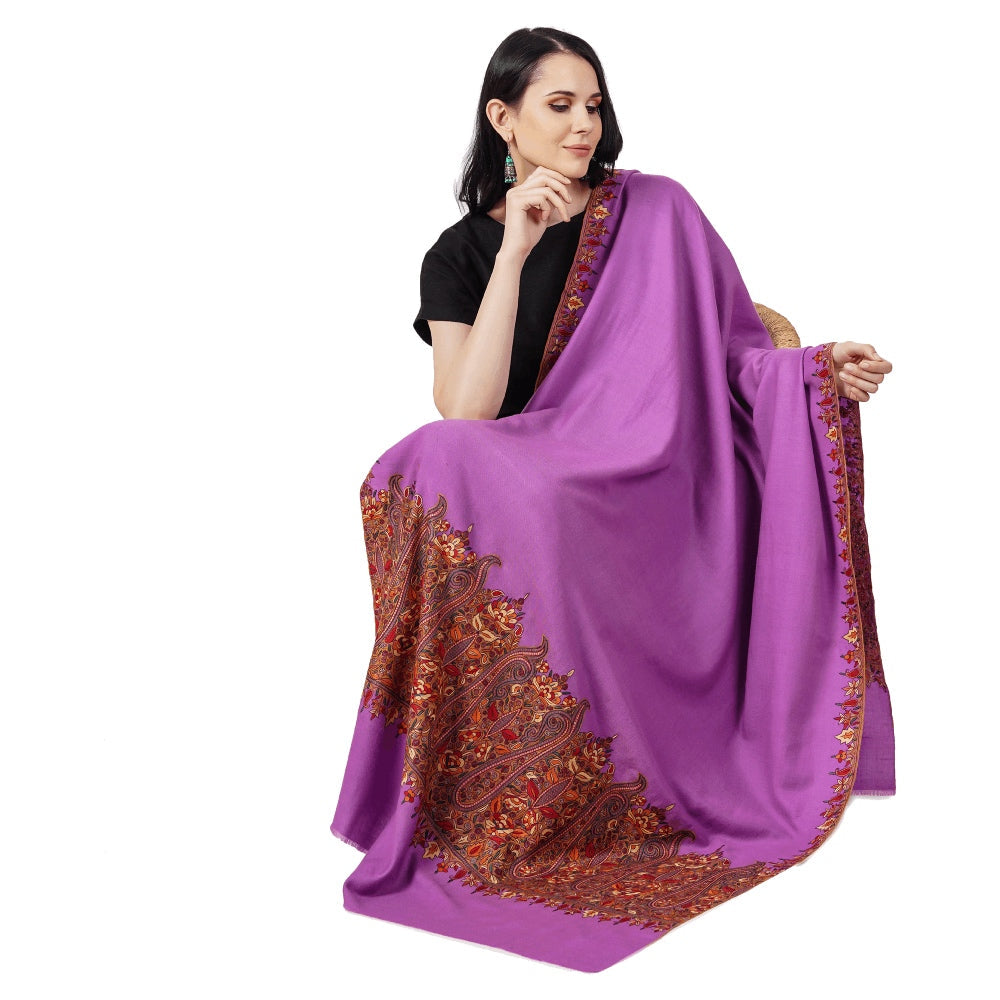
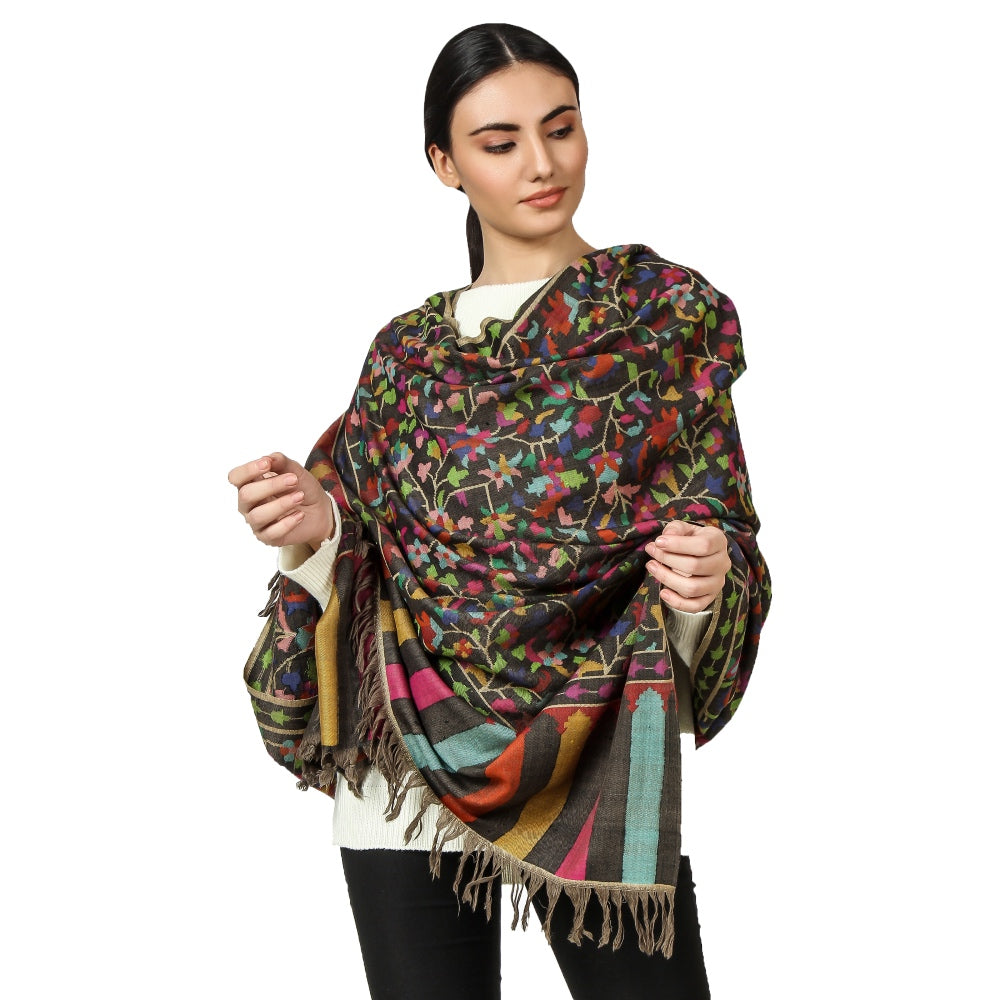
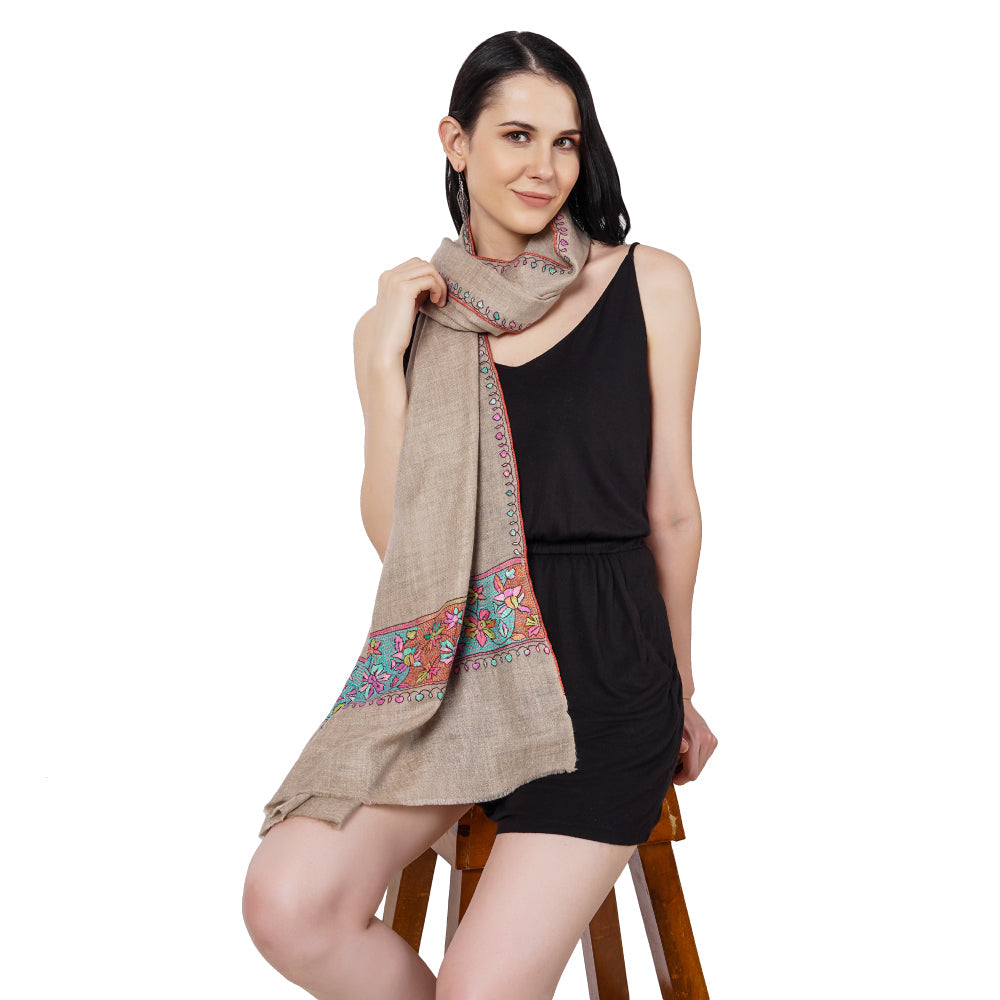
For the Kashmir Pashmina trade, the collapse of the European Shahtoosh market was a net positive — but only for those who were prepared to sell on merit rather than mystique. The buyers who had purchased Shahtoosh did not stop buying fine shawls. They simply shifted their purchasing to the finest available legal alternative. And the finest available legal alternative was, and is, genuine handwoven Pashmina from Kashmir. The [handwoven Pashmina shawl](https://www.pashwrap.com/pages/handmade-pashmina) occupied the exact same position in the luxury hierarchy that Shahtoosh had vacated — but it did so honestly, legally, and sustainably. The European buyer's demand for the finest Kashmiri textile did not end in 2000. It was finally directed toward the right product.
Frequently Asked Questions
Did major fashion houses actually sell Shahtoosh directly? +
Rarely directly through their retail stores. The typical channel was through independent dealers and agents who operated between the Kashmiri supply chain and the European buyer. These dealers often had relationships with multiple luxury houses and would show Shahtoosh to clients on an appointment basis, sometimes in the dealer's own premises, sometimes in a client's home. Whether major fashion houses knew exactly what was being shown through these channels is debated, but the information flow was sufficient for the houses to understand the general nature of the product. The plausible deniability structure — dealers acting as independent intermediaries — protected the brands from direct legal liability while still allowing their clients access to the product.
Are there still people trying to buy Shahtoosh in Europe today? +
Occasionally, an inquiry surfaces — usually from a collector or someone who has inherited a piece and wants to know its value. The active purchase market in Europe is effectively dead. The legal risk in every EU country is too high, and the social risk is even higher. Being known as "the person who bought Shahtoosh" in 2026 is not a status symbol. It is a liability. The European enforcement infrastructure — customs, wildlife crime units, judicial precedents from the 1990s prosecutions — is now permanent and well-documented. Anyone attempting to buy Shahtoosh in Europe today is not just breaking the law. They are doing so in a jurisdiction that has explicitly prosecuted this crime before and knows exactly what to look for. The [black market data](https://www.pashwrap.com/blogs/news/shahtoosh-black-market-2026) confirms this collapse.
Did the fashion magazines ever apologise for their coverage? +
Not meaningfully. The coverage stopped, which was the de facto correction, but explicit retractions or editorial apologies for treating an illegal wildlife product as a fashion curiosity are extremely rare in the historical record. This absence of accountability is notable. The magazines that treated Shahtoosh as a "legendary fabric" in 1990 moved on to other topics in 2000 without ever acknowledging that the legend involved killing an endangered species. The silence is the apology. The shift in coverage is the correction. Nothing more is likely to be said.
How much did a Shahtoosh shawl cost in Paris or Milan at the peak? +
At the peak of the market in the late 1980s and early 1990s, a genuine Shahtoosh shawl sold in Paris or Milan could command prices equivalent to $5,000 to $15,000, with exceptional pieces — very large, very fine, very dense patterns — reaching higher. A [luxury cashmere scarf](https://www.pashwrap.com/pages/luxury-cashmere-scarves) or even a high-end Pashmina shawl at the time might sell for $500 to $2,000. The Shahtoosh premium was 5x to 10x the price of the finest Pashmina. This premium was not justified by any measurable difference in warmth or durability. It was justified entirely by illegality, rarity, and the social capital of owning something forbidden. The price was the point. The shawl was the vehicle.
What replaced Shahtoosh in European luxury? +
Genuine Kashmiri Pashmina — specifically the finest grades, 12–14 microns, hand-spun and handwoven in Srinagar. The European buyers who left Shahtoosh did not downgrade to cashmere blends or machine-made alternatives. They sought out the closest legitimate equivalent to what they had lost. For a time, this created an opportunity for Kashmiri Pashmina houses that could demonstrate genuine artisan quality and provenance. The transition was not from luxury to mass market. It was from illegal luxury to legal luxury. The spending stayed in the same category. The product changed. The budget often did not.
Continue Reading — The Shahtoosh Series
M2·05 · European History
Shahtoosh in European Aristocracy: The Shawl That Conquered 19th Century Fashion
M3·11 · Celebrity & Fashion
Shahtoosh and Celebrity Culture: The Red Carpet History of an Illegal Fiber
M2·07 · Trade Routes
How Shahtoosh Was Smuggled: Trade Routes from Tibet to Kashmir to the World
M3·21 · Legal Analysis
Shahtoosh and Fashion Law: How the Industry Failed the Chiru
The prestige without the crime
Genuine Kashmiri Pashmina.
The luxury the European market discovered when it stopped breaking the law.
The European buyers who once sought the forbidden fiber found that its legal replacement delivered everything they actually wanted — extraordinary softness, breathtaking lightness, artisan craftsmanship, and cultural depth — without the legal risk, moral weight, or reputational damage. Pashmina is what Shahtoosh pretended to be: a naturally extraordinary fiber made by master artisans. It does not need a back room to impress. It impresses in daylight.