
Shahtoosh Weaving: Why Only a Handful of Artisans Could Do It
The market for fake Shahtoosh did not disappear when the real trade was banned. It evolved. Today, the counterfeits are better, the marketing is more deceptive, and buying one carries risks that most consumers do not understand until it is too late.
What This Article Covers
There is an uncomfortable truth about the Shahtoosh ban that conservation organisations rarely discuss and consumers almost never understand: making Shahtoosh illegal did not eliminate the Shahtoosh market. It eliminated the supply of genuine Shahtoosh, which is a completely different thing. What remained — what has remained for over two decades — is a market built entirely on counterfeits. And that counterfeit market is, in some ways, more dangerous than the original trade ever was, because it operates under the cover of a name that no longer describes the product being sold.
We have seen this market from the inside. In the Srinagar textile shops, in the Kashmir handicraft emporiums, in the WhatsApp catalogs that circulate among international buyers, and now on Instagram and e-commerce sites where the word "Shahtoosh" appears in product descriptions for shawls that cost $200. Genuine Shahtoosh never cost $200. Not in the 1980s, not at the peak of the trade, not ever. At those prices, you are not buying a prohibited luxury fibre. You are buying a fraud — and the fraud has consequences that extend well beyond the money you lose.
Why Fake Shahtoosh Exists — The Power of a Banned Name
To understand fake Shahtoosh, you first have to understand [what Shahtoosh is](/blogs/news/what-is-shahtoosh) — and more importantly, what the word has come to represent in the minds of buyers. The chiru's fibre was banned because obtaining it required killing an endangered species. The ban succeeded in shutting down the legitimate Kashmiri weaving industry that processed it. But the ban could not erase the word "Shahtoosh" from the cultural vocabulary. Four hundred years of Mughal court patronage, European aristocratic demand, and twentieth-century luxury marketing had embedded the word too deeply for a legal instrument to remove it.
The word "Shahtoosh" still signals something to a buyer. It signals extreme rarity, extreme fineness, and extreme expense. It signals that the person wearing or owning it has access to something that ordinary buyers cannot obtain. These associations persist even among people who know intellectually that Shahtoosh is illegal. In fact, the illegality can increase the appeal for certain buyers — the forbidden object becomes more desirable precisely because it is forbidden. As we explored in our article on [what the word "Shahtoosh" actually means](/blogs/news/meaning-of-shahtoosh-word-origin), the name was always a marketing tool rather than a technical description. It remains a marketing tool today — just repurposed for a different product.
Sellers who offer fake Shahtoosh are exploiting the gap between the word's reputation and the buyer's ability to verify the product. A tourist in Kashmir who has never touched real Shahtoosh has no sensory baseline for comparison. A buyer in London looking at a photograph on a website cannot feel the fibre. The seller says "this is Shahtoosh." The buyer wants to believe it. The transaction completes. The fraud relies entirely on the buyer's inability to distinguish the real from the fake — and for the vast majority of people, that inability is absolute.
What Fake Shahtoosh Is Actually Made Of
In our decades in the trade, we have encountered four primary materials used to counterfeit Shahtoosh. Each has different properties, different price points, and different tells — but all of them are detectable to an experienced hand, and none of them are Shahtoosh.
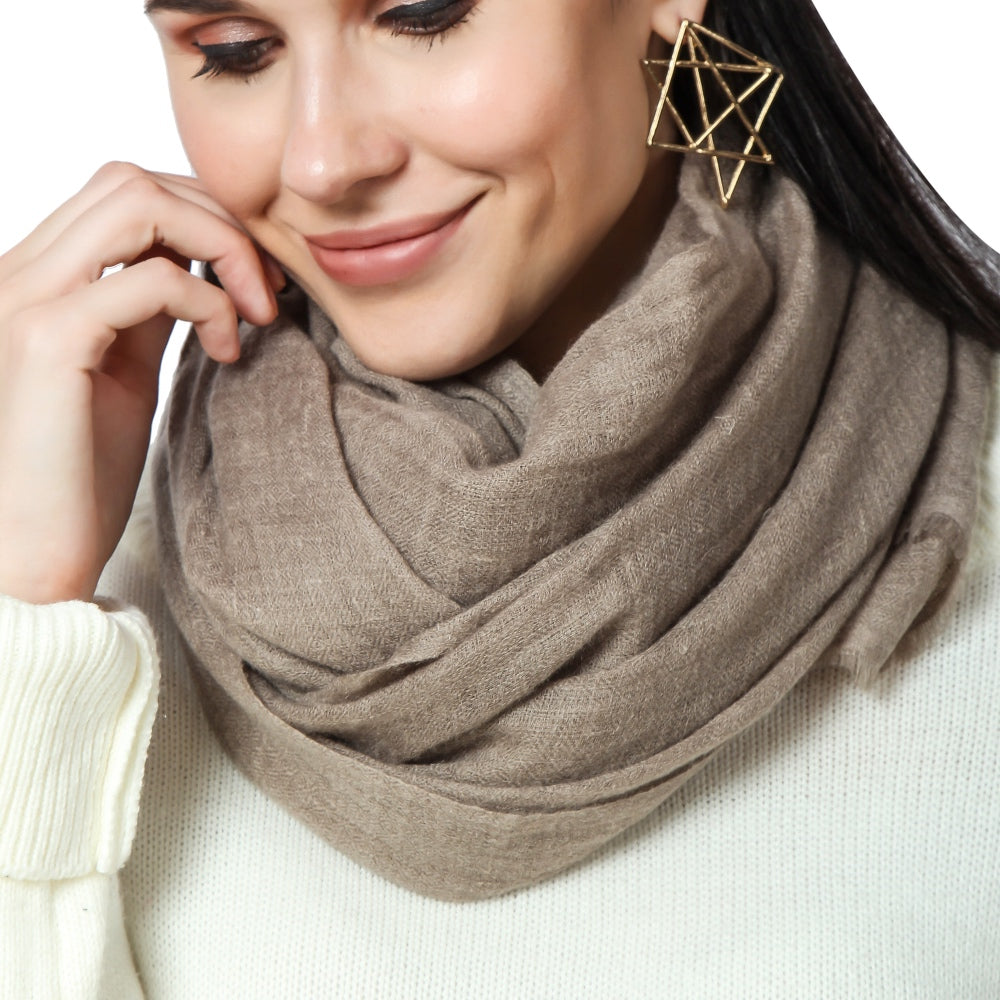
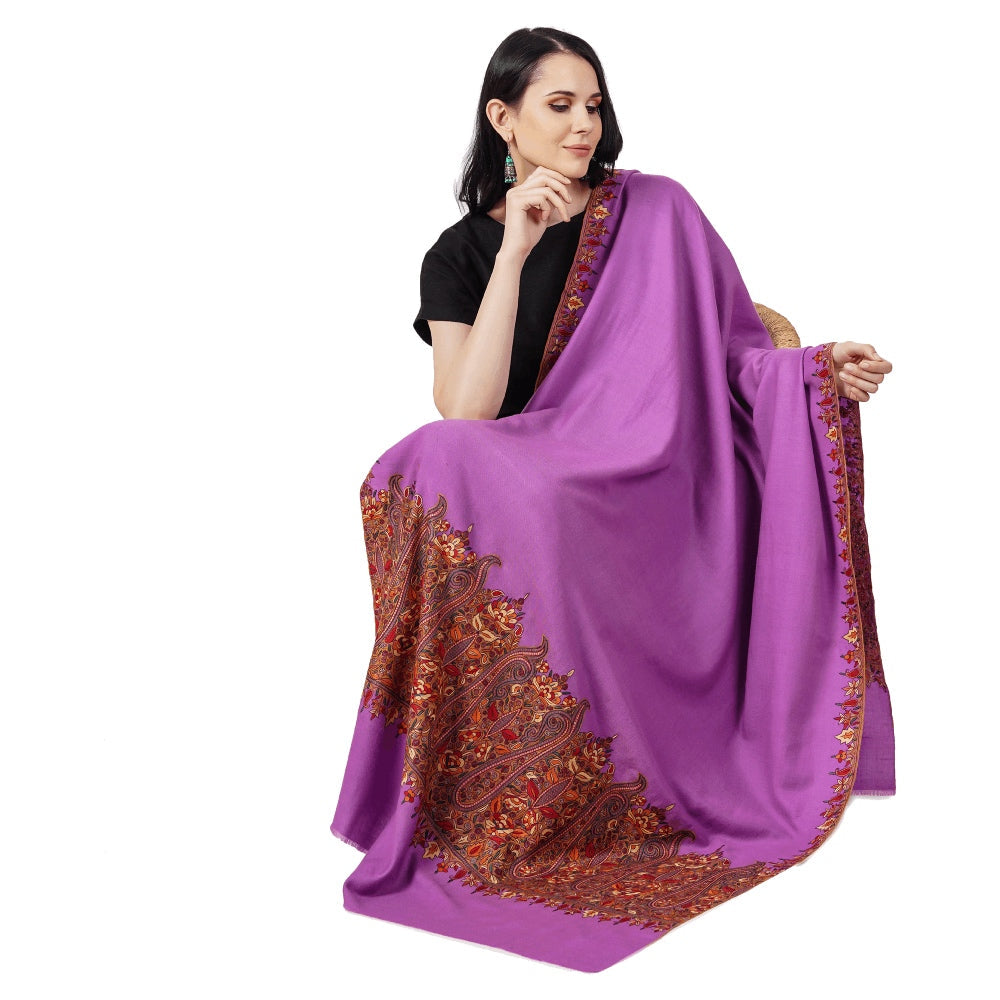
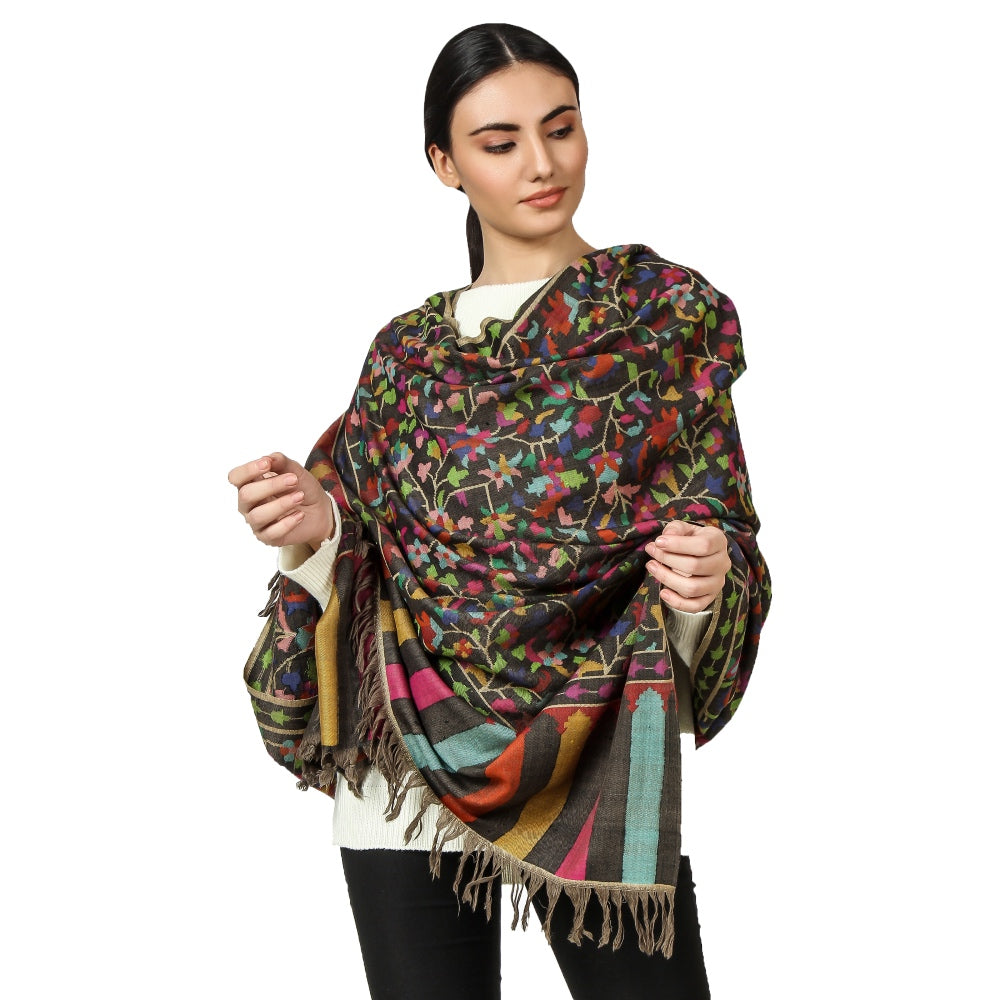
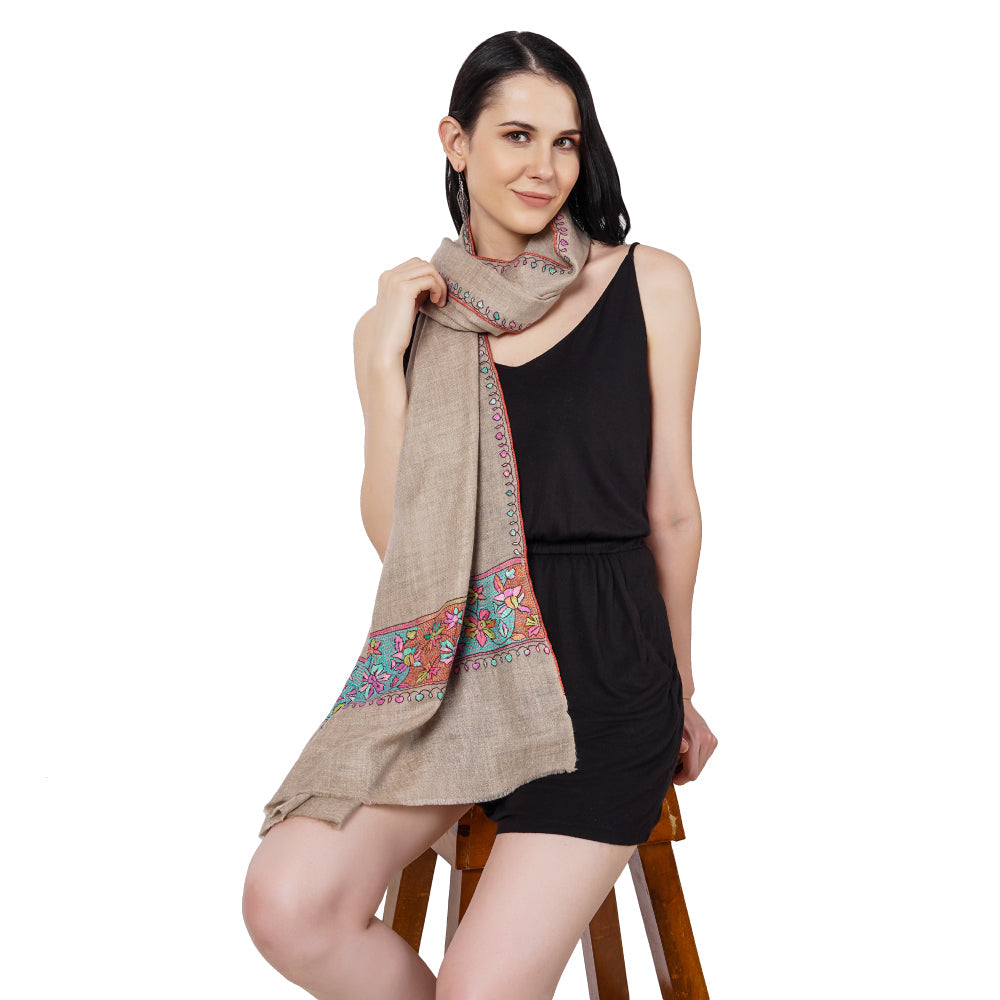
The most common fake we encounter in the market today is the last one: genuine Pashmina mislabeled as Shahtoosh. This is the counterfeit that frustrates us most, because the product itself is not inferior. A fine 12-micron Pashmina shawl from the Changthang Plateau, hand-spun and handwoven in Srinagar, is an extraordinary textile. It does not need to be called Shahtoosh. But the seller knows that adding the word "Shahtoosh" to the description multiplies the price — and the buyer, unable to tell the difference, pays it. The tragedy is not that the buyer gets a bad product. The tragedy is that the buyer gets a superb product but learns nothing about what they actually bought.
Why Buying a Fake Is Not a Victimless Crime
The standard defence offered by buyers of fake Shahtoosh is: "Nobody was hurt. It's fake, so no chiru was killed. I just overpaid for a nice shawl." This logic is flawed in two ways — one legal, one economic — and both matter.
⚠ The Legal Risk
Customs agencies do not test a shawl before seizing it. They seize it because it is labelled, described, or suspected as Shahtoosh. The testing happens later, in a laboratory, after you have already been detained, questioned, or had the item confiscated. If you are carrying a shawl that a seller told you was "Shahtoosh" — even if it is fake — and a customs officer finds that label or that description in your correspondence, you will face the same initial legal process as someone carrying genuine Shahtoosh. The burden of proving it is fake falls on you, after the fact, at your expense.
The [legal status of Shahtoosh](/blogs/news/is-shahtoosh-illegal-country-legal-guide) in most countries makes no distinction between genuine and fake for the purpose of initial seizure. Possessing an item represented as Shahtoosh is sufficient to trigger enforcement action. The fact that it turns out to be viscose does not undo the arrest, the confiscation, or the legal costs. You are buying not just a counterfeit product — you are buying a legal liability.
✦ The Economic Damage
Every dollar spent on fake Shahtoosh is a dollar that does not go to the legitimate Kashmir Pashmina industry. The sellers who deal in fakes are not investing in artisan welfare, in raw material quality, or in craft preservation. They are investing in marketing — specifically, in the marketing of a name that does not belong to the product they are selling. This distorts the market for honest Pashmina sellers, who must compete against fraudulent claims of "Shahtoosh" quality that their products do not make and do not need to make.
More subtly: buying fake Shahtoosh sustains the networks that previously traded in genuine Shahtoosh. The supply chains, the contacts, the smuggling routes, the buyer relationships — these do not disappear when the real product disappears. They pivot to fakes. And when enforcement pressure on fakes increases, those same networks are positioned to resume trading the real product if the opportunity arises. The counterfeit market keeps the infrastructure of the illegal trade alive.
How to Spot a Fake: The Visual and Tactile Cues
We need to be honest about the limits of visual and tactile identification. The differences between fine Pashmina and genuine Shahtoosh are so subtle that even experienced hands in our workshop cannot reliably distinguish them without laboratory equipment. If we cannot do it with certainty, no buyer can do it based on a YouTube tutorial or an Instagram carousel. That said, there are cues that can tell you a shawl is definitely fake — even if they cannot tell you it is definitely real. Here is what we look for.
The sheen test. Genuine Shahtoosh has a completely matte surface. It does not reflect light in the way that silk, mercerised cotton, or synthetic fibres do. If a "Shahtoosh" shawl has any perceptible sheen — any brightness when it catches the light — it is either a silk blend, a synthetic, or a heavily processed wool. This is the single most reliable visual cue, and it eliminates a large percentage of fakes immediately.
The weave regularity test. Genuine Shahtoosh was always hand-spun and handwoven. Hand-spun thread is not perfectly uniform — it has microscopic variations in thickness that create a slight irregularity in the weave. Machine-spun fibre, which is what fakes are almost always made from, produces perfectly uniform thread and a perfectly regular weave. If the weave looks too even, too consistent, too machine-like at close range, it was not made in a Kashmiri workshop. This applies to Pashmina identification as well: machine-spun Pashmina has a different visual texture from hand-spun Pashmina, and the same principle applies to Shahtoosh counterfeits.
The weight-to-warmth test. This is the most subjective cue and the one most easily fooled by fine Pashmina. Genuine Shahtoosh feels warmer than its weight suggests — but so does fine Pashmina at 12–13 microns. If a shawl feels heavy for its size, it is definitely not Shahtoosh. If it feels extremely light and warm, it might be Shahtoosh — or it might be very good Pashmina. This test can eliminate fakes but cannot confirm authenticity.
The burn test. This is destructive and we do not recommend it as a first step, but it is scientifically valid. Protein fibres (Shahtoosh, Pashmina, wool, silk) burn to a crisp, dark ash that crumbles and smells like burning hair. Cellulosic fibres (viscose, rayon, cotton) burn to a light, papery ash that smells like burning paper. Synthetics (acrylic, polyester) melt into a hard plastic bead and smell like burning chemicals. If a "Shahtoosh" shawl melts, it is undeniably synthetic. If it crumbles, it is a protein fibre — but that only tells you it is animal fibre, not which animal it came from.
✦ What the Ring Test Will Not Tell You
The ring test — passing a shawl through a finger ring to "prove" it is Shahtoosh — will be offered to you by sellers of fake Shahtoosh more often than by any other type of seller. The reason is simple: the ring test passes fine merino, thin viscose, and fine Pashmina just as easily as it passes real Shahtoosh. It proves the shawl is thin. It proves nothing about what it is made of. We have addressed this in detail in our article on [the Shahtoosh ring test myth](/blogs/news/shahtoosh-ring-test), but the short version is this: if a seller demonstrates the ring test as proof of authenticity, that demonstration is itself evidence that the product is not what they claim.
The "Shahtoosh Pashmina" Deception
This requires its own section because it has become the most common form of Shahtoosh fraud in the online market, and it operates under a label that sounds plausible to consumers who do not understand fibre terminology.
"Shahtoosh Pashmina" is not a thing. It is a linguistic contradiction. Shahtoosh comes from the chiru. Pashmina comes from the Changthangi goat. These are different species, different fibres, different supply chains, different legal statuses. No product can be both. The phrase is the equivalent of labelling something "beef chicken" or "silk cotton" — it describes a product category that does not exist.
The purpose of the phrase is transparent if you understand how online search works. "Shahtoosh" captures buyers searching for the banned fibre. "Pashmina" captures buyers searching for the legal alternative. By combining both words, the seller appears in search results for both audiences. The buyer who arrives looking for Shahtoosh sees "Pashmina" in the label and assumes the seller is being transparent about the material. The buyer who arrives looking for Pashmina sees "Shahtoosh" in the label and assumes they are getting something even finer than standard Pashmina. Both assumptions are wrong.
"In our workshop, if a weaver described a Pashmina shawl as 'Shahtoosh,' it would be considered an insult to the Pashmina — as if calling a thoroughbred horse a 'cheap donkey.' The names exist to distinguish two different fibres. Combining them does not elevate the Pashmina. It reveals the seller's lack of faith in what they are actually selling."
The Only Test That Actually Works
We have described the visual cues, the tactile cues, and the burn test. All of them can identify a fake. None of them can confirm authenticity with certainty. There is exactly one method that can: laboratory fibre-diameter analysis, and specifically OFDA (Optical Fiber Diameter Analysis) or scanning electron microscopy (SEM).
The process is straightforward. You pull 3 to 5 individual threads from the fringe or an inconspicuous edge of the shawl. You place them in a sample bag and send them to a certified textile testing laboratory. The laboratory prepares cross-sections of the individual fibres, measures the diameter of a statistically significant sample (usually 2,000+ individual fibres), and produces a histogram showing the distribution of fibre diameters in the sample. If the distribution centres between 9 and 12 microns with minimal deviation, the sample is consistent with Shahtoosh. If it centres between 12 and 16 microns, it is consistent with Pashmina. If it centres between 14 and 19 microns, it is consistent with cashmere or fine merino.
This test does not rely on human judgment. It does not rely on ambient light conditions, the sensitivity of your fingertips, or the diameter of your finger ring. It produces a numerical result that is admissible in court and accepted by customs agencies worldwide. It costs between $50 and $150. It takes 5 to 10 business days. It is the only method we recommend for anyone who needs to know with certainty what a shawl is made of. The full process is explained in our article on [Shahtoosh laboratory testing](/blogs/news/shahtoosh-fiber-test-laboratory-ofda) and in our complete guide to [how Shahtoosh is identified](/blogs/news/how-to-identify-shahtoosh-shawl).
If you are buying a shawl that is represented as Shahtoosh, and the seller refuses to allow pre-purchase laboratory testing, you have your answer. A seller of genuine Pashmina has nothing to hide — the lab test will confirm it is Pashmina, which is a legal, ethical, valuable product. A seller of fake Shahtoosh will resist testing because the test will expose the fraud. The refusal to test is more diagnostic than any visual inspection.
Frequently Asked Questions
Can a fake Shahtoosh shawl still be a good quality shawl? +
Yes — if it is mislabeled Pashmina. A fine Kashmiri Pashmina shawl at 12–14 microns is a superb textile by any standard. It is warm, soft, beautifully woven, and will last for decades with proper care. The problem is not the quality of the product. The problem is that you paid Shahtoosh prices for a Pashmina product, and the seller used a fraudulent label to extract that premium. If the fake is made of viscose or synthetic fibre, however, it is neither good quality nor durable — it is simply a cheap imitation with a luxury price tag.
What should I do if I realise I bought a fake Shahtoosh? +
Get it tested. This protects you legally. If the test confirms it is not Shahtoosh, you have documentation that the seller committed fraud — which is relevant if you want to pursue a refund, a chargeback through your credit card company, or a report to consumer protection authorities. If you bought it in Kashmir, your recourse is limited. If you bought it online from a country with strong consumer protection laws, you may have grounds for a refund under misrepresentation or fraudulent misdescription statutes. Do not destroy or discard the shawl until you have the test results.
Are there fake Shahtoosh shawls that even experts cannot identify without a lab? +
Yes. Fine Pashmina at 12–13 microns is so close to Shahtoosh at 10–11 microns in terms of hand-feel, drape, and visual appearance that even our most experienced artisans cannot reliably distinguish them by touch alone. This is not a weakness — it is a reflection of how extraordinary fine Pashmina actually is. The difference between 10 microns and 13 microns is real, but it is not perceptible to human touch with consistency. If anyone claims they can identify Shahtoosh by touch with 100% certainty, they are either lying or overestimating their own abilities. Only a laboratory can provide that level of certainty.
Why do online platforms allow fake Shahtoosh to be sold? +
Because platforms do not test products. They rely on keyword filters and reporting mechanisms. Sellers of fake Shahtoosh have become sophisticated at avoiding keyword detection — using misspellings, code words, or euphemisms ("royal pashmina," "king's wool," "Tibetan special fibre") that evade automated filters but are understood by buyers looking for Shahtoosh. When a listing is reported, platforms often remove it — but the seller relists under a slightly different name within days. Enforcement at the platform level is a game of whack-a-mole that the platforms are not adequately resourced to win. The buyer is the last line of defence, which is why understanding what fakes look like matters.
If I want the finest shawl possible without any legal risk, what should I buy? +
A hand-spun, handwoven Kashmiri Pashmina shawl made from Changthangi goat fibre in the 12–14 micron range. This is the finest fibre that can be legally produced, legally traded, and legally owned anywhere in the world. It is made by the same artisans, in the same valley, on the same looms that once produced Shahtoosh. The craft heritage is identical. The fibre is different — but as we have said before, the difference in daily wear is imperceptible. A legitimate Pashmina seller will never need to invoke Shahtoosh to sell their product. The quality of genuine Kashmiri Pashmina is the reason.
Continue Reading — The Shahtoosh Series
M1·03 · Identification
How to Tell If Your Shawl Is Shahtoosh: The Tests That Work and Those That Don't
M1·07 · Ring Test Deep Dive
The Shahtoosh Ring Test: Why It Doesn't Prove What Most People Think
M1·24 · Lab Testing
Shahtoosh Laboratory Testing: How Fiber Diameter Analysis Works
M1·25 · Etymology
The Meaning of "Shahtoosh": What the Word Actually Means and Where It Comes From
The real thing — with nothing to hide
Genuine Kashmiri Pashmina.
No fake names. No borrowed prestige. Just the fibre.
Every Pashmina shawl we sell can be laboratory tested. We encourage it. The test will confirm what our hands already know: that Changthangi goat fibre at 12–14 microns, hand-spun and handwoven in Srinagar, does not need to pretend to be anything else. Genuine Kashmiri Pashmina is the finest legal fibre on earth — and we are willing to prove it.