
Is Merino Wool Better than Cashmere? A Comprehensive Comparison of the Two Materials
In the rarefied echelons of luxury textiles, two names consistently command the utmost respect: Merino and Cashmere. Both are celebrated for their softness, their warmth, and their ability to transcend the brute utility of standard wool. Yet, to conflate them is to misunderstand the very essence of luxury. Is Merino wool better than cashmere? The answer, as with all matters of true elegance, lies in the nuances of heritage, biology, and artisanship. Here is the definitive comparison.
Table of Contents
- The Genesis of the Fibers: Origins and Heritage
- The Science of Softness: Micron Count and Tactility
- Thermoregulation: Warmth vs. Breathability
- Durability and Longevity: The Marathon vs. The Sprint
- The Crafting Process: Industrial Precision vs. Artisanal Soul
- The Economics of Luxury: Value and Cost Per Wear
- The Verdict: Is Merino Wool Better than Cashmere?
- Frequently Asked Questions
The Genesis of the Fibers: Origins and Heritage
To understand the fundamental difference between Merino wool and cashmere, we must first look to the landscapes that birthed them.
Merino Wool: The Heritage of Hardiness
The Merino sheep, originating in Spain and later perfected in the vast, rugged terrains of Australia and New Zealand, is a marvel of agricultural breeding. The sheep produces a thick, crimped fleece designed to protect it from the searing heat of the outback sun and the freezing night temperatures. It is a fiber born of resilience and adaptation.
Cashmere: The Apex of Altitude
Cashmere, however, is a fiber born of extreme survival. Sourced from the Capra Hircus goat—specifically the Kashmiri Pashmina variant native to the Changthang Plateau in Ladakh—cashmere is not a fleece, but an undercoat. To survive temperatures that plummet to -40°C, these goats grow a hyper-fine layer of down beneath their coarse outer hair. When spring arrives, this precious undercoat is gently combed away by nomadic herders. It is a yield of mere ounces per goat, making it exponentially rarer than the shearing of a sheep.
The Science of Softness: Micron Count and Tactility
The debate over whether Merino wool is better than cashmere often hinges on the sensation of softness. In the lexicon of textiles, softness is a measurable science, quantified in microns (one-millionth of a meter).
- Standard Sheep's Wool: 30+ microns (often feels itchy or scratchy)
- Fine Merino Wool: 17 to 22 microns
- Standard Cashmere: 14 to 19 microns
- Authentic Pashmina (The finest Cashmere): 12 to 16 microns
While Fine Merino is remarkably soft compared to traditional wool, it cannot compete with the microscopic fineness of cashmere. The science behind cashmere softness reveals that its ultra-fine scales and low micron count allow the fibers to bend effortlessly against the skin, creating a sensation that is impossibly cloud-like.
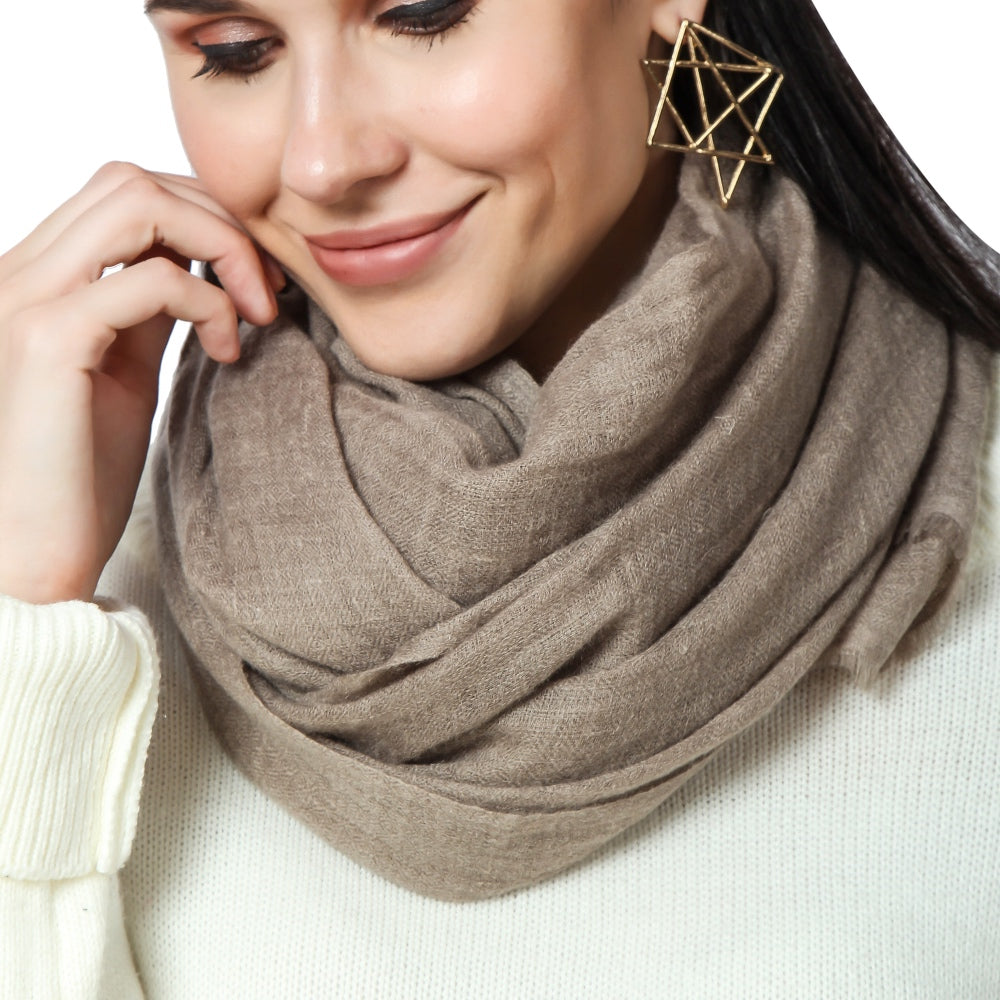
When you drape a Luxury Cashmere Scarf over your skin, it feels like a whisper. Merino, while exceptionally smooth for wool, still retains a subtle, tactile friction—a reminder that it is, fundamentally, a wool.
Thermoregulation: Warmth vs. Breathability
Both fibers are masterclasses in thermoregulation, but they serve different purposes.
Merino’s Breathability
Merino wool excels in active breathability. The crimp of the fiber creates micro-air pockets that trap body heat while actively wicking moisture away from the skin. This makes Merino the darling of the outdoor and activewear industry—it keeps you warm without causing you to overheat during exertion.
Cashmere’s Insulation
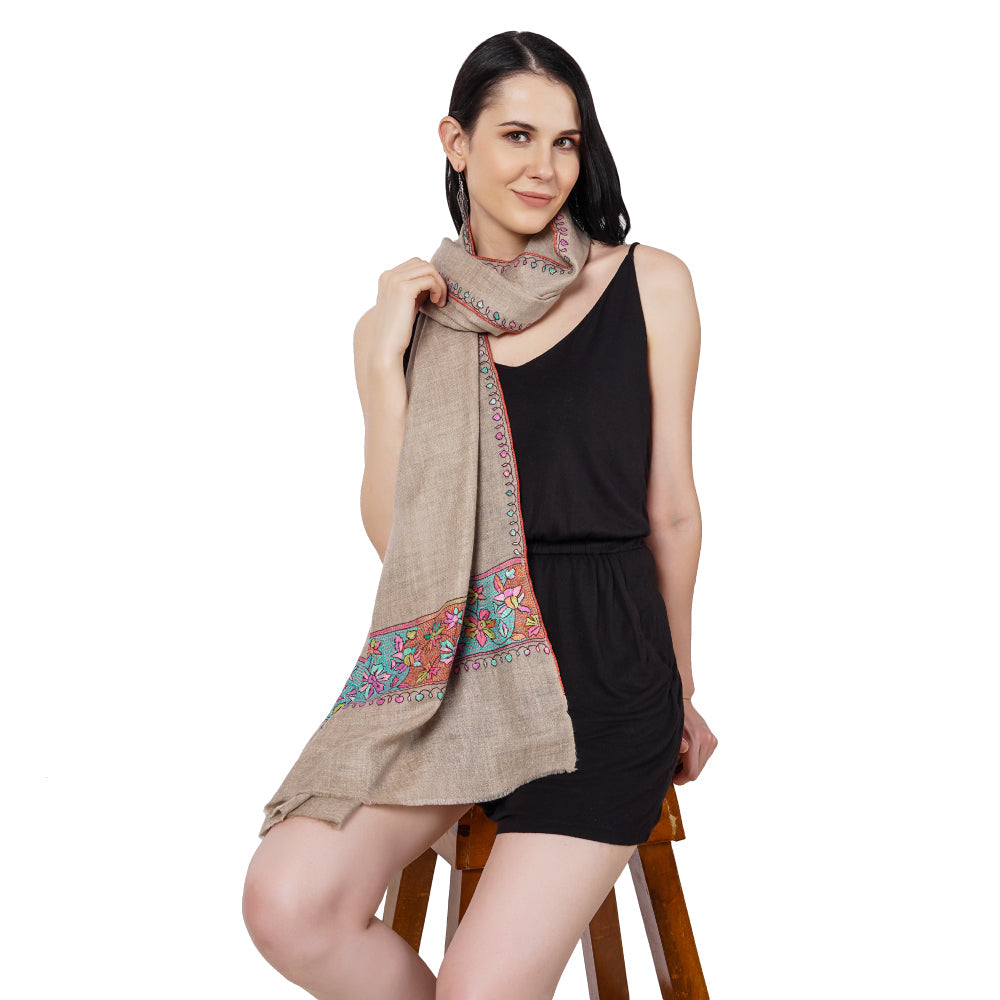
Cashmere possesses an extraordinary warmth-to-weight ratio. Because the fibers are so fine and densely packed, they trap an immense amount of still air, providing up to eight times the insulation of sheep's wool at a fraction of the weight. A Cashmere Scarf will provide profound, enveloping warmth without the bulk associated with winter wool. It is the definitive best cashmere scarf for winter luxury.
While Merino is exceptional for a brisk hike, Cashmere is the undisputed sovereign of the fireside evening and the elegant winter sojourn.
Durability and Longevity: The Marathon vs. The Sprint
If there is one metric where Merino attempts to claim superiority, it is durability.
The Resilience of Merino
Merino fibers are longer and possess a robust elasticity. A high-quality Merino sweater can withstand frequent wearing, regular machine washing (in some cases), and the rigors of an active lifestyle without losing its shape or pilling excessively. It is a workhorse fiber.
The Delicacy of Cashmere
Cashmere fibers are shorter and exceptionally delicate. They are prone to light pilling, especially upon initial wear, as the loose fibers work their way to the surface. Cashmere demands respect—it requires hand washing, flat drying, and gentle storage.
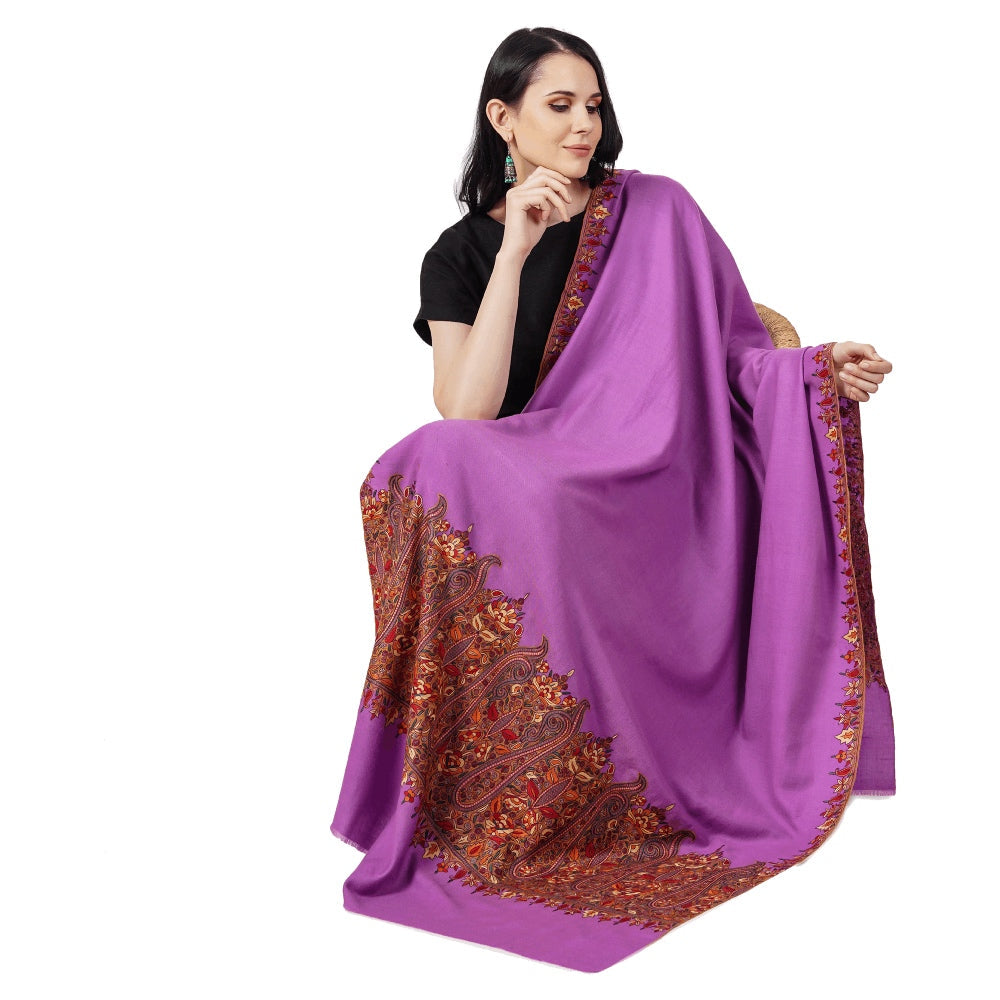
However, this is where the narrative shifts. While Merino may be more immediately robust, authentic cashmere ages like fine wine. With proper care, cashmere actually blooms, becoming softer, more supple, and more intimate with the wearer over the years. It does not degrade; it evolves. To understand is a cashmere scarf worth it, one must view it not as a consumable, but as an heirloom. A Pure Pashmina Shawl will outlive a Merino garment tenfold if treated with the reverence it deserves.
The Crafting Process: Industrial Precision vs. Artisanal Soul
The most profound divergence between Merino and Cashmere lies not in the biology of the animal, but in the hands that transform the raw fiber into fabric.
Merino wool is overwhelmingly an industrial product. From the shearing of the sheep to the spinning of the yarn and the power-loom weaving of the fabric, machines dictate the process. This ensures uniformity, scale, and affordability.
Authentic Kashmiri Pashmina rejects the machine entirely. Because the fibers are too delicate to withstand industrial processing, the journey from raw pashm to finished shawl is entirely manual. It is hand-sorted to remove every coarse guard hair, hand-spun on a traditional charkha, and hand-woven on a loom by artisans whose families have practiced this craft for centuries.
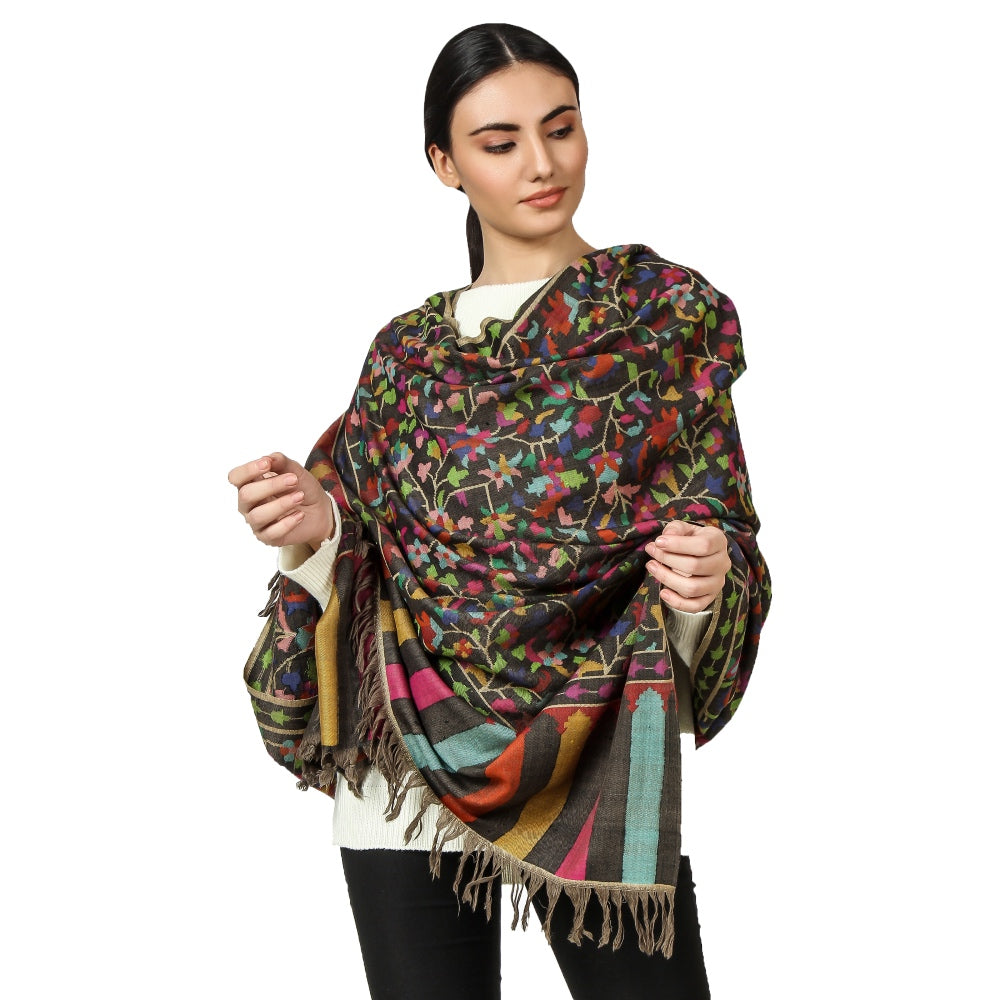
The history of cashmere in Kashmir is a tapestry of royal patronage and human devotion. When you wear a Handmade Pashmina, you are not merely wearing a fabric; you are wearing the rhythmic clatter of the loom, the patience of the spinner, and the heritage of a civilization. Merino is manufactured; Cashmere is cultivated. Learn exactly how Pashmina shawls are made to appreciate the irreplaceable value of the human hand.
The Economics of Luxury: Value and Cost Per Wear
Merino wool is undeniably more accessible. The industrial supply chain and the higher yield per sheep allow Merino garments to be priced comfortably within the realm of everyday fashion.
Cashmere, however, occupies the summit of luxury economics. The scarcity of the raw fiber—yielding only a few ounces per goat annually—combined with the intensive manual labor required to weave it, dictates a profound premium. To understand how much a real cashmere scarf should cost is to acknowledge that true rarity has a price.
Yet, when calculated by "Cost Per Wear" over a lifetime, an authentic cashmere scarf becomes a mathematical triumph. It transcends the seasonal trends that govern Merino fashion, offering a timeless elegance that never dates. For insights into this pricing paradigm, explore why Kashmiri Pashmina is expensive.
The Verdict: Is Merino Wool Better than Cashmere?
To ask if Merino wool is better than cashmere is to ask if a utilitarian sports car is better than a bespoke Rolls-Royce. The answer depends entirely on the context of the journey.
Choose Merino Wool for the ascent. It is the intelligent choice for active pursuits, travel layering, and environments where breathability and rugged resilience are paramount.
Choose Cashmere for the arrival. It is the pinnacle of sartorial elegance, tactile luxury, and heritage artisanship. Cashmere does not merely warm the body; it elevates the spirit. It is a conscious choice to invest in sustainable cashmere, ethical artisanship, and a level of softness that science simply cannot engineer.
In the hierarchy of human desire, utility will always have its place, but it is luxury that commands our ultimate devotion. Cashmere is not just a fabric; it is the zenith of the textile world.
Elevate Your Wardrobe with the Zenith of Luxury
Why settle for the ordinary when you can drape yourself in heritage? Experience the unparalleled softness and artisanal mastery of authentic PASHWRAP cashmere.
Shop Luxury Cashmere ScarvesFrequently Asked Questions
Is Merino wool warmer than cashmere?
No. Cashmere provides up to eight times the insulation of standard sheep's wool, and significantly more warmth than Merino, while remaining a fraction of the weight. Its fine fibers trap heat exceptionally well, making it the ultimate cold-weather luxury.
Is cashmere more ethical than Merino?
Authentic, hand-combed cashmere is inherently cruelty-free, as the fiber is harvested during the goats' natural spring molting season without shearing. It also relies on zero-electricity handcrafting, supporting nomadic herders. Discover more about sustainable cashmere and its ethical standing.
Does cashmere last longer than Merino?
With proper care, cashmere outlasts Merino. While Merino is more immediately resilient to frequent washing and wear, high-quality cashmere blooms and becomes softer over decades, transforming into an heirloom piece. Learn how to check cashmere quality at home to ensure you are investing in longevity.
What is the difference between Pashmina and Cashmere?
Pashmina is the finest grade of cashmere (12-16 microns), sourced exclusively from Ladakh, and is entirely hand-spun and hand-woven. Standard cashmere is broader and often machine-processed. Read our guide on the difference between cashmere and Pashmina for a detailed breakdown.
Can I wear a cashmere scarf every day?
Absolutely. A finely woven cashmere scarf is the perfect daily luxury, offering supreme warmth and effortless elegance for any occasion.
Do not compromise on your comfort. Step into the rarefied world of PASHWRAP and secure a piece of artisanal history today.
Explore Pure Pashmina Shawls