
The Benefits of Cashmere Scarves and How to Style and Care for Them
The complete guide to owning, wearing, and preserving the finest accessory you will ever own.
The winter scarf is an afterthought for most wardrobes. Grabbed on the way out the door, thrown into a bag, washed indiscriminately, and replaced annually when it inevitably pills, thins, or loses its shape. It is treated as a consumable — and most scarves on the market are designed to be exactly that.
A cashmere scarf demands a different relationship. It is not a consumable; it is an asset. And like any asset, the returns it delivers depend entirely on how you use it and how you treat it.
This guide covers the complete lifecycle of owning a cashmere scarf: the tangible benefits that justify the investment, the styling techniques that maximise its versatility, and the care practices that ensure it will outlast every other accessory in your wardrobe.
Part I: The Benefits of Cashmere Scarves
The difference between standard cashmere and premium Kashmiri pashmina is significant, but even entry-level grade-A cashmere offers benefits that no synthetic or wool alternative can match.
1. Superior Thermoregulation
Cashmere provides warmth, but its true advantage is adaptive warmth. The science behind cashmere's performance lies in its ultra-fine fibres (12–15 microns for the best grades), which create millions of microscopic air pockets within the yarn. These pockets trap body heat when it is cold, but the fabric's high breathability allows excess heat and moisture to escape when you step into a heated room.
Wool traps heat and sweat. Polyester traps heat and suffocates. Cashmere responds to your environment. It is the only winter fabric that eliminates the "too cold outside, too hot inside" cycle.
2. Extreme Comfort Against the Skin
Human skin detects textures above 20 microns. Standard wool sits at 25–35 microns — perceptibly prickly against the sensitive neck. Cashmere sits below this threshold. Your nerve endings literally cannot register the individual fibres. The sensation is not "soft" in the way cotton is soft; it is the absence of friction entirely.
For the best cashmere scarf for winter, this comfort is non-negotiable. You will wear it against bare skin for eight or more hours a day. Any texture friction becomes unbearable over time. Cashmere eliminates this entirely.
3. Exceptional Durability and Cost-Per-Wear
A genuine cashmere scarf does not degrade with use — it improves. The fibres soften, the drape deepens, and the fabric settles into a more stable structure. The traditional handcrafting process used for Kashmiri cashmere produces a structural integrity that machine-made alternatives cannot replicate.
A pure pashmina shawl or scarf will easily last 15 to 20 years. At a cost of £250 worn 400 times over a decade, the cost-per-wear drops to £0.62 — significantly cheaper than replacing a £40 high-street scarf every season.
4. Weightless Warmth
Cashmere provides more insulation per gram than any other natural fibre. A 200-gram cashmere scarf delivers the thermal performance of a 400-gram wool scarf. This means you get full winter protection without the bulk that distorts the silhouette of tailored coats and restricts neck movement.
Why Kashmiri pashmina is expensive comes down to raw material scarcity and handcraft labour. But when measured by cost-per-wear and longevity, it represents the most economically rational choice in your wardrobe.
5. Ethical and Sustainable by Design
The Kashmiri cashmere supply chain — nomadic herding, hand-combing, artisan spinning and weaving — is inherently low-impact. The question of sustainable cashmere has a clear answer in Kashmir: one handmade pashmina scarf replaces 10–15 disposable alternatives over its lifetime, dramatically reducing your wardrobe's cumulative environmental footprint while supporting artisan communities.
Our cashmere scarves are handcrafted to deliver these benefits for decades, not seasons.
Shop Cashmere ScarvesPart II: How to Style a Cashmere Scarf
Cashmere's natural drape does most of the aesthetic work for you. Unlike stiff wool or structured silk, it falls into soft, cascading folds that add visual depth to any outfit. The styling principles below are designed to maximise this natural quality rather than fight against it.
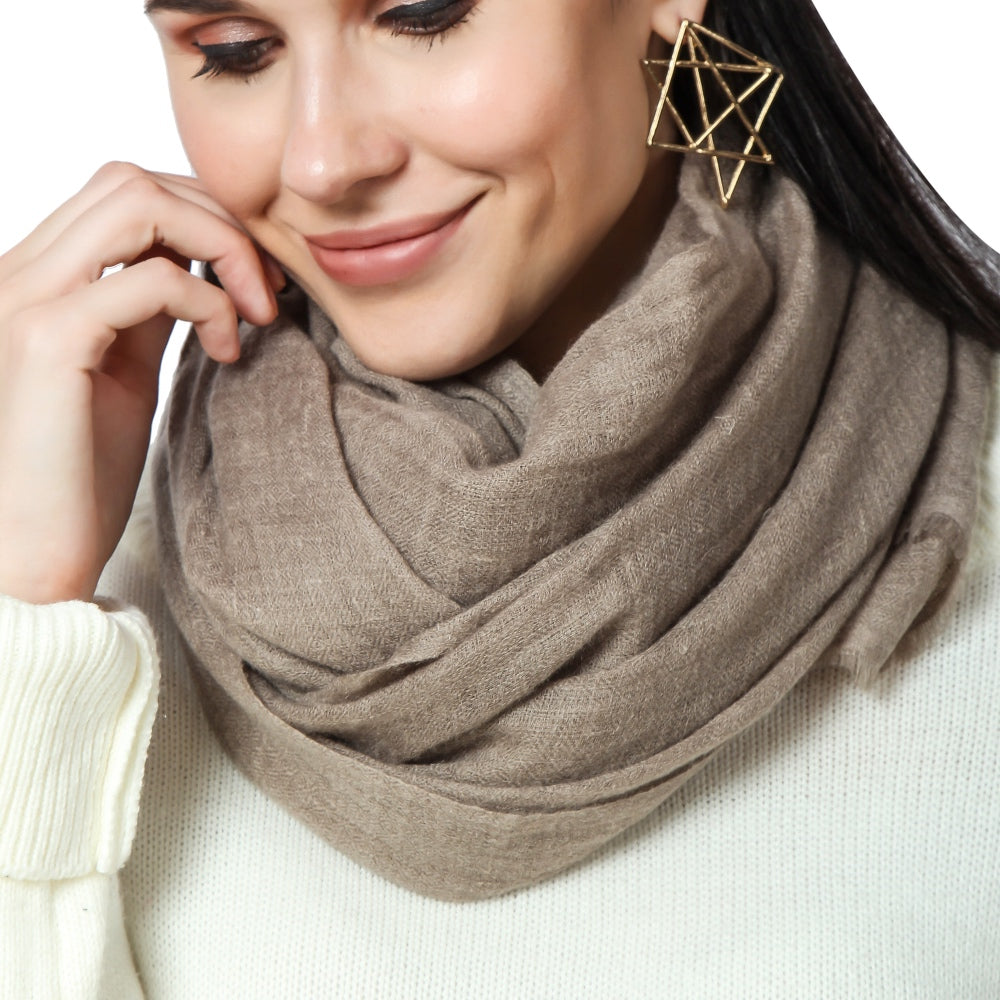
Fold the luxury cashmere scarf in half lengthwise. Drape it around your neck with the folded edge on one side. Pass the loose ends through the loop and pull snug — not tight. The most universally flattering knot, ideal for tailored coats and smart-casual wear.
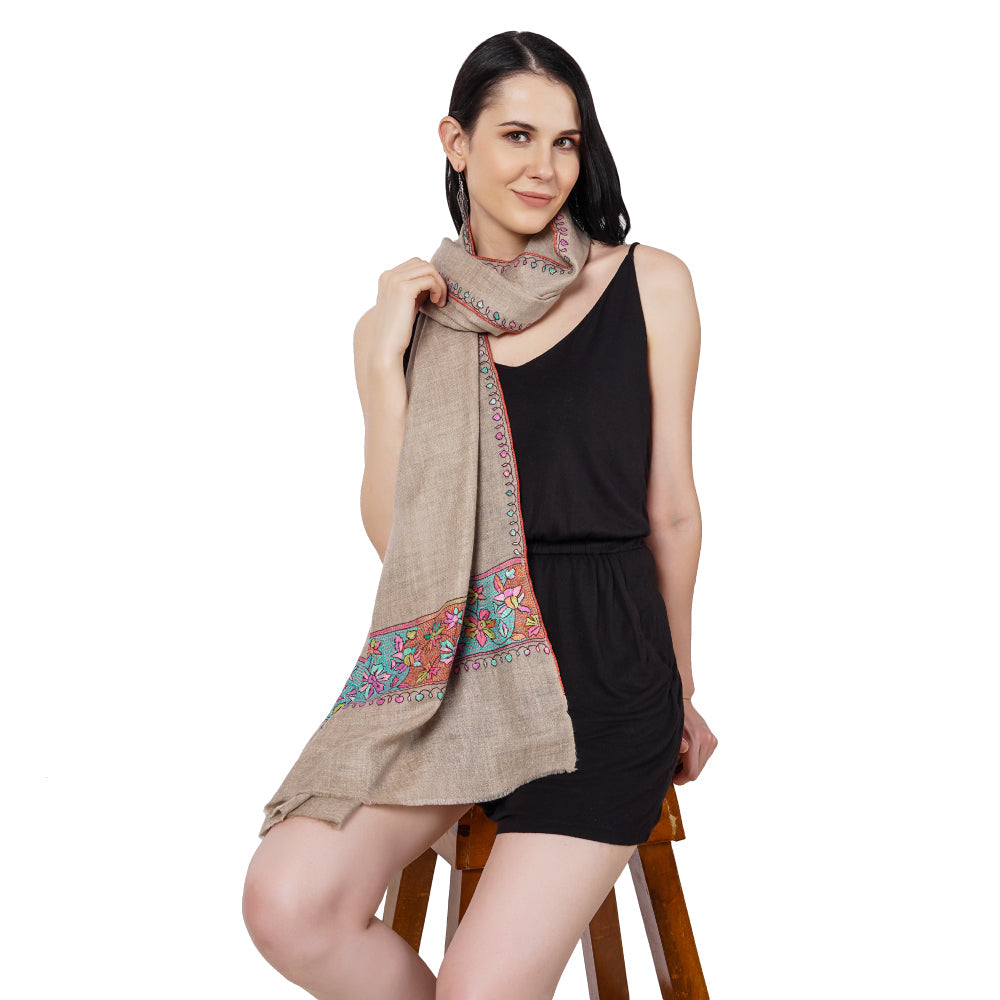
Drape the scarf full-length around the back of your neck, then bring one end across the front and toss it back over the opposite shoulder. Let it fall naturally. Provides more coverage and works beautifully with overcoats in deep cold. The key is asymmetry.
Place the scarf around your neck with one end significantly longer. Wrap the long end once around your neck, crossing in front, and let both ends hang down your chest. The most relaxed option — excellent with knitwear, leather jackets, and casual weekend outfits.
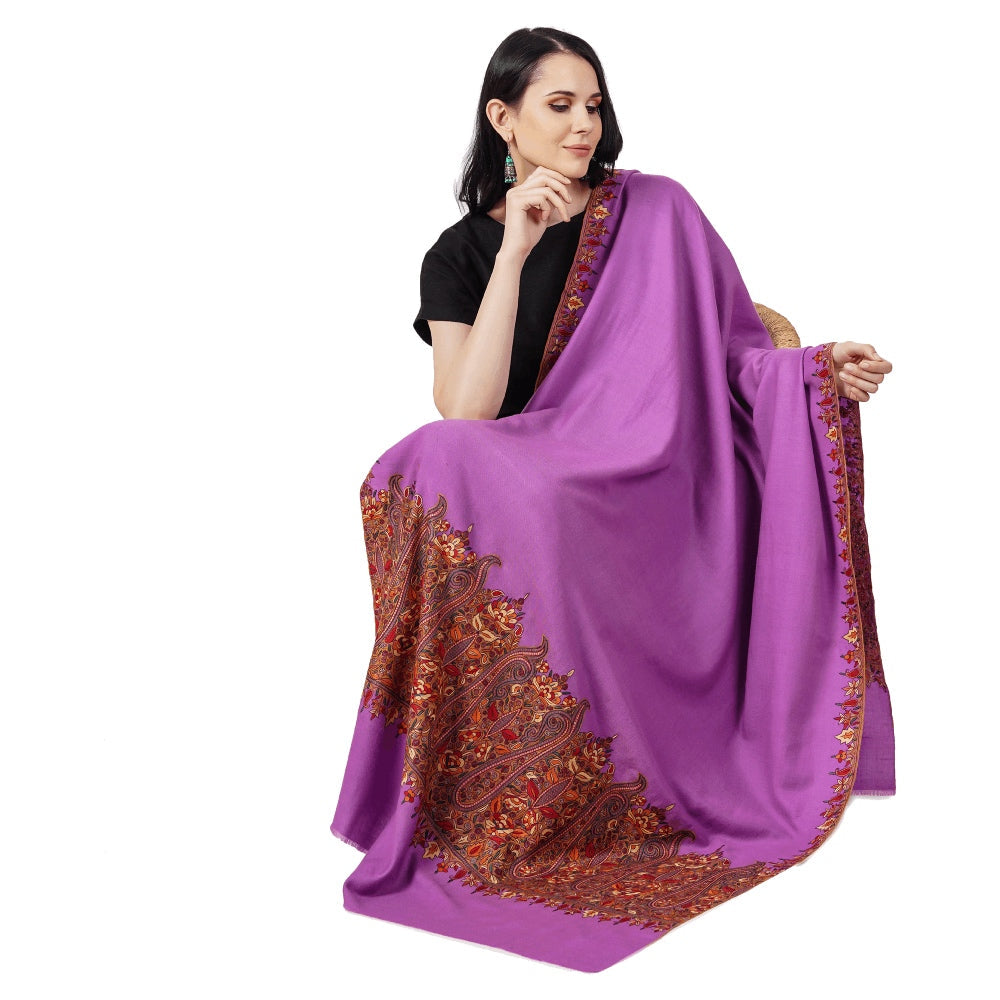
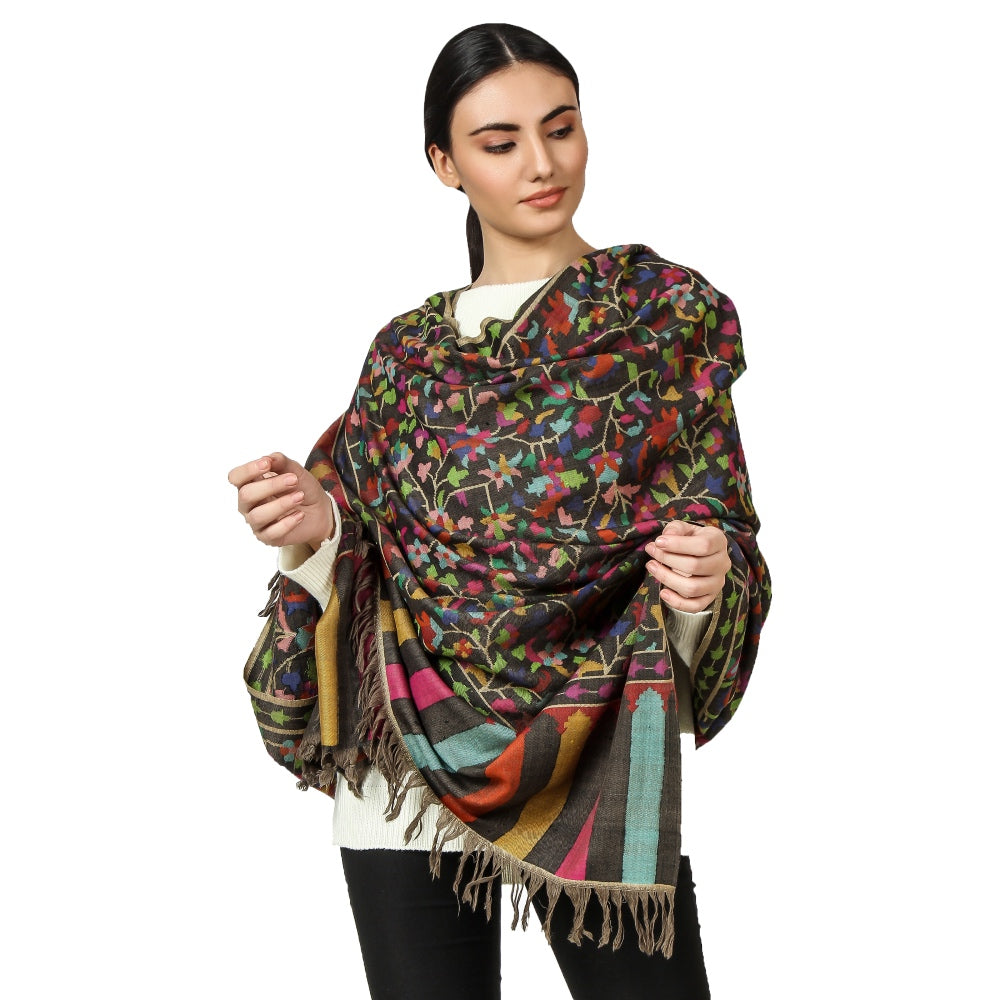
Best suited for larger pashmina formats. Unfold completely and drape across both shoulders. No knot, no folding — just the fabric doing what it does best. The most elegant option for evening wear, formal dinners, or air-conditioned spaces in summer.
Wrap a larger Kashmiri pashmina around your shoulders and secure it at the waist with a slim leather belt. Transforms a shawl into a layered top — striking over a silk blouse. A styling technique borrowed directly from Kashmiri women.
Never force cashmere into rigid shapes. Its value lies in its fluidity. If a knot looks tight or structured, loosen it. If a fold looks crisp, soften it. The goal is for the scarf to look like it fell into place — effortless, not engineered.
Colour Pairing Guide
| Scarf Colour | Pairs With | Effect |
|---|---|---|
| Charcoal | Navy, black, camel, grey | Maximum versatility, sharp contrast |
| Ivory / Cream | Dark coats, jewel tones | Striking elegance, evening-ready |
| Camel | Navy, brown, olive, cream | Warm, earthy sophistication |
| Burgundy / Forest | Grey, navy, black | Statement colour, winter richness |
Part III: How to Care for a Cashmere Scarf
Improper care destroys more cashmere than wear does. The fibres are strong, but they are vulnerable to three things: agitation, heat, and improper storage. Follow these principles, and your scarf will outlast the relationship you have with every other item in your closet.
1. Wash Infrequently
Cashmere is naturally antimicrobial and odour-resistant. It does not need washing after every wear. Air it between uses by laying it flat in a well-ventilated room away from direct sunlight. Wash only when visibly soiled or after approximately 8 to 10 wears.
2. Hand-Wash Only — Always
Machine washing — even on a "wool" or "delicate" cycle — subjects cashmere to agitation that compresses the air pockets providing insulation and can cause irreversible felting. Hand-washing takes five minutes and preserves the garment for years.
Water: Lukewarm, never above 30°C. Hot water causes shrinkage and felting.
Detergent: Specialist cashmere wash or gentle baby shampoo only. Never use biological detergent, fabric softener, or enzyme-based wool wash.
Method: Submerge gently. Do not rub, wring, or agitate. Soak for 10 to 15 minutes maximum.
Rinsing: Drain soapy water, refill with clean lukewarm water. Gently press up and down to rinse — never run water directly onto it.
3. Dry Flat — Never Hang
Wet cashmere is heavy. Hanging it will cause gravity to stretch the fibres permanently. Press gently between two clean, dry towels to remove excess water — do not twist. Lay flat on a fresh dry towel, reshape to original dimensions, and leave in a warm, well-ventilated room away from sunlight and radiators.
4. Store Folded, Never Hung
Even dry, hanging causes gradual stretching. Fold loosely and store in a breathable cotton or linen bag — never plastic. Add natural cedar blocks or dried lavender to deter moths. Avoid chemical mothballs — the odour clings to cashmere fibres and is nearly impossible to remove.
5. Manage Pilling Correctly
Pilling occurs when shorter fibres work to the surface and tangle. Initial pilling is normal and diminishes after the first wash. Persistent pilling indicates low fibre quality. Remove pills with a dedicated cashmere comb or fine-gauge shaver. Never pull pills off by hand — this pulls neighbouring fibres out and creates more pilling.
Never machine-wash. Never tumble-dry. Never dry-clean as routine maintenance. Dry cleaning solvents strip cashmere of its natural oils over time, causing brittleness. Reserve professional dry cleaning exclusively for stubborn stains.
6. Spot Cleaning for Minor Stains
For small marks, act immediately: dab gently with a clean cloth dampened with cold water and a tiny amount of cashmere wash. Work from the outside of the stain inward. Blot, never rub. For oil-based stains, sprinkle with cornstarch, leave overnight, then brush off before dabbing with a damp cloth.
Every PASHWRAP scarf comes with detailed care instructions — because a masterpiece requires a maintenance manual.
Shop the CollectionThe Complete Ownership Experience
The full value of a cashmere scarf only materialises when all three elements align: quality, styling, and care. The finest Kashmiri cashmere, styled thoughtfully and maintained rigorously, will deliver a daily experience that no other accessory can match — softness that greets you each morning, warmth that adapts to your environment, and elegance that transforms the simplest outfit.
The question of whether a cashmere scarf is worth it is ultimately answered not at the point of purchase, but at the end of year five — when every inferior alternative has been discarded and your cashmere scarf is softer and more personal than the day you bought it. The true cost of cashmere is measured not in pounds, but in daily pleasure over a lifetime of wear.
These benefits require genuine quality. Verifying cashmere quality at home — through touch, burn, and drape tests — is essential, as is understanding the heritage of Kashmiri craftsmanship that separates the exceptional from the ordinary.
Choose well. Style with intention. Care with discipline. The reward is a piece that will define your winters for decades.
Frequently Asked Questions
We strongly advise against it. Even the gentlest machine cycle subjects cashmere to agitation and temperature fluctuations that compress air pockets and risk felting. Hand-washing in lukewarm water takes five minutes and preserves the garment's structure for years.
Only when visibly soiled or after approximately 8 to 10 wears. Cashmere is naturally antimicrobial and does not retain odours the way synthetic fabrics do. Between wears, air it flat in a well-ventilated space for a few hours.
Gravity will gradually stretch the fibres, distorting the shape and thinning the fabric. Wet cashmere is particularly vulnerable. Always store folded flat in a breathable bag, never on a hanger or hook.
Initial pilling is normal — even for the finest cashmere. It diminishes after the first wash. Persistent, heavy pilling that does not improve indicates low-grade fibres or synthetic blending, which is a quality issue. Comb pills gently; never pull them by hand.
Direct ironing is risky — heat can flatten fibres and damage natural loft. If your scarf has creases, press it gently using a low-heat iron with a clean cotton pressing cloth placed between the iron and the cashmere. Never slide the iron; press and lift.
Clean it before storing — moths are attracted to body oils and food residue. Fold it in tissue paper, place in a breathable cotton bag with cedar blocks or lavender, and store in a cool, dry drawer. Inspect it monthly for signs of moth activity.
From everyday luxury to statement heirlooms — find your cashmere.
PASHWRAP — Authentic Kashmiri Pashmina & Cashmere
Handcrafted in the Valley. Delivered to Your Door.