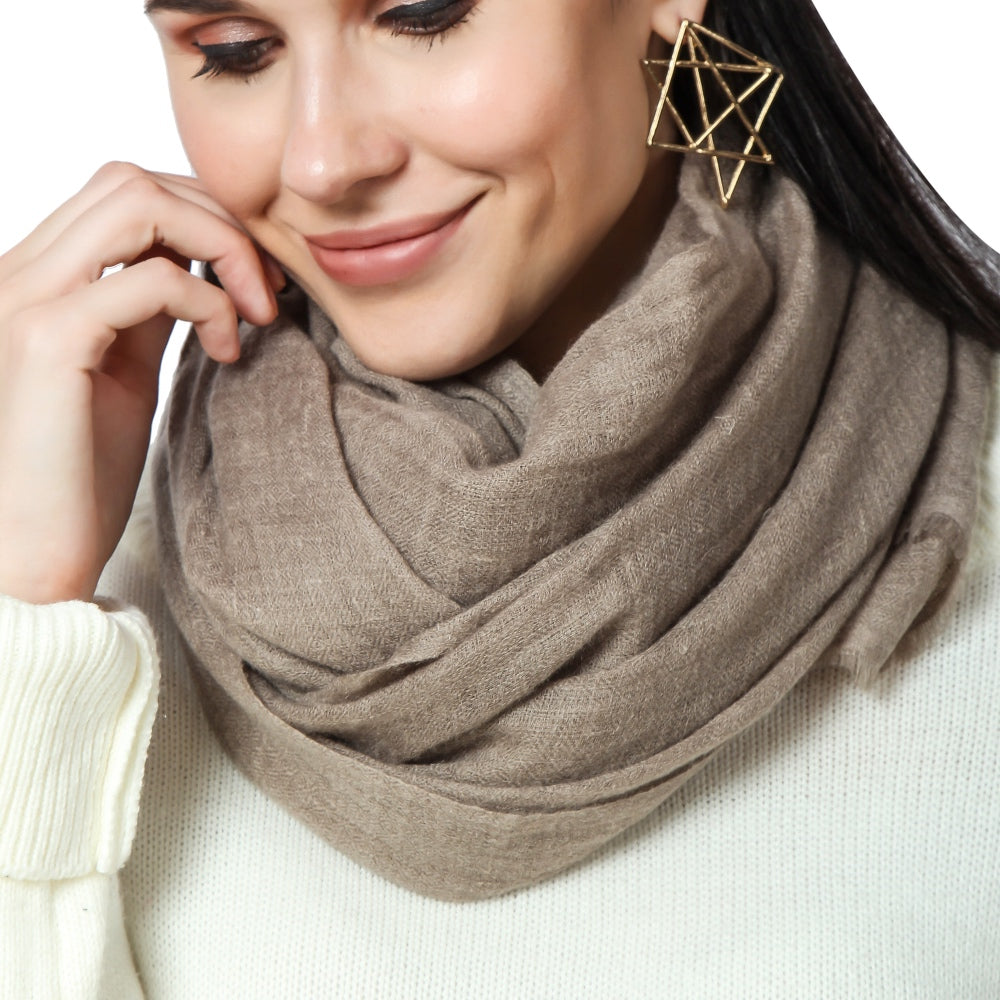

The Ultimate Guide to Cashmere Scarves and Pashmina Shawls
Everything you need to know — from fibre to finish, from choosing to caring — written for those who refuse to settle for ordinary.
If you have arrived here, you likely already sense that not all cashmere is created equal. You may have owned a scarf that felt divine for a month and then began to pill miserably. You may have seen "pashmina" labels on items costing £25 and wondered what that word actually means — if it means anything at all.
This guide exists to dispel the confusion. It is comprehensive by design — the single resource you need to understand cashmere and pashmina at a level that most retailers cannot articulate and most buyers never reach. Whether you are purchasing your first quality piece or adding to a curated collection, the knowledge here will protect you from disappointment and guide you toward pieces that genuinely deserve a place in your wardrobe.
What Is Cashmere?
Cashmere is a natural animal fibre obtained from the undercoat of certain goat breeds that inhabit cold, high-altitude regions of Central Asia. Specifically, it comes from the soft downy layer that grows beneath the goat's coarser outer guard hair during autumn — a thermal adaptation to survive temperatures that can reach minus 40 degrees Celsius.
In spring, when the weather warms, this undercoat naturally loosens. It is then harvested — ideally by gentle combing rather than shearing — and separated from the coarser guard hairs through a process called dehairing. What remains is pure cashmere: fibres so fine that they typically measure between 14 and 19 microns in diameter. For comparison, a human hair measures approximately 70 microns.
The word itself is an Anglicisation of Kashmir — the Indian valley through which this fibre first reached the Western world in the 18th century. The history of cashmere in Kashmir stretches back centuries before that, to Mughal courts and Silk Road trade, but it was the European encounter that gave the material its global name and reputation.
It takes the annual yield of approximately four to six goats to produce enough raw cashmere for a single standard scarf. This natural scarcity is the foundational reason genuine cashmere commands a premium price.
What Is Pashmina?
Pashmina is not a different material from cashmere — it is a specific, premium subset of cashmere. The word comes from the Persian pashm, meaning "wool" or "soft gold," and in its strictest usage, pashmina refers to cashmere that meets three exacting criteria:
It must come from the Changthangi goat (Capra hircus laniger), a breed native to the Changthang plateau of Ladakh at altitudes above 12,000 feet.
It must measure between 12 and 14 microns — significantly finer than standard cashmere and below the threshold of human tactile detection.
It must be hand-spun on a traditional wheel and hand-woven on a loom by Kashmiri artisans. Machine processing disqualifies a garment from being true pashmina — regardless of fibre quality.
All pashmina is cashmere. Not all cashmere is pashmina. The distinction matters enormously — in feel, in longevity, and in price. A pure pashmina shawl occupies the absolute apex of the cashmere hierarchy.
Cashmere vs Pashmina: The Definitive Comparison
This is the distinction that causes the most confusion — and the most deception in the marketplace. Here is a precise comparison:
| Attribute | Cashmere | Pashmina |
|---|---|---|
| Fibre Diameter | 14–19 μm | 12–14 μm |
| Goat Breed | Multiple breeds | Changthangi only |
| Spinning | Machine or hand | Hand-spun only |
| Weaving | Machine or hand | Hand-woven only |
| Origin | China, Mongolia, Iran, Nepal, India | Kashmir, India |
| Softness | Very soft | Extraordinarily soft |
| Typical Price Range | £80–£400 | £200–£2,000+ |
The difference between cashmere and pashmina is not a marketing distinction — it is a measurable, verifiable gap in fibre quality and craftsmanship. If a seller uses these terms interchangeably, they are either uninformed or dishonest.
Understanding Cashmere Grades
Within the broad category of cashmere, the industry recognises three principal grades — though these classifications are self-reported and unregulated, which means buyer vigilance is essential.
Grade A: The Standard for Quality
Fibre diameter of 14 to 15.5 microns. Long fibre length (typically 34mm+). This grade yields fabric that is soft, strong, and durable. It is the minimum standard any reputable luxury brand should meet. Pashmina, at 12–14 microns, technically exceeds Grade A — it exists in a category of its own.
Grade B: Acceptable, Not Exceptional
Fibre diameter of 16 to 18 microns. Shorter fibre length. Noticeably less soft than Grade A and more prone to pilling. This is the grade found in most mid-range department store cashmere — adequate, but not what a discerning buyer should seek.
Grade C: The Threshold of Disappointment
Fibre diameter of 18 to 19+ microns. This fibre is coarse enough to be perceptibly rough against the skin. It pills heavily, degrades quickly, and is frequently used in cashmere "blends" — a term that often masks the inclusion of cheaper fibres. At PASHWRAP, we do not work with Grade C fibre. Ever.
The science behind cashmere softness is quantifiable: fibres below approximately 16 microns fall below the threshold of human tactile detection — your skin literally cannot feel individual fibres. Above this threshold, the fabric begins to register as "textured" rather than "smooth."
How Cashmere Scarves and Pashmina Shawls Are Made
The production process for Kashmiri pashmina is among the most labour-intensive in all of textiles. Understanding it reveals why the final product commands its price — and why machine-made alternatives cannot fully replicate the result.
Changpa herders comb the undercoat from each Changthangi goat by hand, yielding 80–120 grams of raw pashm per animal.
Raw pashm contains coarse guard hairs mixed with the fine undercoat. These are meticulously separated until only pure downy fibre remains.
Women artisans spin the cleaned fibre into yarn on a yander — a traditional spinning wheel. This is perhaps the most critical stage: the spinner's touch determines yarn evenness, twist consistency, and ultimately the fabric's drape and softness.
The yarn is woven on a handloom, with the weaver controlling tension, density, and pattern entirely by feel. A plain shawl takes approximately two weeks. Embroidered pieces can take months.
The woven fabric is washed, stretched on a frame, brushed to raise the nap, and sometimes rubbed with a smooth stone or glass to achieve its characteristic lustre — a process called kalai in Kashmiri.
The full process of how pashmina shawls are made involves up to fifteen distinct stages and can span four to six weeks for a simple piece. Machine-made cashmere scarves move from raw fibre to finished product in hours. The difference is embedded in every thread.
Every PASHWRAP creation follows this centuries-old journey — no stage skipped, no shortcut taken.
Explore Handmade PashminaTypes of Cashmere Scarves
The term "cashmere scarf" encompasses a range of constructions, each suited to different purposes.
By Ply
Single-ply: One strand of yarn. Extremely lightweight and delicate — best as an accent piece in milder weather. Not recommended as a primary winter scarf.
2-ply: Two strands twisted together. The optimal balance of warmth, durability, and drape. This is the construction we recommend for everyday cashmere scarves — versatile enough for three seasons and resilient enough for daily wear.
3-ply and above: Substantial warmth and weight. Ideal for harsh winters. Slightly reduced drape but significant insulation trade-off.
By Weave
Plain weave: Simple, even, and versatile. The fabric's character comes entirely from yarn quality.
Twill weave: Creates a subtle diagonal rib. Adds visual texture and structural rigidity — popular in men's scarves.
Herringbone: More pronounced pattern, adds formality. Excellent over tailoring but less versatile for casual wear.
By Finish
Raw/natural: No dye — the fibre's natural colour (cream, grey, or brown). Prized by purists.
Solid dyed: Single colour throughout. The most versatile option and the recommended starting point.
Ombre: Dyed with a colour transition from one end to the other. Adds visual interest while maintaining versatility.
Types of Pashmina Shawls
Pashmina shawls carry a richer typology than cashmere scarves, reflecting Kashmir's extraordinarily diverse embroidery and weaving traditions.
No embroidery. The purest expression of fibre and weave quality. Often the choice of connoisseurs who appreciate subtlety over ornamentation. This is the quintessential Kashmiri pashmina experience.
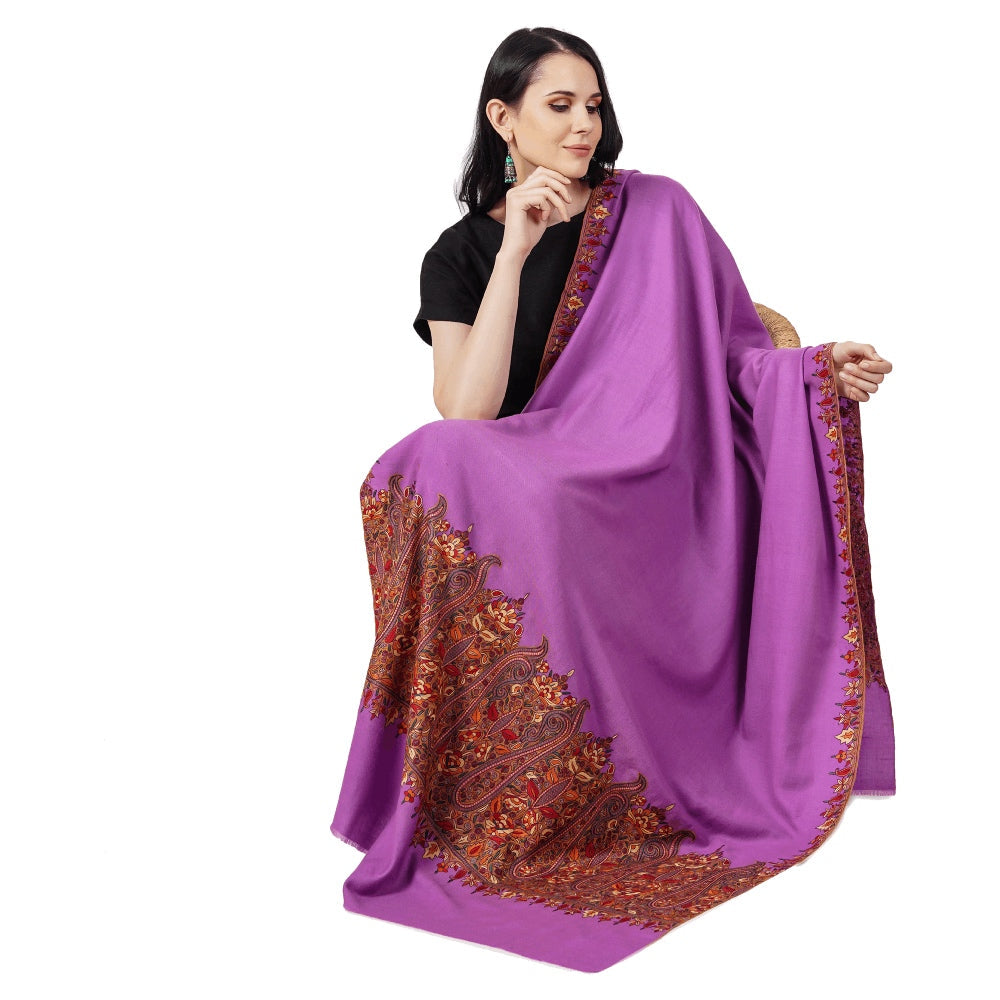
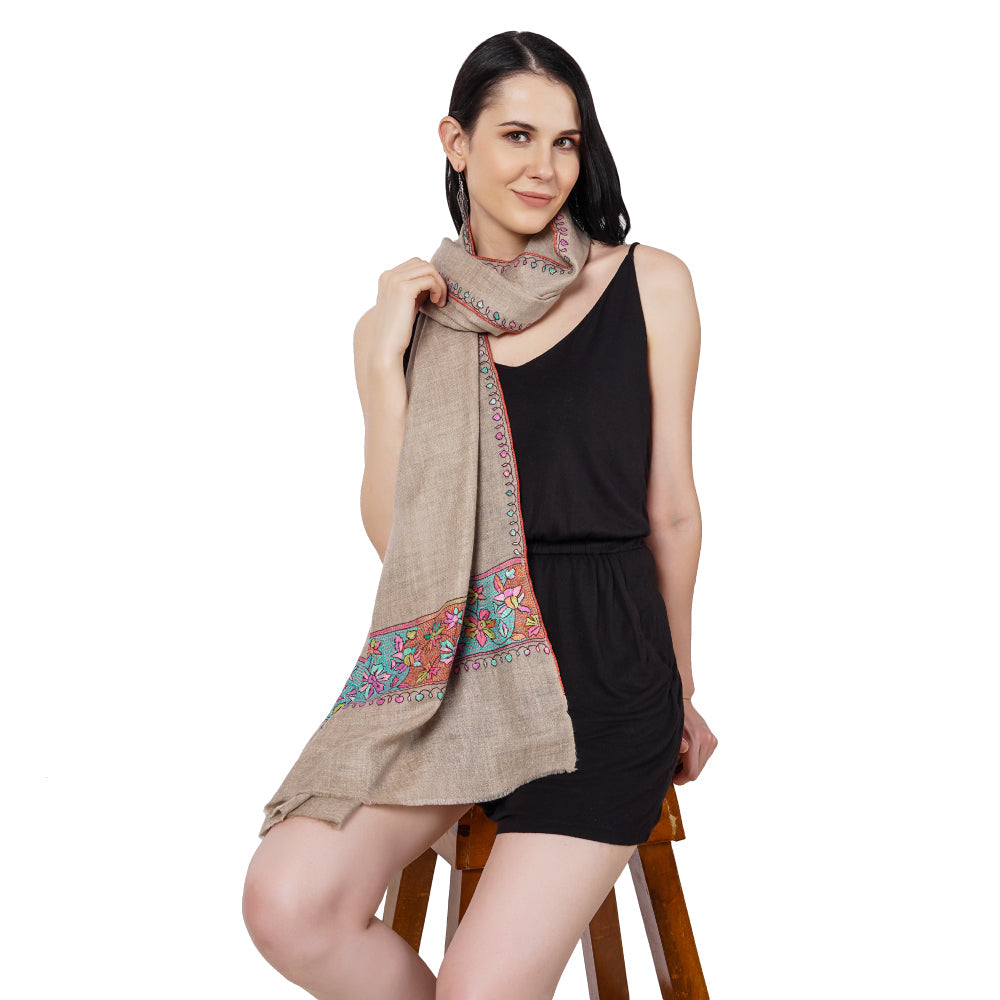
Intricate needlework using fine pashmina yarn to create patterns — florals, paisleys, geometric motifs — that blend into the fabric rather than sitting on top. A fine sozni shawl can take three to six months to complete.
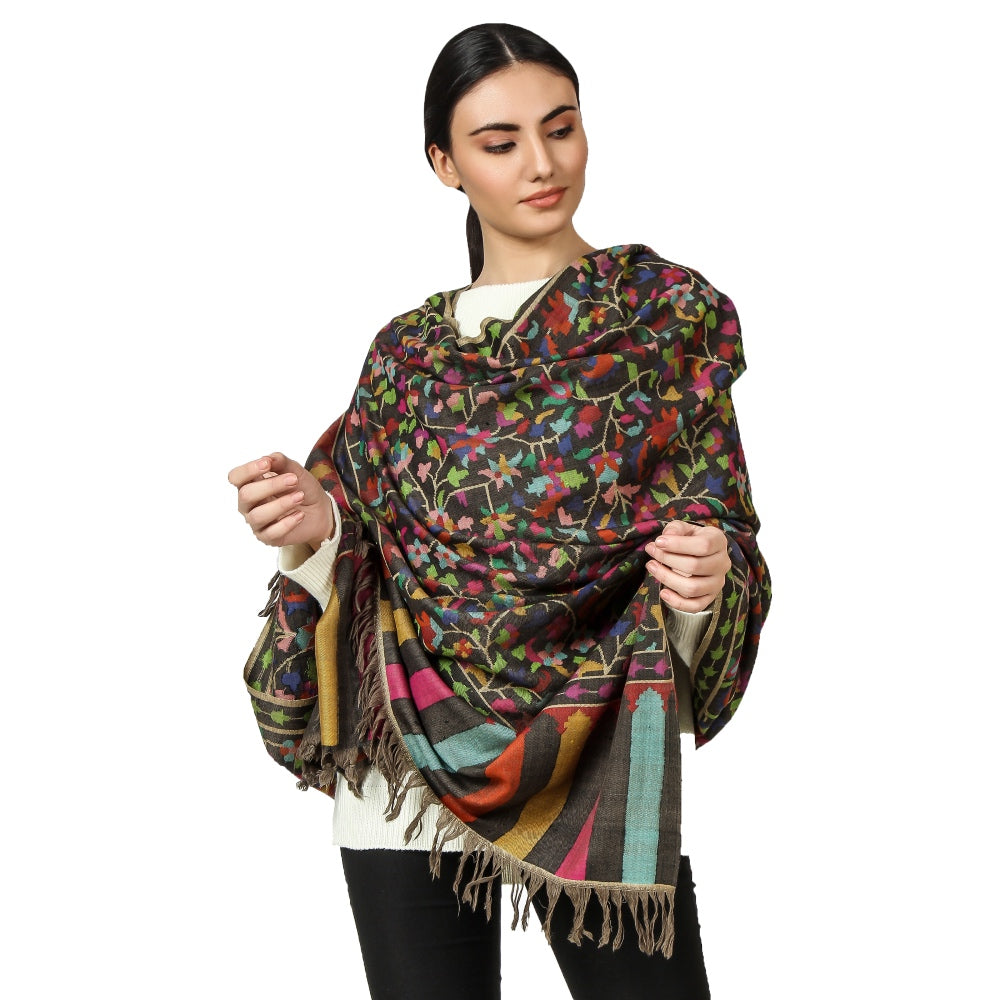
Patterns created during weaving using wooden bobbins called kanis, each carrying a different coloured thread. A single Kani shawl can require over a thousand bobbins and take twelve to eighteen months — among the most complex textile techniques in existence.
Large-scale patterned shawls inspired by Mughal textile traditions. Patterns cover the entire fabric rather than being confined to borders. Can combine weaving and embroidery, producing pieces of extraordinary visual density.
How to Style Cashmere Scarves and Pashmina Shawls
The Parisian Drape
Fold a luxury cashmere scarf in half lengthwise, drape it around your neck with the fold at one side, and pass the loose ends through the loop. Pull snug but not tight. Works with tailored coats, blazers, and heavy knitwear. The most universally flattering knot.
The Over-Shoulder
Drape an open pashmina shawl across both shoulders, letting it fall evenly. No knot, no folding — just the fabric doing what it does best: draping. The most elegant option for evening wear and formal events.
The Belted Wrap
Wrap a pashmina shawl around your shoulders and secure at the waist with a slim leather belt. Transforms a shawl into a layered top — particularly effective over a silk blouse. A styling trick borrowed from Kashmiri women who have worn pashminas this way for generations.
The Blanket Wrap
Unfold a large shawl completely and wrap around both shoulders like a stole. For the best cashmere scarf for winter warmth, layer this over a coat — remarkable insulation for something so lightweight.
The Ascot
Lay the scarf flat, fold in half lengthwise, place around your neck, and tie once near the collar, tucking ends inside your coat. Clean, structured, and distinctly European — particularly effective with a dark overcoat.
Care and Maintenance: Protecting Your Investment
Cashmere is naturally antimicrobial and odour-resistant. Air it between wears by laying flat in a well-ventilated space. Wash only when visibly soiled — perhaps every 8–10 wears.
Use lukewarm water (never above 30°C) and a specialist cashmere wash or gentle baby shampoo. Never use biological detergent, fabric softener, or enzyme-based wool wash. Submerge gently — do not agitate, rub, or wring. Soak 10–15 minutes maximum.
Press gently between two clean towels to remove excess water — do not twist. Lay flat in its natural shape, away from heat and direct sunlight. Never hang a wet cashmere garment.
Hanging causes stretching under its own weight. Fold and store in a breathable cotton bag — never plastic. Add cedar balls or lavender sachets to deter moths. Cool, dry storage only.
Use a cashmere comb or clean razor to gently remove pills. Do not pull by hand. Pilling that diminishes after first few washes is normal. Persistent pilling indicates low fibre quality.
Never machine-wash, never tumble-dry, never dry-clean regularly. Dry cleaning uses solvents that strip natural oils over time, causing brittleness. Reserve for stubborn stains only.
How to Spot Fake Cashmere
Genuine cashmere is immediately soft from the first touch. If it feels rough or scratchy, it is not quality cashmere. The most reliable way to check cashmere quality at home begins with your fingertips.
Remove a few fibres and ignite. Pure cashmere burns like hair — chars, smells of burning protein, crumbles to powdery ash. Synthetics melt into hard plastic beads.
Gently stretch a small section. Quality cashmere stretches and springs back. If it stays stretched or snaps, fibre quality is poor.
Rub firmly with your thumb for 20–30 seconds. Quality cashmere may produce a few loose fibres but should not pill aggressively. Immediate heavy pilling indicates short, low-grade fibres.
A genuine, pure cashmere scarf cannot be sold profitably for £40. Understanding what real cashmere should cost is perhaps the simplest fraud detector: if the price seems too good to be true, it is.
The Buying Guide: Choosing Your Cashmere or Pashmina
Daily winter warmth? 2-ply cashmere scarf in charcoal or camel. Evening occasions? Plain or sozni pashmina in ivory or a jewel tone. Travel? Lightweight pashmina in a neutral — scarf, blanket, and wrap in one.
Kashmiri for the absolute finest. Mongolian for excellent machine-made alternatives. Chinese only from brands you trust implicitly — the quality range is too wide to navigate without reputation.
Hand-spun, hand-woven pieces feel and drape differently. If the brand doesn't specify, ask. If they can't answer, look elsewhere.
Quality cashmere scarf: 150–250 grams. Pashmina shawl: 200–400 grams depending on size and embroidery. Below these ranges may indicate blending.
Do they provide provenance? Explain their process? Offer care guidance? A brand that invests in education — like the article you're reading — has invested in quality. The transparency around why Kashmiri pashmina is expensive is itself a marker of authenticity.
Finally, consider this: the question of whether a cashmere scarf is worth it only arises when you haven't yet experienced the real thing. Once you've wrapped a genuine Kashmiri pashmina around your neck on a cold morning, the question answers itself. The only remaining question is which colour to choose next.
Every piece certified pure, traceable to source, handcrafted in Kashmir.
Shop Cashmere Scarves Shop Pashmina ShawlsFrequently Asked Questions
A cashmere scarf is typically narrower (180×70cm), made from cashmere of varying grades, often machine-processed. A pashmina shawl is larger (200×100cm+), made exclusively from Changthangi goat fibre (12–14 microns), hand-spun and hand-woven in Kashmir. Pashmina is the premium tier.
We strongly advise against it. Even on a "delicate" cycle, machine washing subjects cashmere to agitation and temperature fluctuations that cause felting, shrinkage, and fibre damage. Hand-washing takes minutes and extends the garment's life by years.
Not necessarily. Normal pilling occurs during first few wears and diminishes after washing. Persistent, heavy pilling that doesn't improve indicates short, low-grade fibres — a sign of poor quality, not necessarily fakeness.
Standard: approximately 180cm × 70cm — long enough to wrap once or twice with ends to spare. Shorter (150cm) limits knotting options. Longer (200cm+) offers maximum versatility. Pashmina shawls: typically 200cm × 100cm.
Not at all. Cashmere and pashmina are thermoregulating — they adapt to ambient temperature. A lightweight pashmina provides comfortable warmth without overheating in transitional seasons.
No. These are almost invariably viscose, polyester, or blends with negligible cashmere content. The raw material cost alone for genuine pashmina far exceeds £15. The word "pashmina" is not legally protected in most countries and can be applied to anything.
Clean before storing (moths are attracted to body oils more than fibre). Fold in tissue paper — never plastic — in a breathable cotton bag. Add cedar blocks or lavender sachets. Store cool and dry. Never hang.
From first scarf to lifelong collection — every piece backed by provenance, purity, and craftsmanship.
PASHWRAP — Authentic Kashmiri Pashmina & Cashmere
Handcrafted in the Valley. Delivered to Your Door.